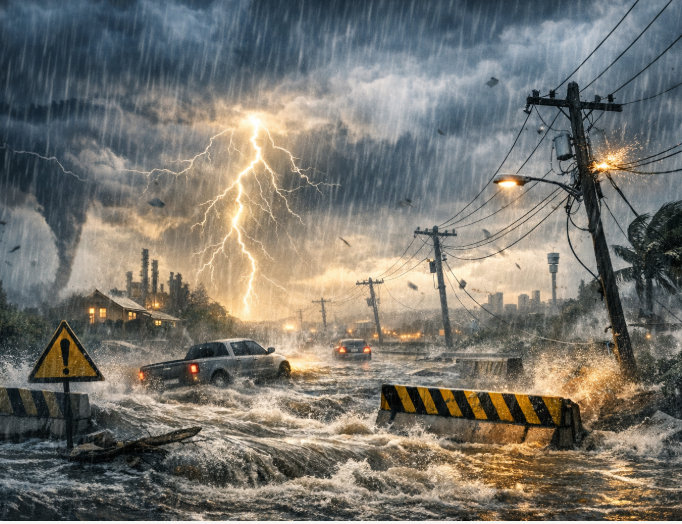
Durban – KwaZulu-Natal’s CoGTA MEC Thulasizwe Buthelezi has placed disaster management teams on high alert ahead of a cut-off low-pressure system expected to impact the province from 5 May.
The South African Weather Service has issued a Yellow Level 2 warning for severe thunderstorms, heavy rain, strong winds, hail and potential flooding in southern parts of KwaZulu-Natal, including eThekwini, Msunduzi and Ray Nkonyeni.
The adverse conditions are expected to persist until Wednesday morning, posing risks to infrastructure, bridges and low-lying settlements.
Authorities say winter readiness plans are in place across municipalities.
“Our disaster management teams across all municipalities have finalised winter readiness plans to protect lives and infrastructure,” the Citizen quoted Buthelezi as saying.
“We are coordinating with social partners and sister departments to ensure a rapid, integrated response to any localised emergencies.”
Residents have been urged to exercise caution, avoid flooded areas, and take safety measures when heating homes, including supervising braziers and heaters and closely monitoring children.
Meanwhile, SAWS has also issued multiple warnings for parts of the Eastern and Western Cape, cautioning residents to brace for severe and potentially disruptive weather.
A Yellow Level 2 warning for severe thunderstorms is in place over central regions of the Eastern Cape, with heavy downpours expected to cause localised flooding of roads, bridges and low-lying areas.
Strong winds and hail could damage infrastructure and informal settlements, while extremely high fire danger conditions have been flagged in the eastern parts of the province.
Looking ahead, an intense cut-off low-pressure system is forecast to affect large parts of the Eastern Cape and eastern regions of the Western Cape from Tuesday evening through to Thursday.
The system is expected to bring widespread heavy rainfall, strong inland winds, gale-force coastal winds, rough seas and possible storm surge along the coast. Disruptive snowfall is also possible in high-lying areas.
Residents, particularly farmers, are advised to take precautionary measures to protect livestock, property and infrastructure, and to monitor official weather updates as conditions develop.
Follow African Insider on Facebook, X and Instagram
Picture: Copilot
For more African news, visit Africaninsider.com
Compiled by Betha Madhomu