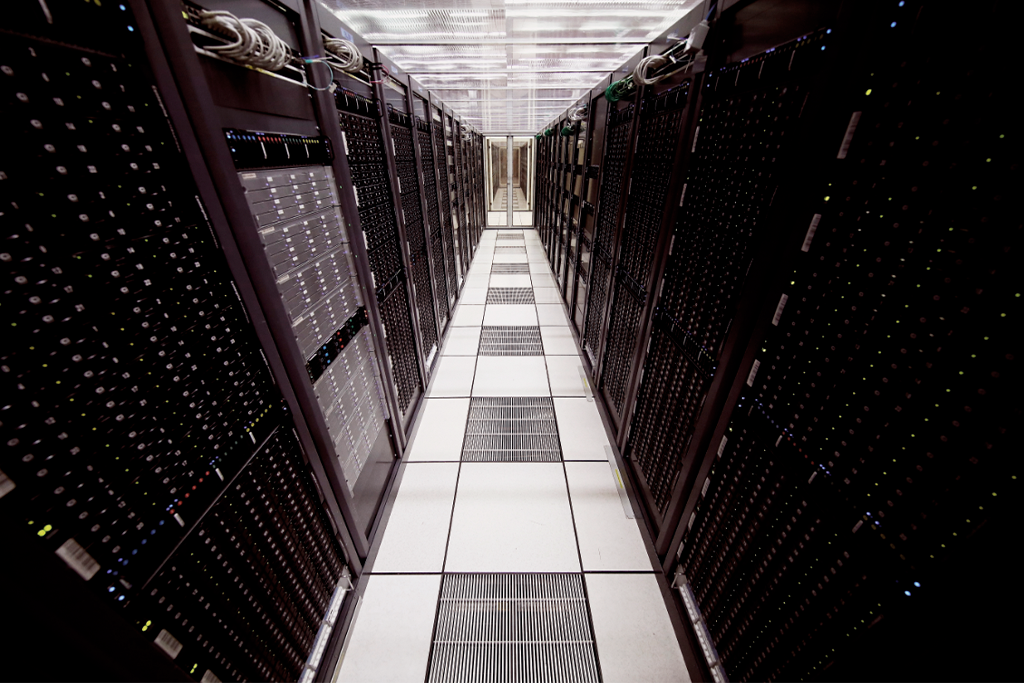
At the end of last year, there were 56 data centres in South Africa, including five power-intensive, AI-capable centres, with an estimated combined load capacity of 350 MW. As of October 2026, the Data Centre Map listed 68 data centres in the country, which is the most in Africa by some margin.
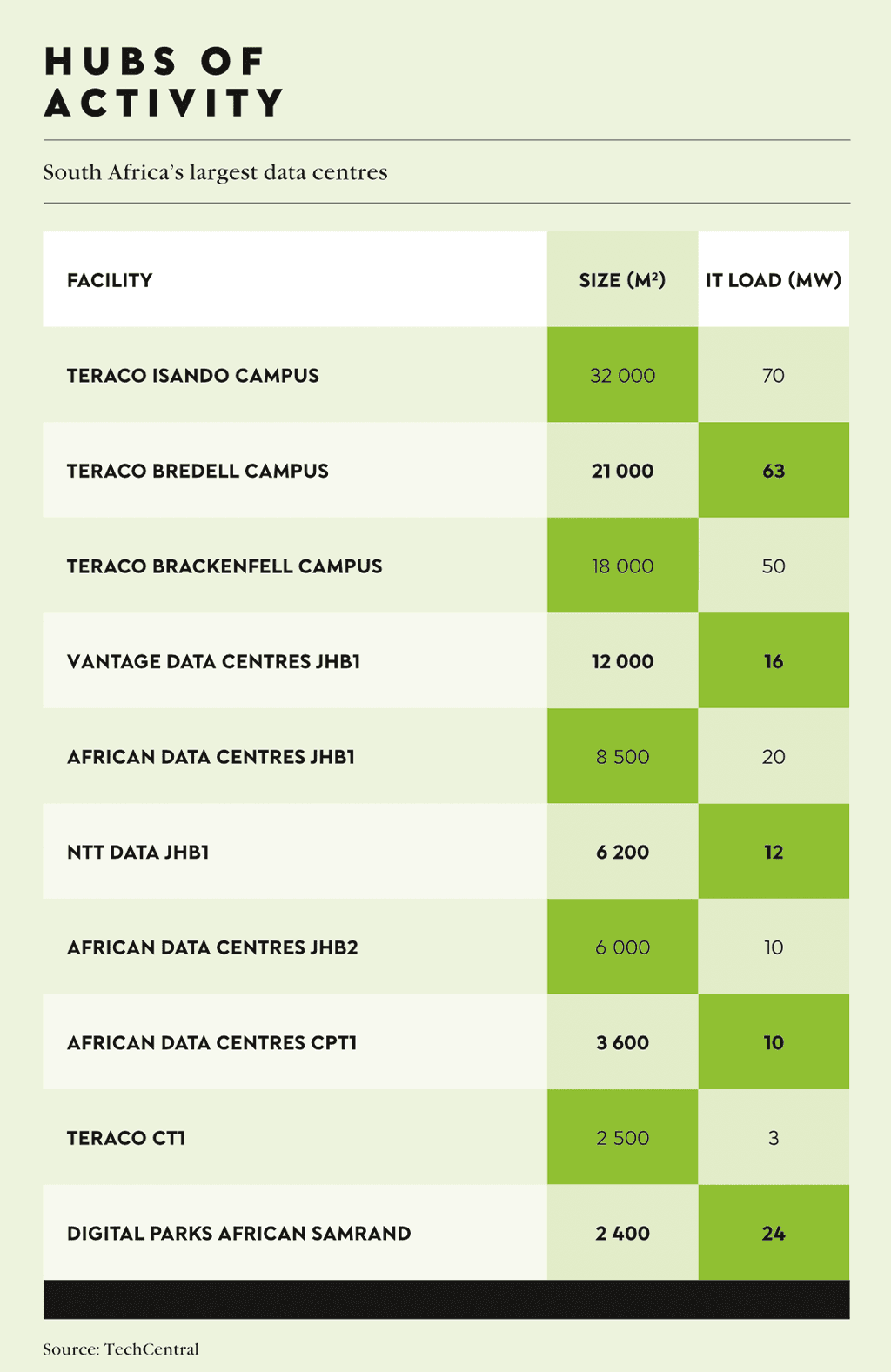
Teraco’s Isando campus in Johannesburg is the biggest data centre, with 70 MW of IT load capacity. The complex comprises several multi-storey buildings with a combined footprint of about 185 000 m2, including 32 000 m2 of white space (server deployment floor). These spaces need power and water to run efficiently, and plenty of it. Companies can’t rely on municipal supplies alone to keep them running, and as the demand for data centres increases in South Africa, so does the demand for power and water. This means developers and operators need to establish alternative sources for both utilities.
Gauteng accounts for around 70% of the country’s data centres, and there have been concerns about their potential impact on the environment, especially considering the province’s ongoing water issues. While the centres may still consume substantial amounts of water, most of the facilities are new, which means they employ modern cooling systems. According to TechCentral, Teraco CEO Jan Hnizdo says older data centres tended to use ‘evaporative cooling’, which consumes considerable quantities of water on an ongoing basis. However, newer systems – including those deployed by Teraco – don’t need to be constantly replenished. ‘Because of our scale, we focused on using as little energy and water as possible,’ Hnizdo tells the website.
Teraco, like many other local data centre operators, uses a closed-loop ‘free cooling’ system. This means that once the air conditioning system pipes have been filled with water, there isn’t a need to refill them continuously. ‘Chillers on the roof cool the water, and we then bring cold water into the air handling units in the data centre. There is no evaporation,’ says Hnizdo. ‘Then, on top of that, we have designed something called “free air cooling”.’
Instead of using refrigeration, Teraco brings in outside air, removes dust particles and then pipes this air into the halls, reducing power consumption. Its air conditioning systems may not require a continuous supply of water, but Teraco’s facilities still have boreholes, and rainwater is collected from rooftops for other water needs, including cleaning and flushing toilets.
‘In the event that there is a cut in the water supply, we have the ability to self-sustain indefinitely,’ says Hnizdo. ‘Also, the efficiencies from closed-loop [cooling] systems are way better. It is a much higher upfront cost – you are investing way more – but the payback is using less electricity and water in the cooling process.’
Africa Data Centres has a similar approach. ‘Occasionally, there is a need to top up closed-loop systems, and of course, some types of maintenance may require refilling pipes,’ Angus Hay, the company’s regional executive for South Africa, tells TechCentral. ‘However, the performance parameter that we track, called “water usage effectiveness” (WUE), [which] is calculated by dividing data centre water consumption in litres by IT equipment energy consumption in kilowatt-hours, is very close to zero for all of our data centres.’
Hay says that although the company doesn’t consume water in its cooling equipment, it does store water on site. ‘Some of our modern, mist-based data centre fire-suppression systems, and even general office sprinkler systems, for example, have local water storage, so that we are not dependent on external water supply in the event of a fire. We also have borehole systems on some of our sites to ensure continuity of water supply, with on-site storage tanks,’ he says.
South Africa’s power grid has faced significant capacity constraints and even though the electricity supply has improved, investment by data centres in new generation and transmission infrastructure is still essential.
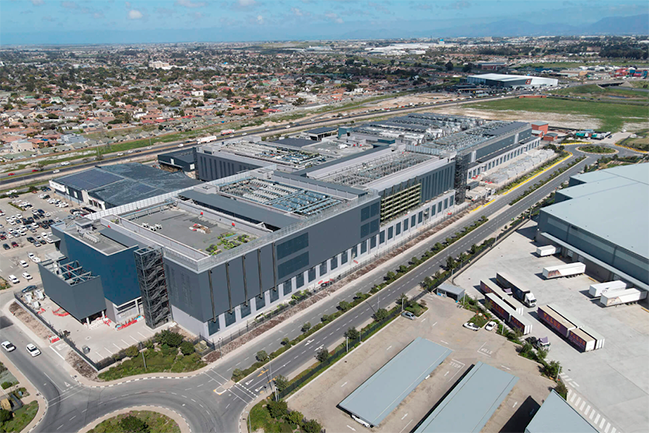
In 2024, Teraco started building a 120 MW solar facility in the Free State. The Sediba Solar Power Plant near Parys, which broke ground in November that year, is owned entirely by the company and is scheduled to come online in the first quarter of 2027. It was developed in partnership with Juwi Renewable Energies South Africa and solar developer Subsolar, and when fully operational, is expected to generate more than 354 000 MWh of electricity annually. Teraco says the grid capacity allocation from Eskom will enable it to connect the planned 120 MW solar facility to the national electrical grid. The power generated will be wheeled across the Eskom grid and municipal power networks to the company’s facilities across South Africa, which include Cape Town and Durban. The Teraco campus also incorporates on-site solar energy and is equipped with heavy-duty diesel generators to maintain continuous, uninterrupted power if there are outages.
Backup diesel generators also raise environmental considerations, particularly the need to store fuel safely. CGH South Africa says the company offers fuel storage that ensures uninterrupted fuel access, supplying belly tanks, daily tanks and larger bulk storage cylindrical tanks to several data centres internationally. The belly tanks’ fuel storage sits directly beneath the generator, so the complete power unit operates with a much smaller footprint, which frees up space and keeps fuel where it’s needed if the grid falters. Head of sales and marketing, Afzal Chothia, adds that the company offers all its tanks in double-walled construction, with the second wall an added layer of protection that guards against leaks, spillage and accidental damage, thereby protecting soil and groundwater. ‘It means the sector can expand its power capacity with confidence, without passing the risk on to the environment,’ he says.
While these measures can help ease the strain on municipal electricity and water supplies, civil society and environmental groups have raised concerns, especially considering how scarce these resources are in the country. Daily Maverick reports that four new proposed data centre projects in Cape Town alone would require 580 MW of power, which equates to just over 34% of the city’s daily maximum electricity demand of 1 676 MW.
According to CNBC Africa, Minister of Communications and Digital Technologies Solly Malatsi says government ‘takes seriously’ concerns about whether data centres will intensify competition for electricity and water, but that the sector is ‘critical to economic competitiveness’. ‘It underpins everything […] that will shape the next decade of economic activity, and it supports the wider digital ecosystem in which jobs are ultimately created.’
David Erwee, head of architecture and managed services at Datacentrix, says Africa needs digital infrastructure to enable growth, and data centres are an important piece of that equation. He believes the right balance needs to be found between expanding the sector and managing the resources needed for them to operate. ‘For the industry as a whole, it means recognising that the data centres required to strengthen Africa’s digital economy will need to become increasingly resource efficient as they scale. This goes beyond adding data centre capacity in Africa. It is about developing it in a way that advances digital and economic growth while making better use of available energy, water and infrastructure resources.’