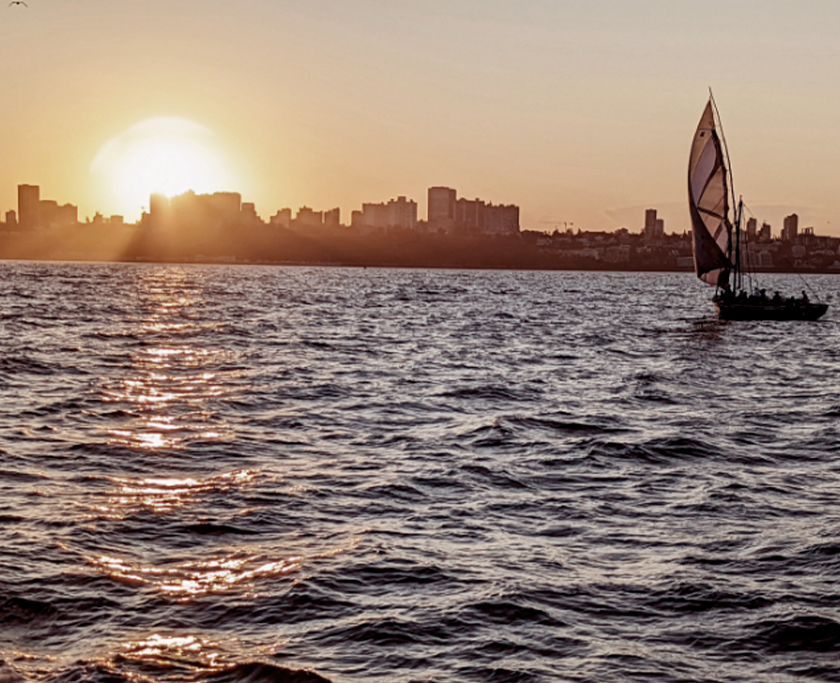
Blessed with an enormous reserve of natural resources, a strategic Indian Ocean coastline and proximity to some of Southern Africa’s most important trading markets, Mozambique has the ingredients to become a major new economic force on the continent.
At the centre of the country’s economic prospects is natural gas. The discovery more than a decade ago of vast offshore reserves in the Rovuma Basin, in the north, has attracted some of the world’s largest energy companies and could transform Mozambique into one of the world’s leading liquefied natural gas (LNG) exporters.
But gas is only part of the natural resources story… Mozambique also has significant deposits of coal, graphite, titanium, precious stones and other minerals increasingly important to the global energy transition. Its spectacular beaches, islands, wildlife reserves and cultural heritage also offer considerable opportunities for tourism investment.
Mozambique’s natural gas reserves represent perhaps the country’s single-greatest economic opportunity. Estimates place the country’s recoverable natural gas resources at approximately 3.766 billion cubic metres, according to the International Energy Agency (IEA). The scale of these resources is substantial, with the potential to support decades of production, exports and industrial development.
The development of the gas industry has, however, been a complicated journey. The discovery of the reserves generated enormous expectations, with international investors committing billions of dollars to infrastructure and development projects. But the insurgency in Cabo Delgado province, which escalated in 2021, forced the suspension of major projects.
There has recently been a significant breakthrough. In January 2026, French energy major TotalEnergies announced the full restart of its Mozambique LNG activities, following the consortium’s decision in November 2025 to lift the force majeure declared in 2021.
The project, based on the offshore gas resources of Area 1, represents an investment of approximately US$20 billion. Construction has resumed at the Afungi site, with more than 4 000 workers mobilised, at least 3 000 of them Mozambican nationals. First LNG production is expected in 2029. The company anticipates that the development will create up to 7 000 direct jobs for Mozambicans during construction and generate more than US$4 billion in contracts for local companies.
Patrick Pouyanné, chairman and CEO of TotalEnergies, described the restart as a landmark development. ‘This landmark project will position Mozambique as a major LNG exporter. With its strong local content, it will also bring lasting economic benefits to Mozambican people.’
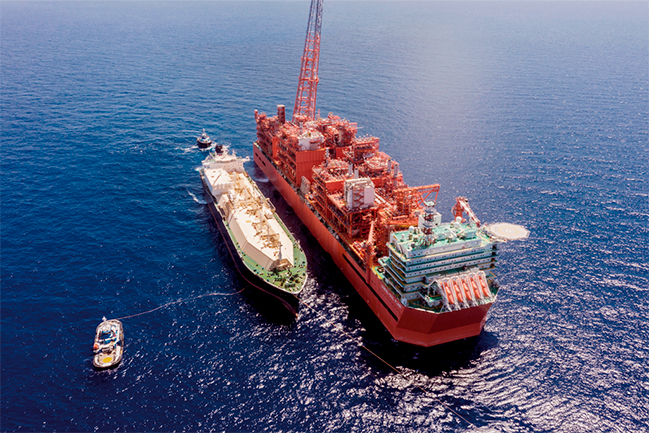
Mozambique’s other major gas development is the Coral South floating LNG project, operated by Italian energy company Eni in Area 4. The project, which began production in 2022, was an important milestone as Africa’s first floating LNG facility. It demonstrated that offshore gas could be developed and exported even while the larger onshore projects faced delays.
The Coral South facility has a production capacity of about 3.6 million tons of LNG annually. In October, Reuters announced that Eni will start drilling up to six development wells from November that will feed gas to its new Coral North platform.
Mario Bello, Eni’s head of sub-Saharan Africa, was quoted as saying the project is on track to start production by 2028, and it will double the firm’s Mozambique output to about 7 million tons per year.
‘Mozambique actually is a premium gas source. I think geographically it’s just perfectly located to fit the premium LNG market that is in the Far East without having a critical transit route,’ he told Reuters.
Bello said Eni, which has said it is weighing up a third FLNG offshore, was ‘currently in the early pre-front-end engineering and design stage on the project. And we are evaluating all aspects of the project’.
Also in October, it was reported that ExxonMobil had increased its stake in the planned Rovuma LNG project to 50% from 25%, following an asset swap with Eni. Rovuma is forecast to produce about 18.6 million tons of LNG per year.
These developments could substantially increase Mozambique’s export capacity over time, although their schedules are dependent on investment decisions, security and market conditions.
The economic implications are considerable. LNG exports could generate foreign exchange, government royalties and taxes, attract further foreign direct investment and strengthen Mozambique’s position in international energy markets.
There are also opportunities for regional energy integration. Mozambique already supplies natural gas to South Africa through the pipeline connecting its producing fields to the South African market. Additional production could strengthen regional energy security and support industrial development across Southern Africa.
An indication of that was the news, via Reuters in November, that Mozambique’s state-owned oil company ENH is in talks with potential South African investors, including Sasol and pipeline company Rompco, for a new natural gas project. ‘We want our infrastructure by 2030 or 2031, in step with Mozambique LNG, Rovuma LNG and Coral North,’ Rudencio Morais, CEO and chairman of ENH, told Reuters.
‘Mozambique is going to become what we call the power hub [of the region],’ according to Morais.
Nevertheless, the development of the gas sector comes with significant risks. The security situation in Cabo Delgado remains a critical consideration, while global energy markets are changing as countries pursue decarbonisation. Mozambique will need to balance the commercial opportunities offered by its gas reserves with environmental responsibilities, the development of renewable energy and the risk of becoming excessively dependent on a single commodity.
Beyond natural gas, Mozambique has a diverse mineral resource base that offers another important avenue for economic growth. Its mineral wealth includes coal, graphite, titanium-bearing heavy mineral sands, aluminium, tantalum, zirconium, rubies and other industrial minerals.
Some of these resources are becoming increasingly important as the global economy transitions towards cleaner energy technologies. Graphite, for example, is a key component in lithium-ion battery anodes, making it an important commodity for electric vehicle production and energy storage systems.
Mozambique is particularly well positioned in this market. According to the United States Geological Survey, the country was the world’s fourth-largest graphite producer in 2024, accounting for approximately 3% of global production. It also ranked second in ilmenite production, supplying an estimated 21% of global output, and third in zirconium mineral concentrates.
The Balama graphite operation in Cabo Delgado, developed by Australian-listed Syrah Resources, is one of the country’s most significant mining investments. The project has experienced operational interruptions arising from community protests, political unrest and difficult international market conditions. Nevertheless, its substantial resource base gives Mozambique an important position in the international battery-materials supply chain.
The heavy mineral sands industry is another established contributor. The Moma mine, operated by Kenmare Resources, produces ilmenite, rutile and zircon. These minerals are used in applications ranging from pigment production and ceramics to advanced industrial manufacturing.
Coal remains an important part of the country’s mining economy, particularly in Tete province, where extensive deposits have attracted international mining investment. Although the long-term outlook for coal faces increasing pressure from climate policies and the global energy transition, it continues to contribute to export earnings and economic activity.
Mozambique also has a globally recognised gemstone industry. Its ruby deposits, particularly in Montepuez in Cabo Delgado, have attracted international attention and established the country as an important supplier of high-quality rubies. The challenge is to ensure that gemstone mining generates sustainable local benefits through responsible operations, employment and transparent revenue collection.
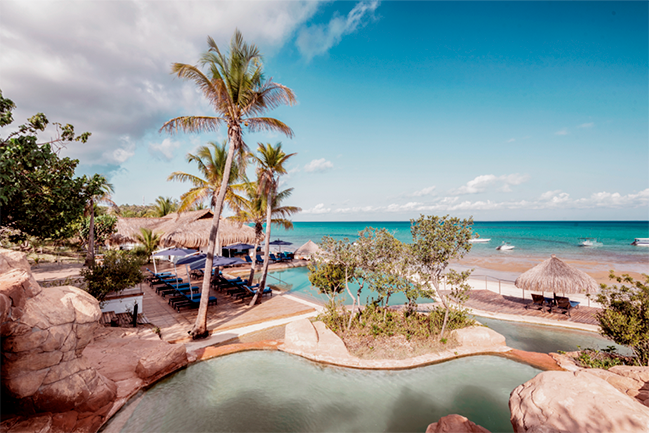
While natural gas and mining attract much of the international investment attention, tourism could prove to be one of Mozambique’s most important sources of inclusive and sustainable economic growth.
The country has a coastline stretching approximately 2 700 km along the Indian Ocean, with pristine beaches, tropical islands, coral reefs and marine reserves. Its tourism offering is complemented by national parks, wildlife reserves, historic towns and a rich cultural heritage.
Among its best-known destinations are the Bazaruto Archipelago, the Quirimbas Archipelago, Vilankulo, Ponta do Ouro and the historic Island of Mozambique. These destinations offer considerable potential for luxury resorts, eco-tourism, diving, sailing, fishing and adventure tourism.
The sector’s employment potential is especially significant. The United Nations has highlighted the contribution of coastal and marine tourism to Mozambique’s economy. Its 2026 assessment estimated that tourism could generate more than 83 000 direct jobs and 242 000 jobs in total, including indirect employment. It also identified the sector’s potential contribution to poverty reduction and improved living standards in coastal communities.
Recent visitor statistics also point to an encouraging recovery. According to figures from Mozambique’s National Statistics Institute reported by Lusa in September, the country’s accommodation establishments welcomed about 2.13 million guests in 2025, including domestic and international visitors. The number of foreign guests increased by 12.5% compared with 2024, while domestic tourism grew by 16.7%.
The government has begun taking steps to position tourism as a more prominent economic priority. At the Mozambique Tourism Summit in November 2025, President Daniel Chapo announced a series of measures aimed at attracting investment and improving the sector’s competitiveness.
The president has described tourism as the country’s ‘true gold’, emphasising its potential as a sustainable source of economic opportunity. The initiatives are intended to improve the investment environment, attract international operators and encourage the development of tourism infrastructure.
Mozambique, however, faces several economic challenges. The World Bank’s latest economic assessment projects economic growth of just 0.6% for 2026, following an estimated contraction of 0.2% in 2025. Although the resumption of LNG-related construction should provide some support, the bank warns that capital-intensive growth will not necessarily translate into significant employment creation or poverty reduction.
The World Bank has been particularly clear about this issue. In July 2026, its Mozambique country director, Fily Sissoko, offered an important perspective on the country’s development prospects. ‘Natural resources are an opportunity for development, but not a guarantee,’ he said.
Sissoko said gas and mineral wealth must be converted into productive assets, including infrastructure, agricultural production, education, healthcare, stronger institutions and employment.
The World Bank Group’s new Country Partnership Framework for 2026–2031 reflects the importance of a more diversified develop-ment strategy.
The bank’s priorities include energy, agribusiness and tourism, alongside improved workforce skills, stronger institutions and greater private-sector participation.
The World Bank has indicated that it aims to mobilise about US$2.5 billion over the five-year period to support Mozambique’s economic transformation and job creation, particularly for young people and women.
The return of major LNG investment, the development of critical mineral projects and renewed attention to tourism provide reasons for cautious optimism. The country’s long-term success, however, will depend on more than the value of its natural resources or the number of international companies operating within its borders.
It will depend on whether Mozambique can build the infrastructure, skills, institutions and business environment necessary to turn resource wealth into broad-based economic opportunity.