Cape Town – Health Minister Aaron Motsoaledi has come under renewed pressure from MPs over a controversial R15-billion antiretroviral (ARV) tender, as the Department of Health revealed that national medicine availability has fallen to 83.4%.
The criticism follows a High Court ruling last month that set aside two portions of the department’s ARV procurement process after concerns were raised about irregularities in the awarding of contracts.
According to The Citizen, MPs serving on Parliament’s Portfolio Committee on Health accused the minister of failing to act on warnings about the tender, including allegations of collusion, inadequate due diligence and questionable supplier credentials.
The court ruling concerned tender items 13 and 23, which cover first-line HIV treatment. The department was given 120 days to reconsider the affected awards.
In its official statement, the Department of Health confirmed that the judgment followed a review application by pharmaceutical companies Cipla and Hetero Drugs South Africa. The court upheld Cipla’s challenge and set aside the two awards, while dismissing Hetero’s application.
Disciplinary action
Department director-general Thembisile Xulu told MPs that the department would not appeal the ruling, saying: “Yes, we agree with that judgment.”
However, committee chairperson Faith Muthambi questioned why no disciplinary action had been taken against officials implicated in the procurement process.
“By now you should have acted. These are the officials you should have suspended with immediate effect, as a consequence of that court judgment,” Muthambi said.
She also criticised the department’s handling of the matter, warning that the minister and director-general were presiding over a “rotten institution a rotten department”.
EFF MP Naledi Chirwa similarly accused Motsoaledi of ignoring concerns raised months earlier.
Supplier capacity
“You are found wanting. That’s the matter of fact. You did nothing about it. We told you about this on 18 February, and you decided you are not going to do anything about it,” she said.
According to Parliament, committee members had previously raised concerns about supplier capacity, common ownership structures, possible collusion and failures in due diligence.
Some MPs called for a commission of inquiry into pharmaceutical tenders, while others urged the Special Investigating Unit (SIU) to investigate the matter.
Motsoaledi welcomed the prospect of scrutiny, saying: “I welcome that wholeheartedly. I will provide answers to whoever is asking me questions about this issue of collusion.”
He maintained that he had never interfered in procurement processes and said a forensic investigation would be conducted.
Meanwhile, the department’s briefing revealed growing pressure on the country’s medicine supply chain.
Port congestion
Xulu told the committee that national medicine availability stood at 83.4% as of 16 November, while the number of medicines on the department’s high-risk list had doubled since May to 184.
Medicine depot availability was below 80% in eight of the country’s nine provinces.
The department identified port congestion in Durban, disruptions linked to the Strait of Hormuz, stricter regulatory enforcement and unpaid provincial supplier accounts among the factors contributing to shortages.
“We recognise the impact that these shortages have on our patients and healthcare workers, and we remain focused on restoring and strengthening the availability of essential medicines,” Xulu said.
The committee has since resolved to meet behind closed doors to consider further action following the department’s briefing and the concerns raised by MPs.
Follow African Insider on Facebook, X and Instagram
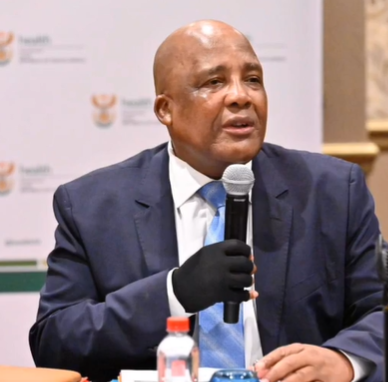
Picture: X/@HealthZA
For more African news, visit Africaninsider.com
Compiled by Betha Madhomu