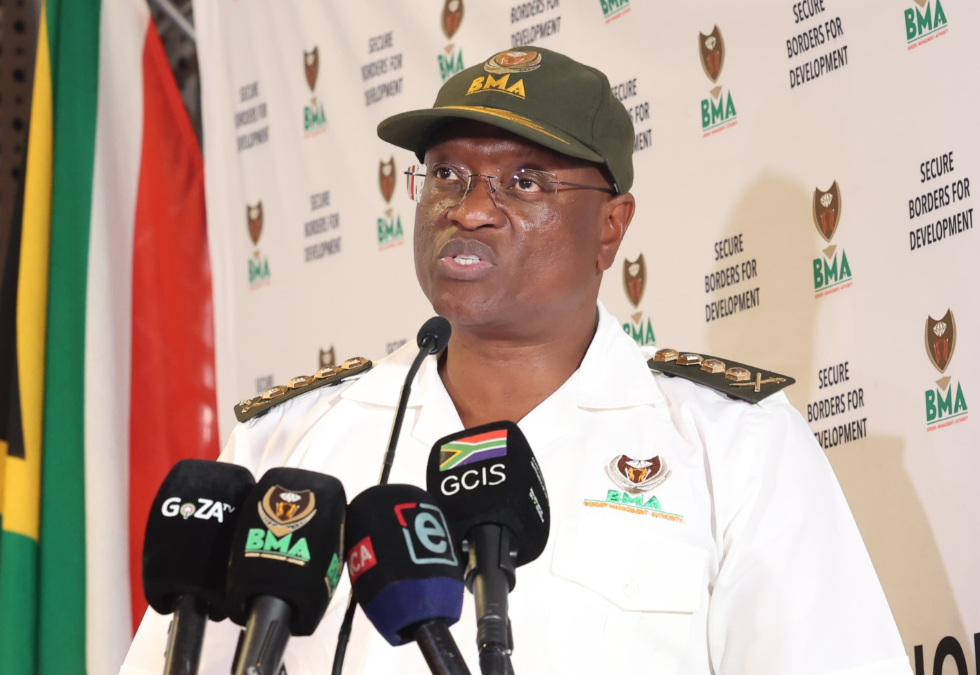
Johannesburg – The Border Management Authority (BMA) has named the successful bidders for the redevelopment of six of South Africa’s busiest land ports of entry under a public-private partnership (PPP) model.
Announcing the outcome on Tuesday, BMA Commissioner Michael Masiapato said the process followed “a fair, transparent, and competitive Supply Chain Management” system after proposals were invited in 2024.
“After all these rigorous processes, all the selected preferred bidders have been found to have complied with all the requirements… hence the decision to announce them today,” he said.
— The Border Management Authority SA (@TheBMA_SA) April 28, 2026
The projects form part of government’s broader strategy to modernise border infrastructure and boost regional trade in line with the African Continental Free Trade Area.
The successful bidders include Baobab Concession for Beitbridge and Oshoek, Raulux Consortium for Lebombo, Kgorong Consortium for Maseru Bridge, Kopfontein Consortium for Kopfontein, and Imbani Consortium for Ficksburg Bridge.
Masiapato said the concessionaires, made up of multiple companies, would undertake phased construction over two to three years depending on the site.
🇿🇦 Commissioner Michael Masiapato:
“Successful bidders have been appointed to lead the redevelopment of six strategic ports of entry.”A major step towards modern, secure, and efficient borders.
🔗 Read more: https://t.co/74MIsuo5v1#DigitalTransformation #SecureBorders… pic.twitter.com/BITw9VFPmV
— South African Government (@GovernmentZA) April 28, 2026
“We have full confidence in them that they will deliver on these key national infrastructure projects within our border environment,” he said.
He added that construction is expected to begin later this year or early next year, pending the finalisation of PPP agreements and financial approvals.
“Based on the current projections, we anticipate that construction will begin later this year or early next year… with phased rollout of the construction work for about two-to-three-year period,” Masiapato said.
The commissioner said government would engage affected communities, municipalities, traditional leaders and business stakeholders in the coming weeks ahead of construction.
The upgrades are also expected to pave the way for the implementation of One-Stop Border Posts and “smart borders” to improve the flow of goods and people across the region.
Masiapato emphasised that the PPP model would help limit corruption risks, noting that private partners would fund construction and be repaid by government over time through a unitary payment system.
“This Public Private Partnership model is seen as a critical strategy to close the vulnerabilities and shun any opportunities for any corrupt tendencies,” he said.
Follow African Insider on Facebook, X and Instagram
Picture: X / @GovernmentZA
For more African news, visit Africaninsider.com
Compiled by Betha Madhomu