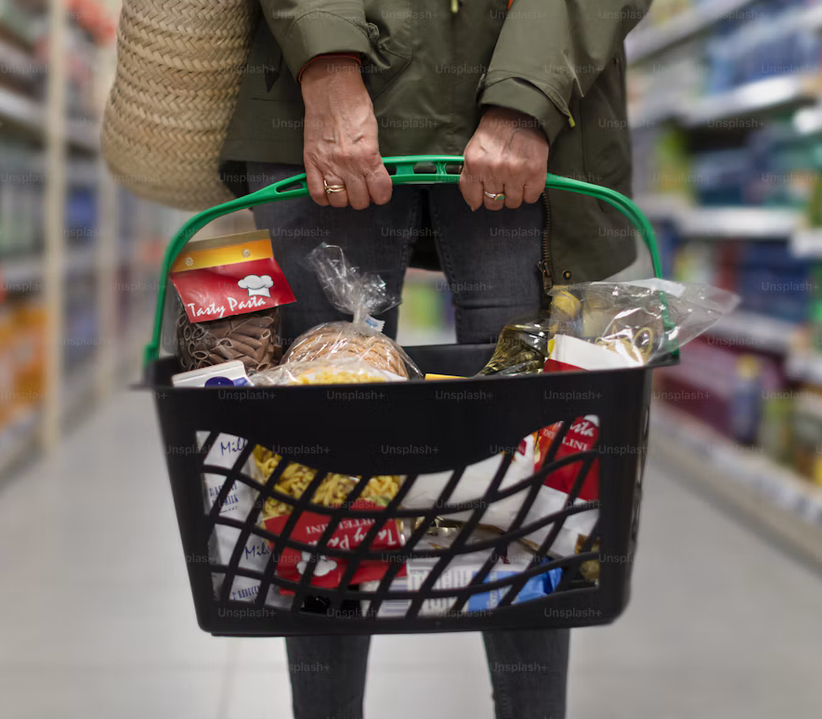
Cape Town – South African households continued to face pressure from the rising cost of basic food in October, with the average Household Food Basket increasing to R5 512.53, according to the Pietermaritzburg Economic Justice & Dignity (PMBEJD) Household Affordability Index.
The basket, which tracks 44 basic food items across 52 supermarkets and 36 butcheries in several urban and rural areas, rose by R24.48 (0.4%) month-on-month, from R5 488.06 in September.
Year-on-year, the basket was R71.94 (1.3%) more expensive, increasing from R5 440.60 in October 2025.
The October figures showed mixed price movements, with 17 of the 44 foods increasing in price while 27 declined.
Among the biggest monthly increases were butternut, which rose by 26%, onions by 11%, tomatoes by 10%, oranges by 6% and margarine by 6%.
The sharpest declines included spinach, down 10%, soup by 5% and cabbage by 5%.
Prices also fell for several meat and staple products, including frozen chicken portions, chicken gizzards, chicken livers, wors, beef tripe, fish, maize meal and peanut butter.
Minimum wage falls short
The affordability crisis becomes more pronounced when food costs are compared with workers’ earnings.
The National Minimum Wage is R30.23 an hour, translating to R241.84 for an eight-hour day. With 22 working days in October, a worker earning the maximum minimum wage could take home R5 320.48 for the month.
However, PMBEJD said workers typically support entire families, rather than themselves alone.
“For Black South African workers, one wage typically must support 4,1 people,” the organisation said.
It added that if the R5 320.48 wage were shared among four people, it would amount to only R1 330.12 per person, below both the National Lower-Bound Poverty Line and Upper-Bound Poverty Line.
The report further found that electricity and transport would consume R3 375.45, or 63.4%, of the monthly minimum wage.
This leaves a worker with R1 945.03 after those two expenses.
But the average cost of a basic nutritional food basket for a family of four was R3 828.72 in October.
PMBEJD said this resulted in a 49.2% food shortfall, equivalent to R1 883.69.
“If all the remaining money (R1 945,03) went to buy food, then for a family of 4, it would provide R486,26 per person per month,” the report said.
That amount is 44% below the National Food Poverty Line of R868 per person per month.
Child support grant also falls short
Children from low-income households were also affected by the affordability gap.
The average monthly cost of providing a child with a basic nutritious diet rose to R975.66 in October, up R5.39 (0.6%) from the previous month and R30.62 (3.2%) year-on-year.
However, the R580 Child Support Grant remained significantly below the cost of feeding a child adequately.
According to PMBEJD, the grant was 33% below the National Food Poverty Line of R868 and 41% below the average cost of a basic nutritious diet for a child.
Food costs vary across regions
The affordability pressure was not uniform across the country.
Food baskets increased in Johannesburg by R87.70, Durban by R51.60, Cape Town by R5.32 and Mtubatuba by R199.47.
Meanwhile, prices fell in Springbok by R42.35, Pietermaritzburg by R123.76 and Mthatha by R22.60.
The report also highlighted a wider gap between what low-income households can afford and what they need for proper nutrition.
PMBEJD’s Basic Nutritional Food Basket for a family of seven cost R6 692.25 in October, compared with R5 512.53 for the standard Household Food Basket.
The R1 179.72 difference, according to the organisation, indicates that low-income households may be spending at least 18% less than required for basic nutrition.
PMBEJD warned that this means the nutritional and health crisis facing poor households may be deeper than suggested by the standard food basket alone.
“As financial and economic circumstances worsen, so too does household health and nutrition,” the report said. “The gap between what women are able to buy for their families and what they need to buy for proper nutrition widens.”
Follow African Insider on Facebook, X and Instagram
Picture: Unsplash
For more African news, visit Africaninsider.com
Compiled by Betha Madhomu