Cape Town – South Africans will face higher borrowing costs after the South African Reserve Bank (SARB) increased the repo rate by 25 basis points, pushing it to 7% and lifting the prime lending rate to 10.5%, in response to persistent inflation pressures.
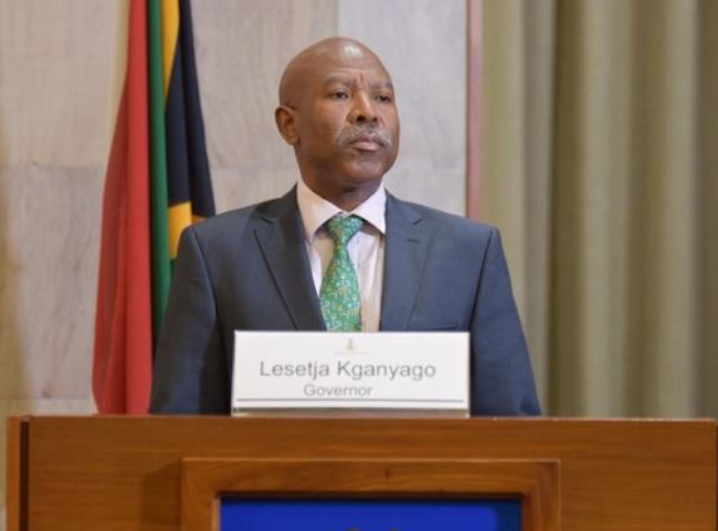
Reserve Bank Governor Lesetja Kganyago said on Thursday that the environment had deteriorated since March, noting that households are being “squeezed” as inflation risks rise. Inflation climbed from 3.1% in March to 4% in April, driven largely by higher energy costs and global shocks.
He warned that “given the forecast, we see upside risks to inflation,” adding that “inflation risks have intensified and the challenge of large and overlapping shocks would likely trigger second round effect requiring a monetary policy response.”
Kganyago also pointed to global uncertainty, including geopolitical tensions and climate-related disruptions, saying these factors are weighing on growth even as South Africa’s underlying economic fundamentals remain stable.
The higher rate means households will pay more on home loans, car finance, and credit cards, with analysts estimating that indebted families could see up to R400 added to monthly expenses for every R1.55 million in combined debt. The increase reflects prime rising from 10.25% to 10.50%.
[WATCH NOW] The South African Reserve Bank Monetary Policy Committee (MPC) is announcing the policy rate decision. Governor Lesetja Kganyago is delivering the May MPC statement. Watch on X: https://t.co/pJtsokXvIL #SARBMPCMAY26
— SA Reserve Bank (@SAReserveBank) May 28, 2026
Market commentators said the move was widely expected due to global oil price volatility, with concerns that prolonged conflict in the Middle East could keep fuel prices elevated and feed into domestic inflation.
Anchor Capital’s Lerato Ntuli said inflation risks remain “skewed to the upside,” warning that higher oil prices could continue driving transport and fuel costs higher.
Investec’s Lara Hodes said the Reserve Bank was acting pre-emptively, noting that “the SARB is likely to hike rates by 25bp… to prevent any second-round effects from becoming embedded in inflation.”
Prescient Securities’ Kristof Kruger added that markets had already priced in the move, with attention now shifting to whether further tightening could follow.
However, some economists and industry players criticised the decision. Seeff Property Group’s Samuel Seeff argued that “the higher inflation is largely imported” and not caused by domestic overspending, warning that further hikes could deepen pressure on already indebted households.
The South African Reserve Bank’s Monetary Policy Committ has increased the repo rate by 25 basis points to 7%, effective from 29 May 2026.
SARB Governor Lesetja Kganyago said four MPC members supported the increase, while two preferred to keep the rate unchanged.
At a media… pic.twitter.com/1RFw7sC8ea
— @SAgovnews (@SAgovnews) May 28, 2026
The rate increase comes against a backdrop of severe household debt stress. The DebtBusters Debt Index shows that consumers earning over R50,000 a month are now using 101% of their take-home pay to service debt, with a debt-to-income ratio of 303%—the highest across all income groups.
The report also found rising reliance on unsecured lending, with 96% of debt counselling applicants holding personal loans and 61% using payday loans, while the average number of credit agreements has climbed to 8.5 per person.
Real wages continue to decline, with average salaries falling to R20,244—the lowest in two years—reducing spending power across households.
Independent economist Elize Kruger warned that ongoing uncertainty could dampen economic activity, saying: “This could negatively impact investment decisions, workforce expansion and earnings expectations for the remainder of 2026.”
Despite concerns, Kganyago maintained that South Africa’s fundamentals remain strong, though acknowledged that global shocks and inflation pressures may keep monetary policy restrictive for longer.
Follow African Insider on Facebook, X and Instagram
For more African news, visit Africaninsider.com
Compiled by Betha Madhomu