Cape Town – Elon Musk’s SpaceX has offered to provide free high-speed internet to more than 5,000 rural schools in South Africa, potentially benefiting 2.4 million learners annually, but the proposed R500 million investment remains tied to a regulatory dispute over telecommunications ownership requirements.
US Ambassador to South Africa Leo Brent Bozell III said Musk was prepared to fund school connectivity indefinitely through his satellite internet company, Starlink.
The proposal was submitted in 2025 as part of Starlink’s attempt to secure approval to operate in South Africa. It would provide fully funded satellite equipment and internet services to rural schools, helping address connectivity gaps that limit learners’ access to digital educational resources.
BREAKING: US Ambassador to South Africa Leo Bozell slams the government for blocking Starlink’s offer of free internet for 5,000 schools.
“Everyone would agree that Starlink is a great idea for South Africa. Starlink is a great idea in every single nation on earth because of what it’s been able to do. … The government said, we want 30% of that company here, which of course is preposterous. And Elon Musk is never going to do that. … They said, no, we want 30% of your company. So he said, go pound sand. I’ll go in every other country on planet earth.”
— DogeDesigner (@cb_doge) October 22, 2026
According to MyBroadband, in a letter to Trade, Industry and Competition Minister Parks Tau dated 14 June 2025, Starlink’s senior director of market access, Ryan Goodnight, said: “Today, millions of children are being denied access to education resources because SA broadband networks do not extend to the most rural parts of the country. This is a problem we want to help solve.”
Business Day reported that the proposed programme could improve access to digital learning for approximately 2.4 million children each year while supporting the government’s SA Connect broadband expansion programme.
Ownership dispute blocks rollout
The central obstacle is South Africa’s telecommunications licensing framework, which requires at least 30% ownership by historically disadvantaged groups for individual licence holders. Starlink has argued that it should be allowed to meet its empowerment obligations through an Equity Equivalent Investment Programme (EEIP), rather than transferring an ownership stake in its local operations.
The company says such programmes would allow foreign businesses to contribute directly to transformation through investments in education, infrastructure and other development initiatives.
In its official submission to the government, Starlink stated: “Starlink has never sought an exemption from B-BBEE laws, nor have we asked for any special treatment.”
However, the Independent Communications Authority of South Africa (ICASA) has maintained that telecommunications operators must comply with the applicable licensing framework. Regulatory changes remain necessary before equity-equivalent investments can be accepted as a substitute for the ownership requirement.
The debate is not without opposition. In January 2026, parliamentary communications portfolio committee chairperson Khusela Sangoni Diko argued that Starlink should not undermine existing empowerment legislation, pointing to commitments by established mobile operators to connect more than 22,000 schools. MyBroadband reported her position.
More recently, NovaNews reported on 26 October 2026 that the proposed school connectivity programme remained stalled, with the ownership requirements still unresolved.
The impasse leaves a substantial education investment on hold, highlighting the tension between South Africa’s economic transformation policies and efforts to expand affordable digital access in underserved communities.
Follow African Insider on Facebook, X and Instagram
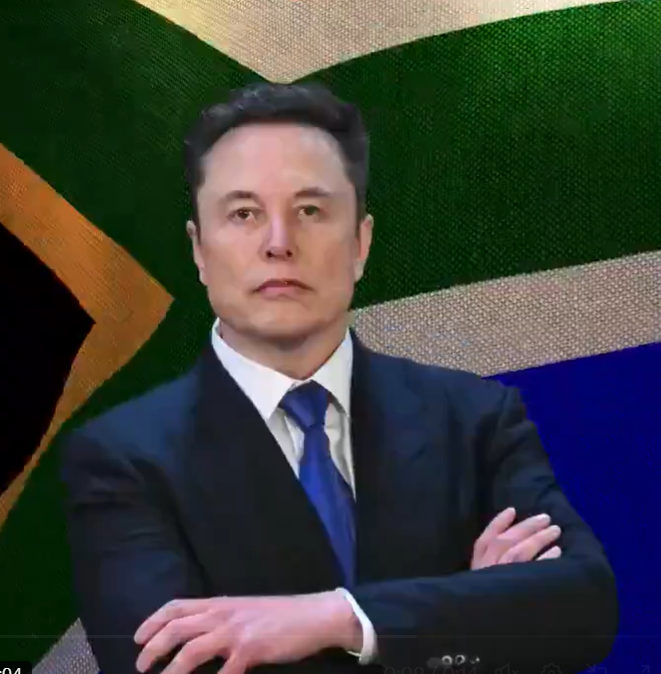
Picture: Screengrab
For more African news, visit Africaninsider.com
Compiled by Betha Madhomu