Cape Town – Political parties have welcomed Finance Minister Enoch Godongwana’s decision to introduce temporary fuel levy cuts, but warned that the relief announced in the 2026 Medium-Term Budget Policy Statement (MTBPS) will do little to address South Africa’s underlying economic challenges.
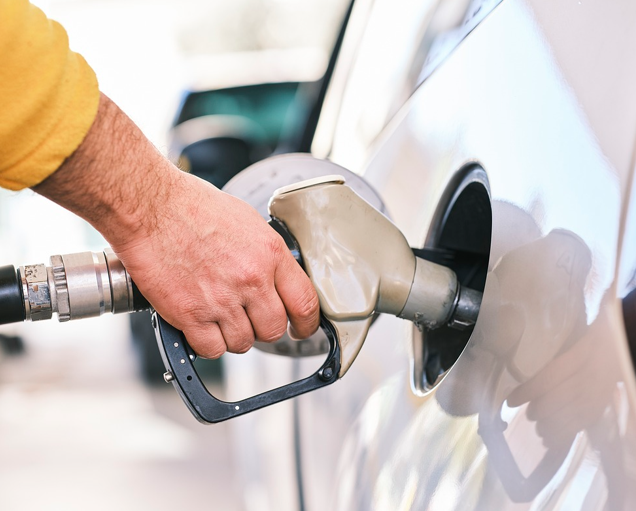
The relief, announced in Parliament on Wednesday, will reduce the general fuel levy by R1.50 per litre for petrol and R3 per litre for diesel from 4 November to 1 December 2026. The cuts will then be reduced to R1 per litre for petrol and R1.50 per litre for diesel until 5 January 2027.
The measures are expected to provide R10 billion in relief to households and businesses grappling with rising fuel prices, transport costs and food inflation.
However, as reported by The Citizen, opposition parties have questioned whether the temporary intervention is sufficient to ease the cost-of-living crisis and stimulate economic growth.
Economic growth
ActionSA’s Athol Trollip welcomed the immediate relief but criticised the government’s broader economic performance. According to The National, Trollip likened the intervention to “applying a plaster to a septic wound”, arguing that temporary measures would not resolve the country’s deeper economic problems.
The criticism comes as Treasury revised South Africa’s economic growth forecast for 2026 down from 1.6% to 1.2%, highlighting the difficulty of creating jobs and improving household incomes amid sluggish economic activity.
The Democratic Alliance (DA), meanwhile, backed the government’s fiscal consolidation efforts but called for structural reforms to deliver more sustainable relief to motorists.
Speaking to Moneyweb, the DA’s Kingsley Wakelin said the party wanted a longer-term solution to high fuel costs, including reform of the Road Accident Fund (RAF).
“Our view is that one of the primary issues to address is to reduce the Road Accident Fund [RAF] levy, alongside urgent reform of the RAF, which offers a practical way forward,” Wakelin said.
Inadequately managed system
He warned that motorists should not continue bearing the cost of an inadequately managed system without reforms to improve its financial and operational performance.
According to eNCA, the DA also stressed the need for economic reforms to accelerate growth and employment.
“The minister has laid a foundation for this country now to move to the next frontier and the next frontier is clear structural reform and economic growth,” DA representative Kingsley Wakelin said.
Meanwhile, African National Congress (ANC) secretary-general Fikile Mbalula defended the budget, saying it would help shield households from rising food and transport costs.
“In a hard year, the minister has done the thing that a budget does not always manage to do. He has reached into the pocket of the working family and left a little more there,” Mbalula said, according to SABC News.
Repeated fuel levy reductions
The government said the R10 billion intervention would be funded by returning money previously allocated to the Central Energy Fund to the National Revenue Fund, allowing the relief to be implemented without compromising the fiscal framework.
However, the temporary nature of the cuts has raised questions about what will happen when they expire in January, particularly if international oil prices remain elevated.
As Moneyweb reported ahead of the MTBPS, economists had cautioned that repeated fuel levy reductions could put pressure on public finances and create expectations of government intervention whenever fuel prices rise.
The broader challenge for government remains translating improved fiscal stability into stronger economic growth, job creation and lasting relief for households struggling with the rising cost of living.
Follow African Insider on Facebook, X and Instagram
Picture: Pixabay
For more African news, visit Africaninsider.com
Compiled by Betha Madhomu