Section 63 in Action: Rand Water’s structural reset of Emfuleni’s wastewater system
There is something profoundly revealing about how a nation treats its wastewater. It is not glamorous, not appealing, yet it remains central to public debate precisely because it is foundational to human dignity. Wastewater infrastructure lies beneath the surface, but it determines whether dignity is preserved or eroded. In Emfuleni Local Municipality, that reality has, for years, been tested. Today, through the decisive application of Section 63 intervention measures, there are clear signs of renewal – driven in large part by the steady, technical leadership of Rand Water. What is emerging now, through the application of Section 63, is not merely recovery – but a strategic reassertion of capability, led with notable precision by Rand Water.
The Sedibeng Regional Sewer Scheme (SRSS), implemented by Rand Water under Section 63, represents more than an infrastructure project; it is a deliberate act of reclamation. It acknowledges past infrastructure collapse while asserting that decline is neither inevitable nor irreversible. By stepping into a complex and often fragile municipal environment, Rand Water has begun restoring systems essential to public health, environmental protection, and economic development.
The scale and substance of the work already completed speaks volumes. The delivery of the Rothdene pump station and its associated bulk pipeline to Midvaal Local Municipality has strengthened regional capacity and improved system reliability. In Emfuleni, the construction of the 50-megaliter Module 6 at the Sebokeng Wastewater Treatment Works stands as a defining achievement – the first major addition of wastewater treatment capacity in over three decades. This milestone signals not only progress in infrastructure provision but a renewed sense of institutional momentum.
Equally important has been the rehabilitation of existing assets. At Sebokeng, Leeuwkuil, and Rietspruit wastewater treatment works, targeted civil, mechanical, and electrical upgrades have restored functionality to facilities that had long operated under strain. These were not cosmetic interventions, but deliberate upgrades that directly impact compliance, environmental outcomes, and service delivery. Today, Sebokeng operates at 150 megaliters per day, positioning it as one of the largest facilities in Gauteng and a critical anchor for development in the broader Sedibeng region.
This progress has not gone unnoticed. The Parliamentary Select Committee on Cooperative Governance and Public Administration, during its oversight visit on Friday, 17 April 2026, witnessed firsthand the upgrade work at the Leeuwkuil Wastewater Treatment Works. Together with local councillors and stakeholder groupings, the Committee expressed satisfaction with the progress achieved and the meaningful difference Section 63 intervention has made – particularly commending Rand Water’s role in infrastructure upgrades and improved compliance with required standards. Stakeholders present at the Select Committee engagement were equally aligned in recognising the tangible impact of the intervention, noting both the visible improvements in infrastructure and the strengthening of operational performance across the system.
What distinguishes this intervention is not only the infrastructure built and delivered, but how it has been delivered and the governance architecture enabling it. Section 63 has enabled a model of cooperative governance where national oversight, technical expertise, and local accountability intersect. Rand Water’s role as an implementing agent has introduced stability, engineering excellence, and project discipline into a space that requires all three. The results are increasingly visible: reduced sewage spillage, improved operational performance, and growing stakeholder confidence. Within this framework, Rand Water has demonstrated a level of project discipline, engineering competence, and operational consistency that is often aspired to but seldom achieved in complex infrastructure environments.
Importantly, the experience in Emfuleni reflects a broader national pattern. Section 63 interventions have delivered measurable benefits in municipalities across all provinces where they have been implemented. This reinforces the effectiveness of funded national intervention when coupled with the technical and operational capability of Water Boards. It also highlights the importance of municipal cooperation, which, when present, strengthens outcomes and underpins the overall effectiveness of collaboration across the water services value chain.
Operating within the municipal space under the directive of Section 63 has also created an enabling environment for institutional innovation. In Emfuleni, this has taken the form of a public-to-public partnership between Rand Water and the municipality through the establishment of a Special Purpose Vehicle (SPV) – the Vaal Corporation Water Utility, launched on 14 November 2025. This development represents a strategic evolution from intervention to long-term sustainability, providing a structured mechanism for ongoing service delivery, asset management, and operational stability.
The establishment of the Vaal Corporation Water Utility has been widely welcomed. Stakeholders engaging with the Parliamentary oversight process recognised it not merely as an extension of the intervention, but as a potential permanent solution to longstanding municipal challenges. It reflects a shared understanding that while Section 63 interventions are catalytic, durable solutions require institutional continuity beyond the lifespan of the intervention itself.
At the same time, Rand Water has been clear-eyed about the work that remains. While sewage spillage has been significantly reduced, some areas continue to experience challenges, and these are actively being addressed. This acknowledgment underscores an important truth: infrastructure renewal is not a finite task, but an ongoing commitment requiring sustained attention, maintenance, and investment. The Emfuleni experience offers more than a success story – it provides a working model. It demonstrates that where institutional capability is matched with structured oversight and clear mandates, even deeply compromised systems can be stabilised and rebuilt. The task ahead is to sustain this trajectory, ensuring that the gains realised under Section 63 are not only preserved but expanded.
At its core, the Section 63 intervention in Emfuleni is about restoring dignity through reliable service delivery. Sanitation is not an abstract policy goal; it is a lived daily reality. When systems fail, communities bear the consequences. When they are restored, the benefits extend beyond infrastructure – into health, local economies, and public trust.
Rand Water’s continued commitment to working collaboratively with the National Government speaks to a broader national imperative: protecting strategic water resources while restoring dignity to communities. This partnership reflects a shared understanding that infrastructure delivery, when done properly, is both a technical and moral responsibility.
The work undertaken in Emfuleni demonstrates what is possible when technical capacity aligns with institutional commitment. It offers a practical blueprint for supporting struggling municipalities – not through temporary fixes, but through sustained, structured intervention. The challenge now is to maintain this trajectory, ensuring that the gains achieved under Section 63 are consolidated and extended.
If success is to be measured meaningfully, it will not rest only on infrastructure delivered, but on infrastructure sustained. In Emfuleni, that journey is well underway. And for the first time in many years, the foundations beneath the surface are being rebuilt with purpose, precision, and a clear sense of public responsibility. The Emfuleni experience illustrates a critical policy lesson: structural challenges require structural intervention, and the value of Section 63 lies precisely in its ability to enable such structured responses, anchored by capable implementing agents such as Rand Water in restoring both systems and public trust.
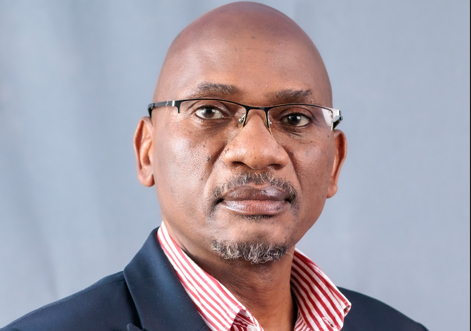
Ramateu Monyokolo is the Chairperson of AWSISA and Rand Water Board.