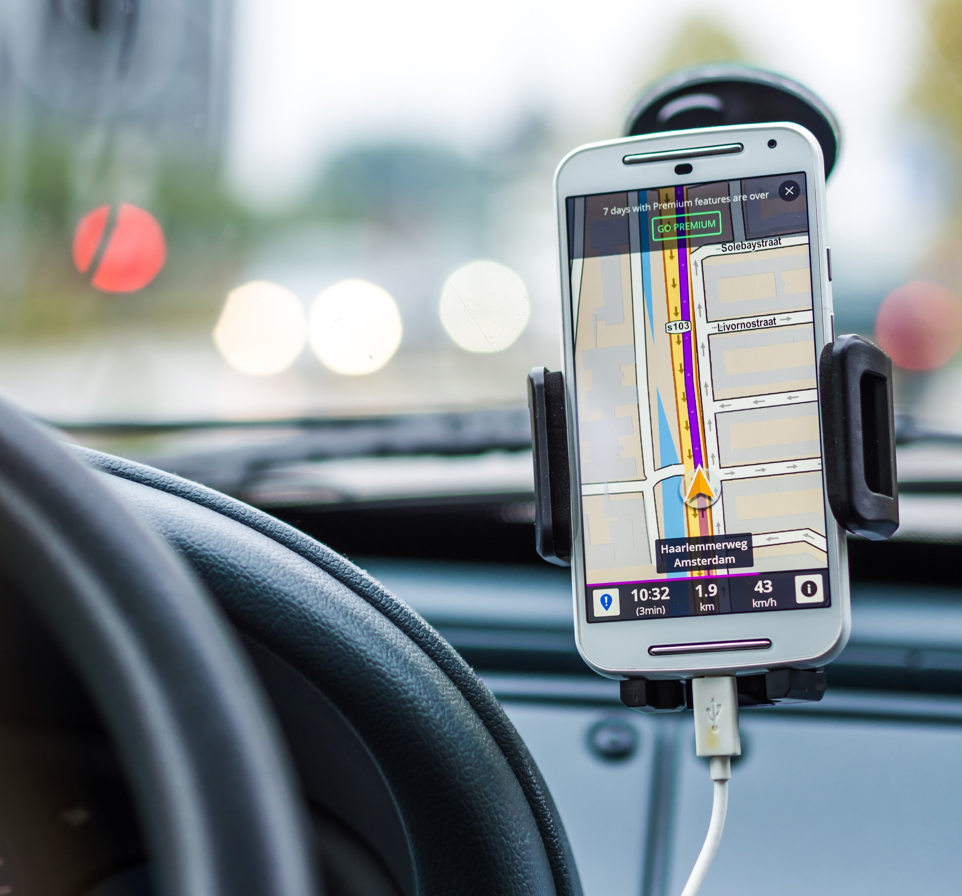
Cape Town – South African motorists have been warned against blindly following GPS navigation instructions after security specialists raised concerns that applications such as Google Maps and Waze could direct drivers through dangerous areas, particularly at night.
The warning follows an incident involving private investigator Brad Nathanson, who recently arrived in Johannesburg and used GPS directions to travel from the airport to his accommodation in Sandton.
Nathanson said the navigation application directed him away from major roads and highways, taking him through Alexandra township after dark.
Describing the experience, he said: “It was pitch dark. Refuse was burning at numerous points along the roads. There were huge numbers of people in the streets and taxis everywhere.”
He added: “Traffic lights weren’t working, and there was virtually no street lighting. I had absolutely no idea what was happening or where I was.”
Despite having more than 46 years of experience in law enforcement and investigations, Nathanson said he felt extremely uncomfortable navigating the unfamiliar area.
Security specialist Mike Bolhuis cautioned that GPS applications are designed to assist with navigation, traffic updates and route planning but cannot guarantee motorists’ safety.
“Drivers who follow instructions without assessing their surroundings may encounter unfamiliar roads, poor lighting, infrastructure problems, road closures or vulnerable situations,” Bolhuis said, according to Newsday.
The concerns are not new, with previous incidents highlighting the potential dangers of relying exclusively on navigation applications in South Africa.
In November 2023, TimesLIVE reported that American tourist Walter Fischel was shot and robbed after following GPS directions through Nyanga in Cape Town while travelling from the airport to Simon’s Town.
Security concerns
The incident prompted the US government to issue a travel safety alert warning its citizens that the shortest and fastest routes suggested by GPS applications could expose them to criminal risks.
The advisory urged travellers to investigate their routes in advance, remain on major highways and avoid shortcuts through townships.
The issue was also highlighted following the fatal shooting of British surgeon Kar Hao Teoh in Nyanga in 2023.
According to Africanews, Google subsequently announced that Google Maps and Waze would no longer direct motorists through Nyanga and surrounding areas because of security concerns.
More recently, the Cape Argus reported that the City of Cape Town had engaged Google, Waze and Apple Maps to help prevent navigation applications from directing motorists through crime hotspots along the N2 and R300.
Popular navigation systems
City’s Mayco Member for Safety and Security, JP Smith, said the engagement had resulted in a significant decrease in crime incidents, although road safety advocates disputed this assessment.
The concerns are also supported by academic research. A 2024 study published in the Journal of Transportation Security, titled What’s the safest way home? Mapping safe transport routes in South Africa with (and without) crime data, found that popular navigation systems did not give crime risks the same consideration as traffic conditions when recommending routes.
Against this background, Bolhuis and Nathanson have urged motorists to check their routes before departing, particularly when travelling at night or through unfamiliar areas.
They also recommend prioritising major roads, preparing alternative routes, enabling traffic alerts and avoiding unnecessary stops in potentially unsafe locations.
Bolhuis stressed that GPS applications should be treated as navigation aids rather than authorities on road safety, urging motorists to use their judgement and change direction when circumstances warrant it.
Follow African Insider on Facebook, X and Instagram
Picture: Pixabay
For more African news, visit Africaninsider.com
Compiled by Betha Madhomu