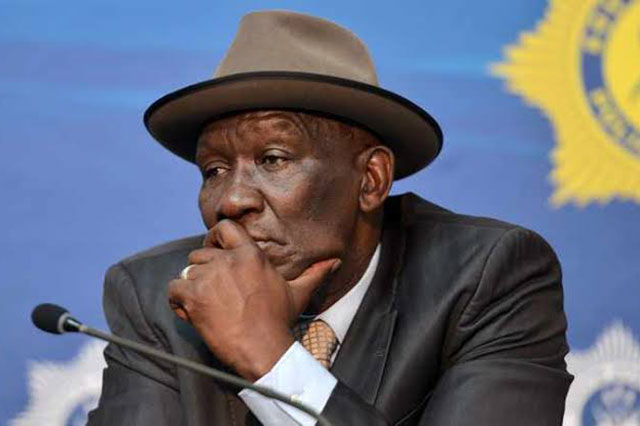
Cape Town – Former police minister Bheki Cele has told the Khampepe Commission of Inquiry into Truth and Reconciliation Commission (TRC) cases that he was instructed by his then-commander, Jacob Zuma, to leave South Africa and operate underground during the apartheid era.
Testifying before the commission, Cele said he was repeatedly arrested by the apartheid security forces, making it increasingly difficult for him to continue his political activism.
“I was arrested almost every week and released. The belief was that I had become one of the people targeted for elimination. I was no longer functional as an activist because I spent most of my time in hiding,” Cele said.
He told the inquiry that Zuma, who was based in Maputo at the time, instructed him to leave the country through an underground network.
Former Police Minister Bheki Cele has detailed how he left South Africa to operate underground on the instructions of his then-commander, Jacob Zuma.
Cele is testifying before the Khampepe Commission (TRC Cases Inquiry) pic.twitter.com/EBF95nfT21
— News Live SA (@newslivesa) July 14, 2026
“The message came through a contact in Lamontville that my commander had instructed me to leave the country. My commander was Jacob Zuma, who was based in Maputo at that particular time,” he said.
Before departing, Cele said he bid farewell to his foster mother, Mrs Mandela, uncertain whether he would ever see her again.
He was moved from Durban to Soweto, where he spent three weeks in safe houses during what was described as a “cooling-off period” before crossing the border into Eswatini. From there, he was expected to travel to Maputo, Mozambique.
However, Cele said he was arrested by border officials on arrival and detained for 27 days.
“I was taken to a police station where I was kept for 27 days without baths because there was a belief that if you bathed, you would run away,” he told the commission.
After negotiations, Cele said he was eventually taken to Maputo, where he was debriefed by Zuma and Solly Rabkin, whom he described as the commanders of his unit.
According to IOL, Cele also told the inquiry that he was largely unaware of unresolved TRC cases during his tenure as national police commissioner, as his attention was focused on preparations for South Africa’s hosting of the 2010 FIFA World Cup.
“I don’t think much attention was brought to me about the TRC cases,” he said.
Cele added that any such investigations would have fallen under the then head of the Hawks, General Anwa Dramat.
He said he only became more involved with TRC-related matters after being appointed minister of police.
“I must admit that my engagement with these Truth and Reconciliation Commission cases came more when I was minister than when I was National Commissioner,” Cele said.
Follow African Insider on Facebook, X and Instagram
Picture: X/ @TheTruthPanther
For more African news, visit Africaninsider.com
Compiled by Glaan Sibuyi