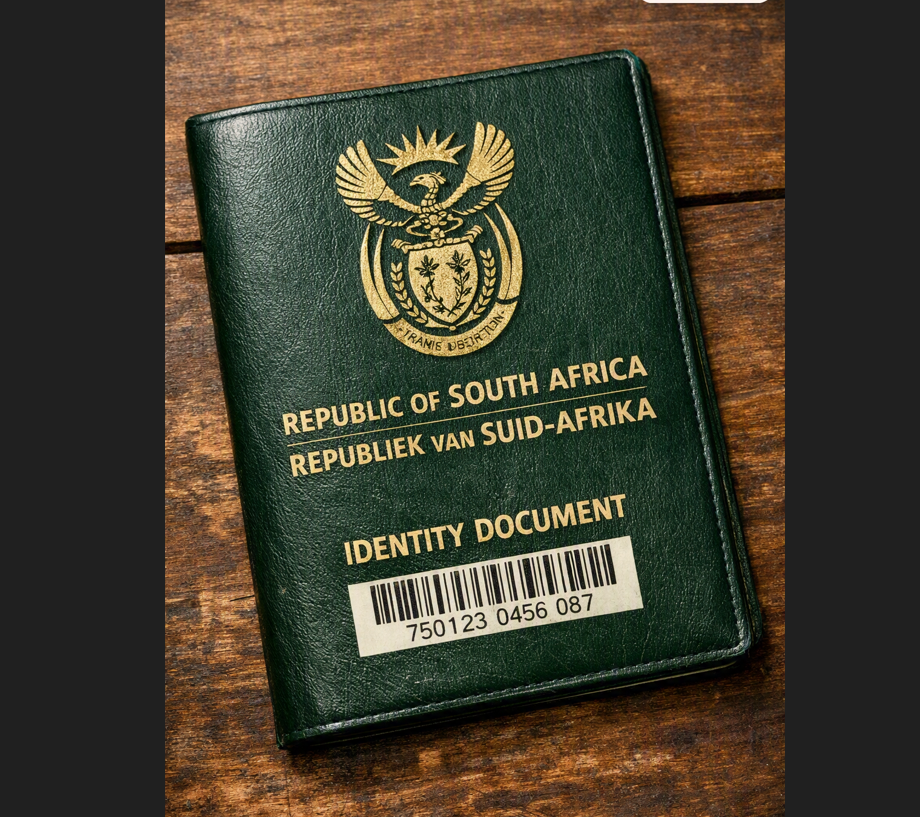
Johannesburg – South Africa’s decades-old green identity document is set to disappear, with Home Affairs Minister Leon Schreiber announcing that production will end on 31 March 2027 as government accelerates the transition to Smart ID cards and digital identity systems.
Schreiber made the announcement on Thursday during Home Affairs’ Quantum Leap: A Vision for the Future of Government event at Constitution Hill.
“The continued use of the Green ID Book is irreconcilable with the functioning of a modern society,” Schreiber said. “On 31 March 2027, the machines that produce this booklet will be permanently shut down and decommissioned.”
The minister described the green ID book as one of the continent’s most fraud-prone identity documents, saying its replacement would strengthen identity security and reduce identity theft.
Schreiber said the government’s digital transformation programme would ensure that eligible South Africans have access to secure identification.
“For the first time ever, every single eligible person will be able to obtain a secure Smart ID card. This is a quantum leap into the future for our country,” he said.
WATCH | Home Affairs Minister Dr Leon Schreiber says production of the green ID book will end on 31 March 2027, with a 12-month transition period for South Africans to migrate to Smart IDs. After 31 March 2028, green ID books will no longer be recognised. pic.twitter.com/xNVifJKDqF
— SABC News (@SABCNews) October 1, 2026
More than 515 bank branches are already offering biometric Smart ID replacement services, with more than 822,000 citizens having used the service. The number of participating service points is expected to exceed 1,000 by the end of 2026.
The department is also introducing home delivery for IDs and passports, while visa processing through the Electronic Travel Authorisation (ETA) system has been reduced to as little as 24 hours.
Schreiber also unveiled a working Digital Identity credential linked to his smartphone, saying the system was intended to give citizens greater control over their personal information.
“Surveillance is the state watching the citizen. What we are building is the opposite: the citizen watching the state and other users of their data,” he said.
Another major component
The minister further announced plans for a biometrically secured ePassport and the modernisation of six major land ports through a R12.5 billion public-private partnership, including automated gates aimed at reducing delays and opportunities for corruption.
Another major component of the programme is a campaign to formally document South Africans who remain without recognised identity documents.
“By the end of this administration in 2029, every last South African citizen will be formally documented for the first time in our history,” Schreiber pledged.
Schreiber said the reforms were ultimately about restoring dignity and confidence in government services.
“By eliminating the fraud-prone Green ID book and documenting every last citizen, we are restoring the hope that South Africa can be fixed – and delivering dignity for all,” he said.
Follow African Insider on Facebook, X and Instagram
Picture: Copilot
For more African news, visit Africaninsider.com
Compiled by Betha Madhomu