Africa’s secret ingredient in the global MICE (meetings, incentives, conferences and events) mix is its ‘bleisure’ appeal. The unique flavour lies in what happens around the meetings, where business blends into leisure (known as bleisure). Delegates attend their conference and are then offered cultural, heritage or nature-based experiences that transform their business trip into a holistic travel experience.
This can include anything from wildlife safaris, unspoilt beaches and mountains, adrenaline sports such as bungee jumping or sandboarding, to private dining and vineyard tours. Some MICE travellers – particularly those on incentive trips – see their bucket-list items come true with a helicopter flight over Vic Falls, a visit to Nelson Mandela’s former prison cell on Robben Island, a walking safari in Kruger Park, hot-air ballooning over the Masai Mara or gorilla trekking in Rwanda. A strong bleisure offering can encourage high-value business travellers to extend their trip or return for a family holiday, and possibly spark interest in investment opportunities in the region.
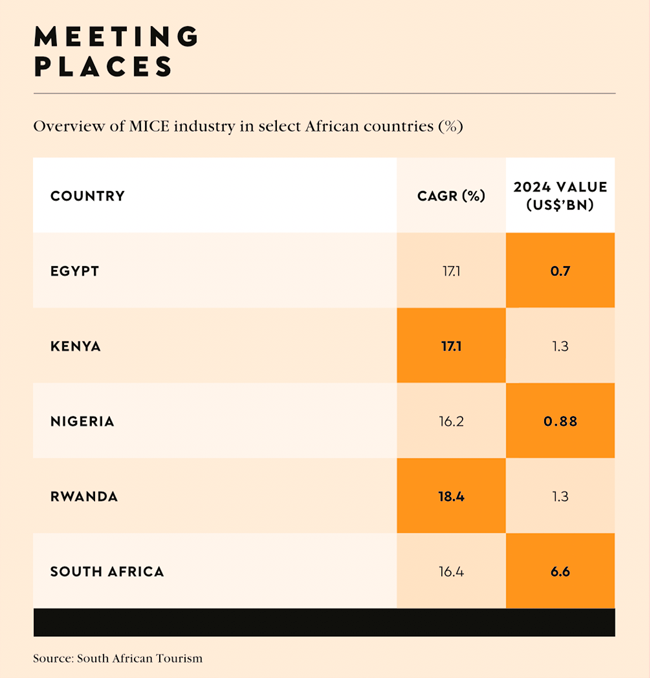
Africa’s MICE industry was worth about US$16.6 billion in 2023, according to Allied Market Research. The market is forecast to reach US$65.6 billion by 2032, which highlights the sector’s rapid expansion at an average annual growth of nearly 17%. The industry has rebounded after the global Covid-19 slump of early 2020 to mid-2022. Since then, Africa’s strategy has evolved from simply attracting more conferences to adopting a ‘whole-of-place’ or ecosystem approach that positions MICE as a driver of broader economic development – boosting investment, innovation, skills transfer and social upliftment. As African cities improve their convention facilities and connectivity, the MICE sector generates far-reaching benefits for airlines, hotels, restaurants, transport operators and a wide range of local service providers.
‘Importantly, the success of modern MICE events is increasingly measured not by attendance numbers alone, but by tangible outcomes: deals signed, investments secured, partnerships formed and innovations launched,’ according to Africa MICE Hub, a Kenya-based platform aimed at transforming the business events ecosystem. Africa MICE Hub intends to support start-ups and growth-stage businesses while linking convention bureaus, tourism agencies, academia and destination managers into a unified ecosystem that drives economic growth. Its goal is to position Africa as a premier destination for business events. ‘This includes linking events to key sectors such as trade, technology, tourism and even sports, creating year-round engagement opportunities and sustained economic impact,’ says the organisation.
Cape Town offers a practical example of this approach. It was once again ranked Africa’s top destination for international business association meetings by the International Congress and Convention Association (ICCA) Globewatch Business Analytics 2025 report. Kigali (Rwanda) ranks second, followed by Nairobi (Kenya), Marrakech (Morocco) and Johannesburg. Stellenbosch entered Africa’s top 10 for the first time, marking an important development for smaller destinations. However, the ICCA’s strict criteria only consider international association meetings that are recurring and rotate between at least three countries, so the ranking excludes incentive travel, expos, trade shows and any corporate or government conferences.
Wrenelle Stander, CEO of the Western Cape’s official tourism, trade and investment promotion agency, Wesgro, attributes Cape Town’s ICCA ranking to the joint efforts of the Cape Town and Western Cape Convention Bureau and its partners. ‘Through strategic bidding and destination promotion, the convention bureau continues to attract confe-rences that deliver long-term economic value for the region,’ said Stander. In the 2024/25 financial year, the bureau secured 30 highimpact business event bids across diverse sectors, channelling about ZAR683 million into the provincial economy. The bureau anticipates that the hosting of meetings in sectors such as healthcare, technology, academia, science and sustainability will help transform the region into a leading destination for knowledge-based events.
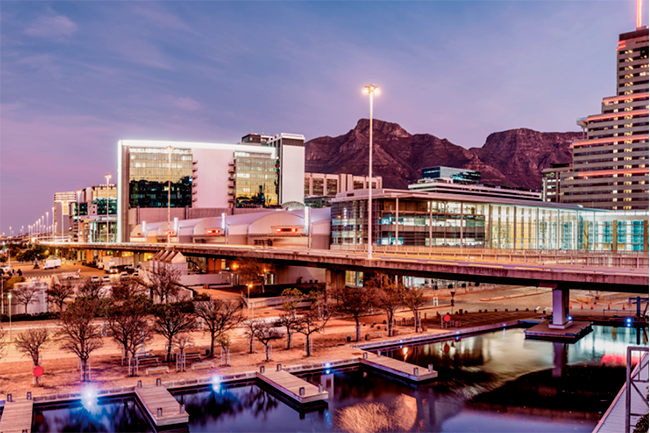
In total, South Africa has successfully bid for 66 international and regional conferences in the 2025/26 financial year, likely to contribute more than ZAR1.2 billion to the economy between 2025 and 2030. In line with the new Beyond Cities MICE strategy, some of these events will be hosted in smaller destinations such as Bela-Bela, Grabouw, Hermanus, Makhanda, Mbombela, Polokwane, Skukuza and Sun City.
Corne Koch, chief convention bureau officer for the South African National Convention Bureau, told Tourism Update that ‘expanding the geographic spread of business events to secondary cities, smaller towns and nature-based destinations will be important to ensure the benefits of the sector are more widely distributed across the country, particularly where these destinations have the infrastructure, access and local support required to host quality business events’.
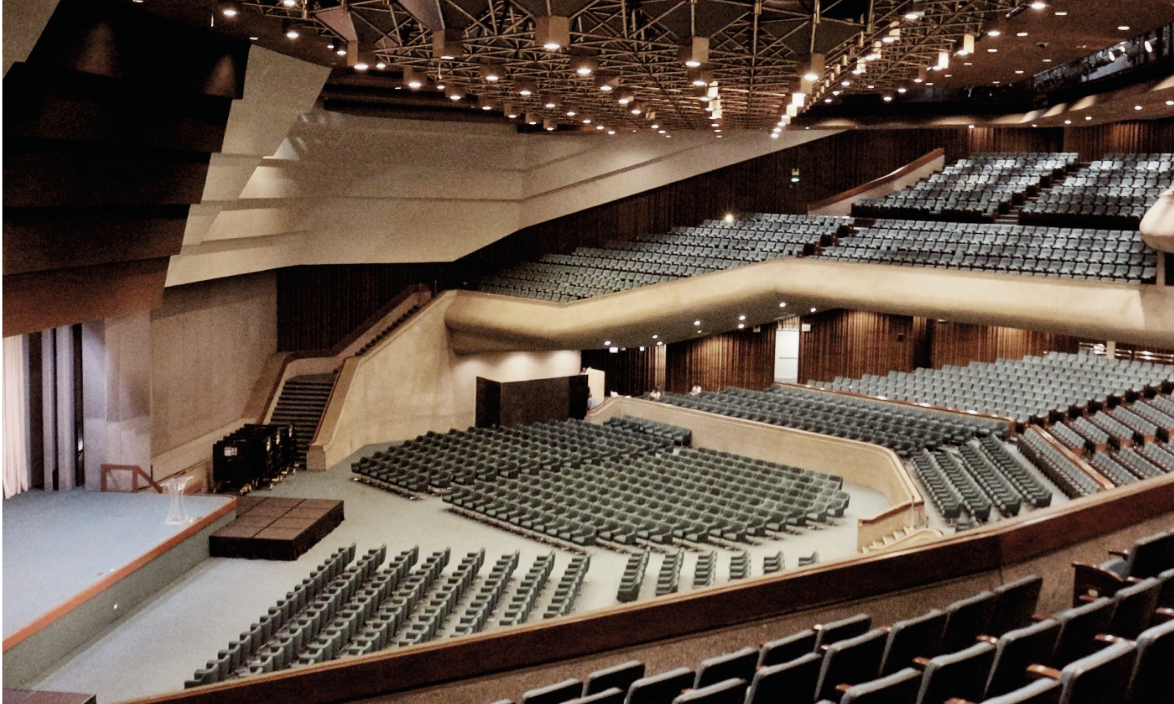
That ambition, however, will only work in mature MICE markets such as South Africa. The continent’s events infrastructure is uneven, according to Niche Partners, a specialist MICE consultancy. While South Africa, Kenya, Rwanda, Morocco and Egypt have world‑class convention centres and active bureaus, many other countries are still in early stages with fragmented facilities. Major new builds, such as Kenya’s 11 000-seater Bomas International Convention Complex, Ethiopia’s 40 ha Addis International Convention Centre and Angola’s 3 000-seater Luanda Convention Palace, showcase the continent’s ambition to host global events.
Infrastructure is only part of the equation. Niche Partners’ African Perspectives on the MICE Industry 2024/25 report highlights the importance of building institutional capacity. ‘Supporting the development of convention bureaus and MICE associations will help professionalise the industry,’ says the report. Another growth lever is the development of national MICE strategies. ‘Countries need to treat MICE as a core economic sector, not just a tourism subset,’ it says. Yet only nine of the 18 countries analysed have such strategies. While MICE is increasingly recognised as a driver of growth, most African markets still lack integrated policies or structures to support its full development.
But things are happening. Mozambique unveiled its MICE strategy at IMEX Frankfurt 2026, the global MICE expo. ‘The role of the government is to create the conditions for events – whether public or private – to take place,’ said government spokesperson Inocêncio Impissa. He explained that business travellers spend between two and four times more than leisure tourists, which is one of the reasons Mozambique is preparing to launch a convention bureau.
Rwanda, whose capital Kigali ranks consistently among Africa’s top three MICE destinations, illustrates how a national strategy can attract business events. Its government treats MICE as a national priority sector and financially underwrites competitive international congress bids. Its policies include visas on arrival and investment incentives for international hotel brands.
The Rwanda Convention Bureau leads the bidding and destination marketing, helping the country’s transition from a pure leisure destination to a knowledge-based MICE hub. In addition to the flagship Kigali Convention Centre, there is Intare Conference Arena and large-scale facilities such as BK Arena and Amahoro Stadium, with hotels clustered around the convention centre.
East African neighbour Kenya has taken inspiration from the unified, single-mandate structure that has made Kigali so successful. At IMEX 2026, Kenya announced its new Meet Nairobi strategy, under which the government-run Convention Bureau will now co-ordinate bids, marketing and stakeholder engagement. The competition with Kigali is healthy as ‘it drives infrastructure investment, policy reform and professional standards improvement in both markets’, according to the Meet Nairobi team. ‘The collaboration is also real. ICCA’s African Chapter advocates explicitly for joint regional propositions, multi-destination congress itineraries and shared destination marketing that positions East Africa as a single, exceptional region – one too large and too varied for any single city to represent alone.’
The continent’s MICE industry is entering a new phase, where destinations compete and collaborate to host business events as catalysts for economic growth. And it’s the bleisure appeal that adds another layer of global competitiveness: Africa’s culture and nature-based experiences that can leave delegates with memories to last a lifetime.