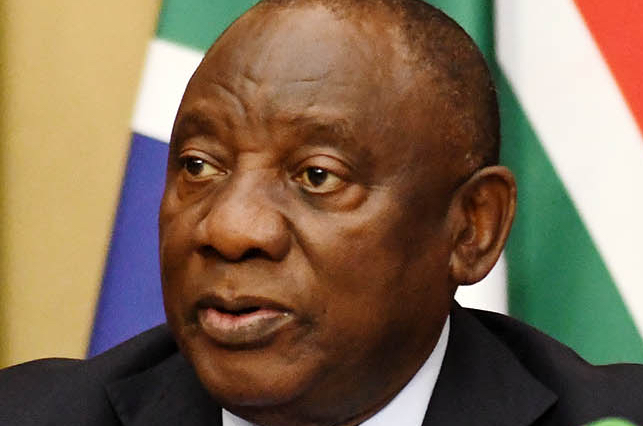
Johannesburg – President Cyril Ramaphosa has ordered urgent government action to tackle gender-based violence and femicide (GBVF), including a national review of unresolved murders, rapes and serious sexual offences involving women and children.
The measures follow the discovery of multiple women’s bodies in Ekurhuleni since July, which has renewed public anger over the country’s response to violence against women.
Addressing the nation on Tuesday night, Ramaphosa acknowledged that government had failed to do enough to protect women.
“What we have done has not been enough. We need to do much more,” he said.
Ramaphosa ordered a national case-recovery operation targeting unresolved murders, attempted murders, rapes and serious sexual offences involving women and children.
For too long, gender-based violence has been treated as a women’s problem to solve.
Women march, organise, protest and comfort survivors.
Women change their routes home, avoid going out at night and warn one another about dangerous places and dangerous men.…
— Cyril Ramaphosa 🇿🇦 (@CyrilRamaphosa) September 29, 2026
The police and Justice Department must conduct an audit within 60 days, identifying unresolved cases, cases awaiting forensic evidence, suspects who have not been arrested and matters where investigations or prosecutions have been delayed. Recovery plans for priority cases must then be in place within 90 days.
The second measure targets forensic backlogs. Ramaphosa ordered authorities to develop a funded plan to reduce outstanding forensic cases, with evidence linked to the rape or murder of women and children to be prioritised for processing.
The third measure requires municipalities to conduct women’s safety audits to identify risks such as broken streetlights, overgrown public spaces, abandoned buildings, unsafe transport routes and poorly secured parks.
“Women should not have to live in fear because government has failed to repair a light, clear a public space, process evidence or enforce a law,” Ramaphosa said.
The fourth measure will focus on alcohol-related violence, with several departments tasked with developing legislative and enforcement measures.
Ramaphosa stressed that alcohol does not cause GBV or excuse perpetrators, but said harmful alcohol use is a significant aggravating factor in interpersonal violence.
Too often, the greatest threat to a woman is not an unknown perpetrator.
It is someone the woman knows, trusts or loves.
This is why prevention must begin in our homes.
It must begin with how we raise our sons; with what boys learn about girls, anger, rejection and consent,…
— Cyril Ramaphosa 🇿🇦 (@CyrilRamaphosa) September 29, 2026
The president also said the responsibility for ending violence cannot continue to fall primarily on women.
“The solution to violence against women cannot be to make women less free,” he said. “We cannot build a safer country by turning women into prisoners of precaution.”
The measures come amid questions about the implementation and funding of South Africa’s GBVF response. Last week that government departments had struggled to provide a clear account of how funds were redirected after GBV and femicide were classified as a national disaster.
The recent killings have also drawn international attention. The United Nations has expressed concern over the deaths of women in the East Rand.
Ramaphosa said the new directives would be monitored by the Inter-Ministerial Committee on GBV and Femicide and the National Council on GBV and Femicide, with the first consolidated progress report due within 90 days.
Follow African Insider on Facebook, X and Instagram
Picture: X/@GovernmentZA
For more African news, visit Africaninsider.com
Compiled by Betha Madhomu