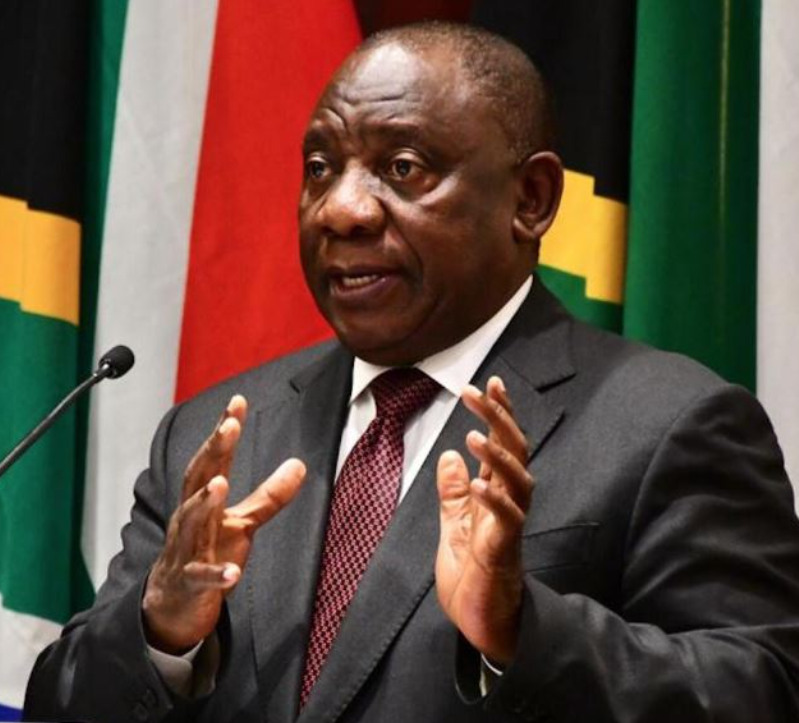
Pretoria – President Cyril Ramaphosa says South Africa is targeting annual economic growth of more than 3% and the creation of one million new jobs by 2030 as government and business enter the third phase of their partnership to accelerate inclusive growth.
In his weekly From the Desk of the President newsletter published on Monday, 24 August 2026, Ramaphosa said the latest phase would shift the focus from stabilising the economy and implementing structural reforms to driving growth and employment.
“The third phase of the partnership sets a clear target of lifting South Africa’s GDP growth above 3% a year and contributing toward the creation of one million new jobs by 2030,” Ramaphosa said.
The announcement comes as the country continues to grapple with high unemployment, weak economic growth and pressure on households and businesses.
Ramaphosa said South Africa has about 8.5 million unemployed people according to the official unemployment rate, while approximately 300,000 new work-seekers enter the labour market each year.
“Our growth rate remains too low to absorb the millions of South Africans seeking work,” he said.
“With around 8.5 million unemployed citizens by the official rate and roughly 300,000 net new work-seekers entering the labour force each year, we must accelerate our pace.”
Dear Fellow South African,
Last week, we launched the third phase of the partnership between government and business to drive faster inclusive economic growth and create jobs.
This partnership is but one example of the collaborative initiatives that government has with… pic.twitter.com/X5NpUfZQl3
— Cyril Ramaphosa 🇿🇦 (@CyrilRamaphosa) August 24, 2026
From load shedding to growth
Ramaphosa said the government-business partnership, established in 2023, was initially created amid severe economic pressures, including load shedding, problems in freight logistics and security challenges.
The first two phases focused on stabilising the economy and advancing structural reforms.
He said the partnership had contributed to more than 400 days without load shedding, crediting Eskom’s improved generation performance, increased private electricity generation and progress towards a competitive electricity market.
“This work, together with the efforts of the relevant government departments and public entities, has helped us to achieve more than 400 days without load shedding,” Ramaphosa said.
He also pointed to improvements at key ports and the opening of freight rail corridors to private operators.
The partnership, he said, had also helped South Africa secure its removal from the Financial Action Task Force grey list, followed by improved outlooks and ratings from credit-rating agencies.
“These are real outcomes that demonstrate that social partnerships are more than meetings and presentations; they are practical, delivery-focused mechanisms that achieve measurable results,” Ramaphosa said.
Three pillars for growth
The third phase will focus on three broad areas aimed at translating economic reforms into higher growth and job creation.
The first will focus on strengthening the country’s economic infrastructure, including completing the unbundling of Eskom, expanding electricity transmission capacity, operationalising the wholesale electricity market and increasing private participation in freight rail.
The second pillar will target sectors with significant employment potential, including mining, agriculture and agro-processing, tourism and infrastructure.
Ramaphosa said government would roll out a new mining cadastre system to encourage mineral exploration, streamline visa systems to attract tourists, expand agricultural export markets and increase public-private investment in infrastructure.
The third pillar will focus on improving confidence in the economy and society, including efforts to tackle crime and corruption and improve municipal service delivery.
“We will focus on tackling crime and corruption, extending partnership models to improve municipal service delivery, and backing specialised forensic capacities to accelerate high-impact prosecutions against organised syndicates,” he said.
Youth employment push
Youth unemployment is also expected to be a major focus of the new phase.
Ramaphosa said government and business would work together to increase the placement of young people in entry-level jobs, supported by employment incentives and assistance for work-seekers.
The government will also maintain and expand public employment programmes while working with businesses to help young people move into sustainable employment.
The President said the experience of the past three years had demonstrated the importance of cooperation between government, business, labour and civil society.
“The overarching lesson of these past three years is that no single sector of society can resolve South Africa’s economic challenges in isolation,” he said.
“Government brings an electoral mandate, regulatory authority and policy direction. Business brings investment, technical skills and resources.”
Ramaphosa said the government-business partnership would now seek to turn the gains made through economic reforms into stronger investment, economic growth and employment.
“When we align our capabilities around clear, measurable objectives, we move our country forward,” he said.
The President said deepening cooperation between the public and private sectors would be critical to achieving “shared prosperity for all” as South Africa seeks to raise its growth rate and tackle unemployment.
Follow African Insider on Facebook, X and Instagram
Picture: X/@SAgovnews
For more African news, visit Africaninsider.com
Compiled by Betha Madhomu