Cape Town – President Cyril Ramaphosa has warned that South Africa’s high electricity costs are placing energy-intensive industries under severe pressure, saying the country’s electricity reforms must now focus on affordability as well as reliability.
Speaking at the SEIFSA Presidential Business Breakfast in Boksburg, Gauteng, Ramaphosa said rising electricity tariffs had contributed to the closure and reduced production of several energy-intensive operations, putting industrial capacity and jobs at risk.
“Reliability alone is not enough. Electricity must also be affordable.”
Ramaphosa said electricity tariffs had risen far faster than inflation over the past two decades, creating what he described as an existential challenge for energy-intensive industries.
He warned that when major industrial operations close, South Africa loses skills, export earnings and productive capacity that can be difficult to rebuild.
“Once a smelter closes, we lose productive capacity. We lose skills. We lose export earnings. We weaken entire industrial value chains.”
The President said government was moving towards a competitive electricity market in which multiple generators would compete to supply power. The South African Wholesale Electricity Market is expected to begin operating next year.
He said greater competition, expanded transmission capacity and investment in new generation should help create a more efficient electricity system and put downward pressure on the cost of power.
“The next phase of electricity reform must focus not only on security of supply, but also on reducing the cost of electricity.”
Ramaphosa also highlighted plans to establish a fully independent, state-owned transmission company, saying the restructuring process must strengthen energy security while helping to reduce electricity costs.
President Cyril Ramaphosa gave delegates at the Black Business Council’s annual Black Summit taking place in Kempton Park on Thursday a nice surprise when he momentarily walked in to greet them. Ramaphosa was in the vicinity to attend another conference when he made the brief… pic.twitter.com/gNteUX03qv
— Sunday World News (@SundayWorldZA) August 13, 2026
He said the electricity transition should also be used to grow South Africa’s manufacturing sector by producing more of the equipment needed for the country’s new energy economy locally.
“South Africa should not simply import the technologies required for the new energy economy.”
The President pointed to opportunities to manufacture transformers, cables, switchgear, structural steel and other electrical equipment domestically.
He said South Africa’s planned expansion of its electricity transmission network could become a major industrialisation opportunity, with the country requiring around 14,000 kilometres of new transmission lines over the next decade.
“This is the largest transmission expansion programme in our country’s history.”
Ramaphosa said the transmission programme would require thousands of towers, transformers, cables and other components, creating opportunities for local manufacturers, engineers, artisans and suppliers.
He added that the programme should also create apprenticeships and training opportunities for young South Africans.
“The transmission programme must therefore become both an industrialisation programme and a national skills programme.”
Ramaphosa said the government’s broader infrastructure programme, worth around R1 trillion over the next three years, should be viewed as an industrial strategy rather than simply a construction programme.
He said affordable electricity would be critical to ensuring that South African manufacturers could invest, expand production and create jobs.
“Predictability creates investment. Investment creates capacity. Capacity creates jobs.”
Follow African Insider on Facebook, X and Instagram
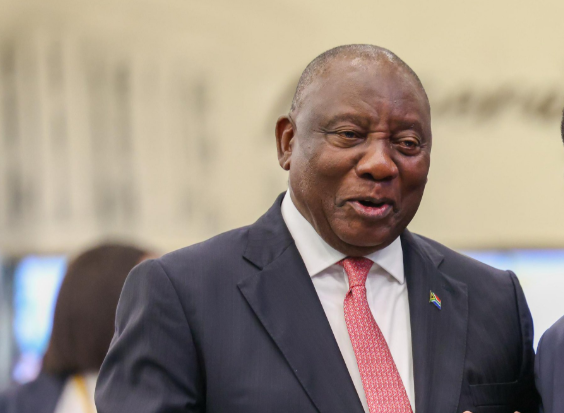
Picture: X/@GovernmentZA
For more African news, visit Africaninsider.com
Compiled by Glaan Sibuyi