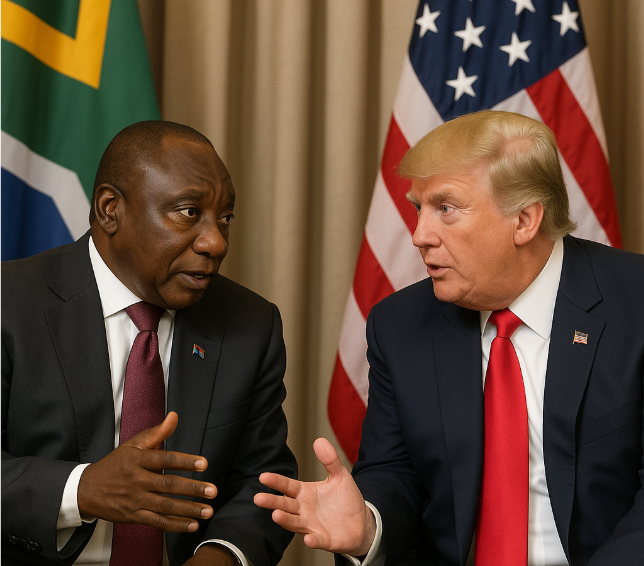
Pretoria – President Cyril Ramaphosa is preparing to respond to five demands from US President Donald Trump aimed at addressing growing tensions between South Africa and the United States.
Ramaphosa’s spokesperson, Vincent Magwenya, said that the President would respond, although he declined to give a specific timeframe, saying: “It will be timely,” Daily Maverick reported.
The demands, which were again raised during US Ambassador to South Africa Leo Brent Bozell III’s engagements with the South African government, focus on land reform, Black Economic Empowerment (BEE), farm violence, inflammatory political rhetoric and Pretoria’s foreign-policy alignment.
According to BusinessTech, the US wants South Africa to prioritise the protection of farming communities, publicly condemn the “Kill the Boer” chant, ensure clear compensation standards under its expropriation laws, reconsider BEE requirements affecting business ownership and distance itself from countries viewed by Washington as US adversaries, particularly Iran.
Significant economic implications
The issue has been simmering for more than a year. Bozell said in March that Washington had “been waiting for almost a year for a response” and warned that the US was “running out of patience”.
Pretoria believes progress has already been made on several of the issues and that Ramaphosa is expected to highlight this in his response to Trump.
The dispute also carries significant economic implications. South Africa’s preferential access to the US market under the African Growth and Opportunity Act (Agoa) remains under review, while existing US tariffs have already eroded some of the benefits of the trade arrangement. South African diplomats have been working to retain the country’s eligibility.
Bozell has linked the dispute directly to investor confidence, saying: “These issues shape investor confidence. They shape strategic trust and the trajectory of our bilateral relationship.”
He has also defended Washington’s concerns over BEE while acknowledging its original purpose of addressing apartheid-era inequality. However, he argued that policies that create uncertainty for investors could lead businesses to reassess their exposure to South Africa.
Some economists have warned that the potential consequences should not be underestimated, although she said the most severe scenarios, including US companies withdrawing from South Africa or a ban on US bank lending, were “not currently likely”.
The latest developments come as Ramaphosa attends the BRICS Summit in India, underscoring the competing diplomatic and economic interests at the centre of Pretoria’s increasingly delicate relationship with Washington.
Follow African Insider on Facebook, X and Instagram
Picture: Chat GPT
For more African news, visit Africaninsider.com
Compiled by Betha Madhomu