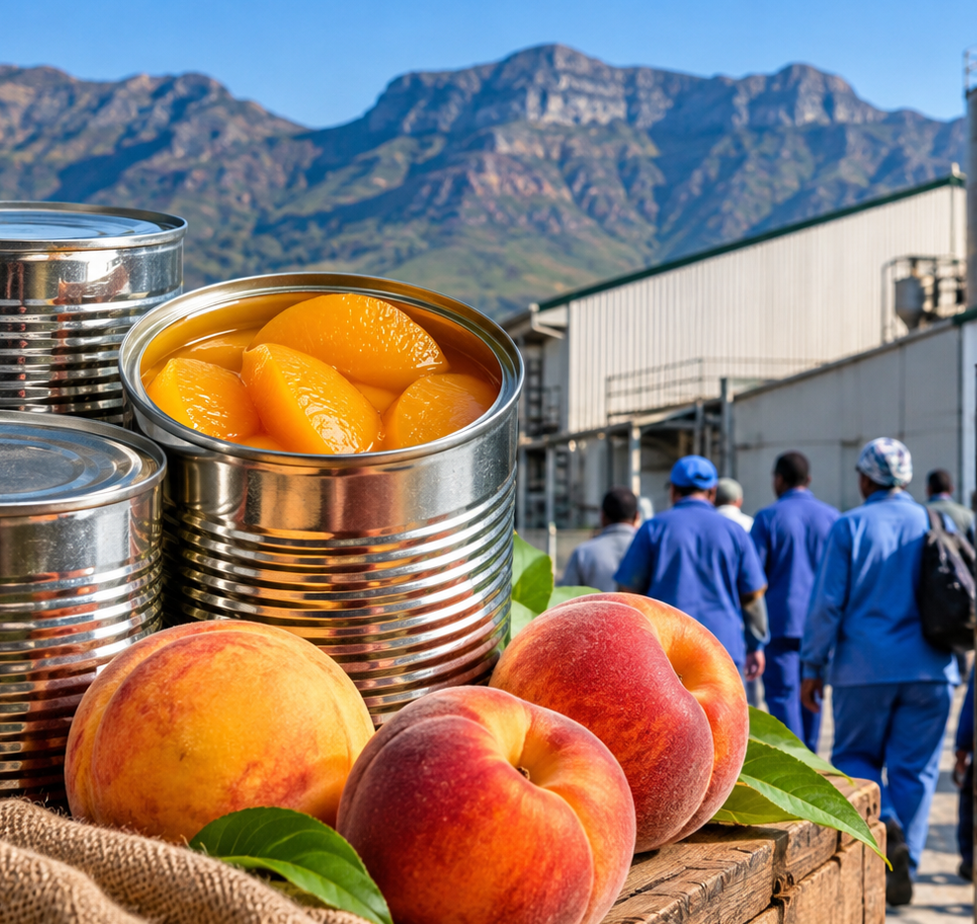
Cape Town – Premier Group has defended its decision to shut down its historic fruit-processing factory in Tulbagh, Western Cape, insisting that the closure was driven by deteriorating global market conditions and not its acquisition of Rhodes Food Group (RFG).
The food producer made the clarification in its interim results for the six months ended September 2026, following concerns raised by the Competition Commission over the closure of the Fruit Processing Western Cape (FPWC) facility.
According to Daily Investor, Premier acquired full control of RFG in March 2026 in a R5.7 billion transaction. The merger was approved by the Competition Tribunal subject to conditions, including a three-year prohibition on merger-related retrenchments.
However, Premier subsequently announced that it would not reopen the Tulbagh cannery, prompting the Competition Commission to investigate whether the decision breached the merger conditions.
Premier attributed the closure to what it described as an “implosion” of the global canned-fruit market, citing a stronger rand, a bumper Greek fruit harvest, the bankruptcy of US food producer Del Monte and increased competition from Chinese producers.
No merger-related retrenchments
In its interim results, Premier rejected suggestions that the closure was linked to the merger, stating: “There was no contemplation of closure prior to the merger approval.”
The company added: “As such, there have been no merger-related retrenchments, only voluntary separation agreements which were specifically allowed.”
The Competition Commission, however, has applied to the Competition Tribunal to revoke its approval of the Premier-RFG merger, arguing that the parties failed to disclose discussions about the possible closure of the Tulbagh facility during the merger review process.
According to TimesLIVE, the regulator found that the companies had discussed the possibility of closing the factory before the merger was approved but did not disclose this information when asked about their plans for manufacturing facilities.
Competition Commissioner Doris Tshepe said: “The integrity of South Africa’s merger-control regime depends on merger parties making full, frank and honest disclosure of all material information.”
Premier has indicated that it will oppose the Commission’s application, arguing that the factory’s deteriorating commercial prospects would have made it unviable regardless of the acquisition.
Agricultural industry
The closure has raised concerns about its impact on Tulbagh and the wider agricultural industry. The factory, which has operated since the 1950s, has historically processed peaches, pears and apricots sourced from Western Cape farmers.
GroundUp reported that the facility supported more than 3,500 workers, including permanent and seasonal employees, while approximately 2,000 farm workers’ jobs were also at risk.
Premier said it had introduced measures to limit the impact on affected stakeholders, including offering employees voluntary separation packages worth double the mandatory separation amounts. It also agreed to compensate farmers for uprooting peach orchards and committed to purchasing the upcoming season’s harvest.
The company said it remained open to alternative business opportunities to repurpose the Tulbagh facility.
Meanwhile, Premier reported a 38.8% increase in revenue to R14.3 billion for the six months ended September 2026, largely reflecting the inclusion of RFG in its results. Operating profit rose 52.5% to R1.7 billion, while net profit increased by 62.1% to R1.2 billion.
The Competition Tribunal will ultimately determine the outcome of the regulator’s application.
Follow African Insider on Facebook, X and Instagram
Picture: ChatGPT
For more African news, visit Africaninsider.com
Compiled by Betha Madhomu