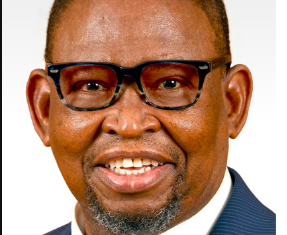
Johannesburg – Finance Minister Enoch Godongwana is expected to present an improved fiscal outlook in Wednesday’s Medium-Term Budget Policy Statement (MTBPS), but rising fuel prices, weak economic growth and mounting household pressures could limit the benefits for ordinary citizens.
According to East Coast Radio (ECR), economist Patrick Buthelezi expects government revenue to exceed earlier projections, potentially by R30 billion or more, supported by stronger corporate profits and value-added tax (VAT) collections.
“Even so, the revenue overrun could reach, say, around R30 billion or even higher, thanks to the terms of trade for boosting corporate profits and VAT,” Buthelezi said.
The anticipated revenue improvement comes despite the withdrawal of planned tax increases of about R20 billion, personal income tax relief and temporary fuel levy cuts that cost the fiscus more than R17 billion.
However, Reuters, in a report published through Investing.com, reported that analysts expect stronger tax receipts to help narrow the budget deficit, although weak growth and pressure for additional spending could undermine efforts to stabilise public finances.
The International Monetary Fund has forecast South Africa’s economy to grow by just 1% in 2026, highlighting the challenge facing the government as it seeks to reduce debt while supporting economic activity.
Households face mounting pressure
The expected improvement in government finances comes as consumers grapple with sharp fuel price increases that are driving up transport and living costs.
Petrol prices increased by as much as R3.33 a litre in October, while diesel rose by between R2.84 and R3.24 a litre. Illuminating paraffin increased by R4.77 a litre, adding to the burden on low-income households.
Lindo Motha of shack dwellers’ movement Abahlali baseMjondolo warned that the increases were placing further pressure on families already struggling to make ends meet.
“You can go in maybe one household, you will find that a granny who is living with [a] child there is only earning about R2 400,” Motha said.
“Just imagine R2 400. We have to [with] this money, get the transport for the learners to go to school. Now, how [will] they survive for [the] whole month?”
Economic growth, service delivery and fiscal sustainability
The Road Freight Association has also warned that rising fuel costs will increase the cost of transporting goods, potentially feeding through to consumer prices. Its chief executive, Gavin Kelly, said fuel accounts for between 35% and 55% of operating costs, depending on the vehicle, route and operation.
Meanwhile, eNCA reported that the Middle East conflict and surging fuel prices are complicating the government’s economic outlook ahead of the budget statement.
The MTBPS, scheduled to be presented to Parliament at 2pm on Wednesday, will update the government’s revenue and expenditure forecasts, economic growth projections and debt outlook for the next three years.
According to South African Parliament, the statement will also provide an opportunity to scrutinise how government intends to balance economic growth, service delivery and fiscal sustainability.
The key question is whether Treasury will use stronger-than-expected tax receipts to reduce borrowing and stabilise public debt or allocate more funds to address competing spending demands.
While an improved fiscal position could strengthen investor confidence, the immediate challenge for government will be managing economic uncertainty while limiting the impact of rising living costs on vulnerable households.
Follow African Insider on Facebook, X and Instagram
Picture: X/@PresidencyZA
For more African news, visit Africaninsider.com
Compiled by Betha Madhomu