Johannesburg – South Africa has been ranked the second-most AI-ready country among African Commonwealth members, with a new international study estimating that artificial intelligence could lift the country’s GDP level by US$9.184 billion over 10 years under a moderate scenario.
The 2026 Commonwealth Youth AI Readiness Index, released on Thursday by the Ayre Think Tank, ranks South Africa 13th out of 56 Commonwealth countries, with a score of 56.8 out of 100.
Mauritius, which scored 64.4, was the highest-ranked African Commonwealth country, placing eighth overall.
South Africa was one of only 15 Commonwealth countries to meet or exceed the study’s youth AI readiness benchmark of 53 points.
The index draws on 1,128 research sources and assesses conditions affecting young people aged 15 to 29 across all 56 Commonwealth countries.
The study estimates that South Africa could see a US$4.699 billion increase in its GDP level under a conservative scenario, US$9.184 billion under a moderate scenario and US$13.670 billion under an optimistic scenario after 10 years.
Major challenges
The researchers cautioned that these figures are economic illustrations rather than forecasts of annual growth or guaranteed gains from AI adoption.
South Africa’s ranking reflects strong enthusiasm for AI among young people and entrepreneurs.
The study found that 88.2% of young South African respondents expected to use AI for education or work in the following year, while about half said they were already using the technology for study.
Among entrepreneurs aged 18 to 64 who were starting or running new businesses, 49.2% of South African respondents said AI tools would be very important to their operations over the following three years. This was the highest proportion among the five Commonwealth countries with comparable data.
However, the research also highlighted major challenges facing South Africa’s youth.
Youth unemployment stood at 46.3% among young people in the labour force, while 39.6% were outside employment, education and training.
Among young South Africans aged 18 to 29 who were starting businesses, 90.9% said a shortage of jobs was one reason for doing so. Yet only 0.8% of young people in that age group owned an established business.
Wealthy countries
The study also identified concerns around the responsible use of AI.
Research conducted in 2024 and 2025 found that 63% of employed South African adults surveyed admitted relying on AI-generated information without checking its accuracy.
Calvin Ayre, founder of the Ayre Think Tank, said governments needed to ensure young people were equipped to benefit from the technology.
“AI is going to change how we work, how we do business and how wealth is created.”
He said AI should not be viewed as an opportunity reserved for wealthy countries.
“What matters is giving young people the skills and the chance to get ahead – whether to start businesses, find jobs or build something for themselves.”
Ayre said the index was intended to show countries where they stood in terms of AI readiness and where improvements were needed.
“Governments now have to decide what they’re going to do about it.”
South Africa has already introduced initiatives aimed at expanding AI and digital skills.
Automated decisions
In March 2026, the Department of Higher Education and Training signed an agreement with Google to provide an initial 10,000 scholarships for professional qualifications in areas including AI, cybersecurity and data analysis.
The programme targets students and educators at public universities and training colleges, with a particular focus on rural and township communities.
Microsoft and the Youth Employment Service also reported in May that more than 70,000 young people had participated in digital learning programmes.
The Ayre Index identifies five priorities for improving youth AI readiness: affordable and reliable access to technology, practical skills-based education, stronger pathways from training into employment and enterprise, AI tools suited to local languages and needs, and safeguards that enable young people to question automated decisions.
Professor C. Justin Robinson, Pro Vice-Chancellor and Campus Principal of the University of the West Indies, Five Islands Campus, said young people should not merely become consumers of AI developed elsewhere.
“We need to make sure that the next generation will be able to do more than just consume AI products made elsewhere.”
Alternatives
Robinson said young people needed the ability to question and improve AI systems.
“Young people should be equipped to question these new tools, to improve them and to be supported in building alternatives suited to their own needs.”
Singapore topped the Commonwealth ranking with a score of 77.6, followed by Malta at 75.0 and Australia at 71.0.
The United Kingdom ranked fourth with 70.8, while Canada placed fifth with 70.2.
South Africa was followed by Trinidad and Tobago in 14th place and Nigeria in 15th.
The study said its readiness benchmark of 53 was a comparative research measure and was not an International Monetary Fund threshold or a guarantee of economic gains.
It also stressed that the index measures conditions associated with AI readiness rather than the AI competence of every young person.
The researchers assessed eight pillars, 39 sub-pillars and 111 indicators, although comparable evidence was insufficient to score the eighth pillar, critical judgement and human agency. The published rankings therefore use 102 indicators across seven pillars.
Follow African Insider on Facebook, X and Instagram
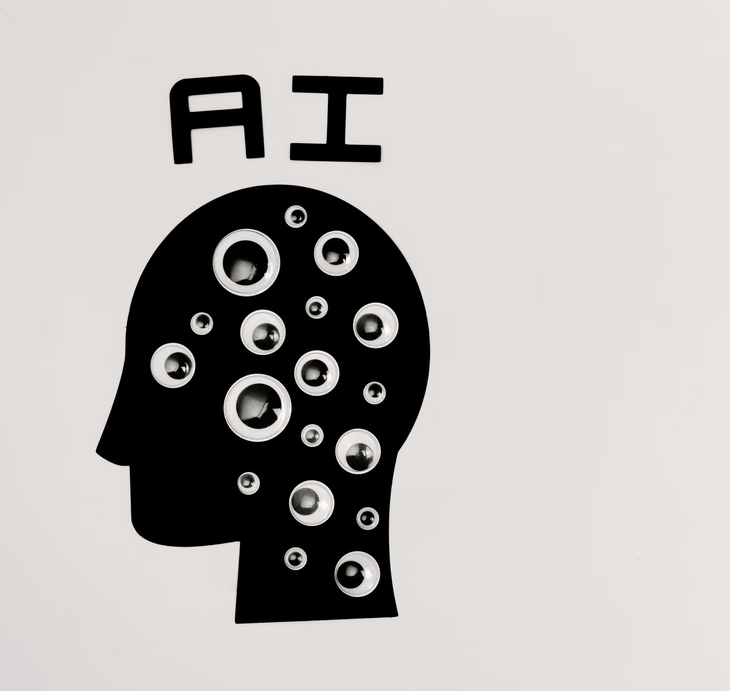
Picture: Pexels
For more African news, visit Africaninsider.com
Compiled by Betha Madhomu