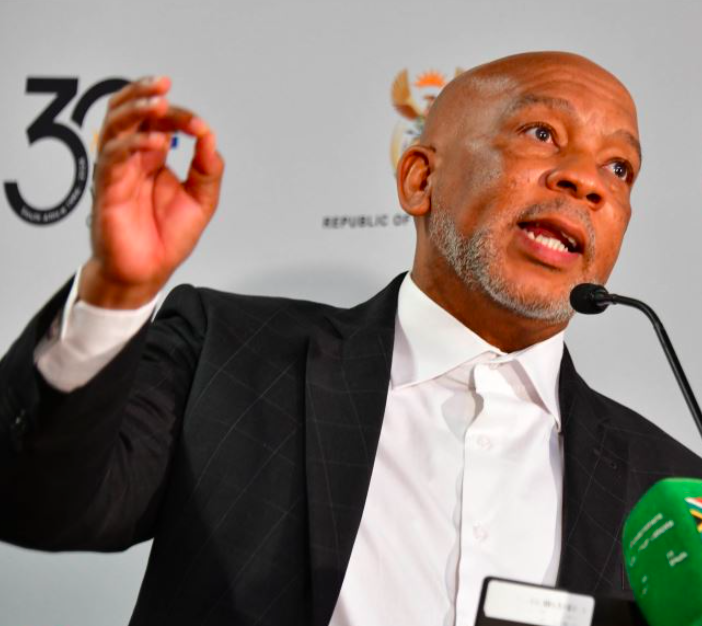
Johannesburg – Electricity and Energy Minister Kgosientsho Ramokgopa wants Eskom to be given greater commercial flexibility as South Africa moves towards a competitive electricity market, arguing that the state-owned power utility is disadvantaged by rules that do not apply to private-sector generators.
Ramokgopa is considering seeking Cabinet approval to exempt Eskom, at least partly, from the Public Finance Management Act (PFMA), which governs procurement and financial management at state-owned entities.
According to a report by The Citizen, the minister wants to “level the playing field” between Eskom and private electricity producers, including by extending some of Eskom’s social obligations to private-sector players operating through bilateral electricity agreements.
Speaking at a recent Unisa School of Business Leadership event, Ramokgopa argued that Eskom lacks the flexibility enjoyed by private competitors.
“Eskom does not have the flexibility that other private sector actors have. Eskom has to be subjected to the PFMA,” he said.
He added that he intended to consult Finance Minister Enoch Godongwana before taking the proposal to Cabinet.
“I can make the case, and I believe the case is compelling.”
The proposal comes as South Africa moves towards the South African Wholesale Electricity Market (SAWEM), which is intended to allow multiple generators and traders to compete in supplying electricity.
Business Day reported that Ramokgopa believes Eskom’s obligations as a state-owned entity could make it difficult to compete with private players in the emerging market.
The minister has also argued that opening the electricity market should not result in the state abandoning its responsibility to provide affordable electricity.
“The state must appreciate that it can’t be displaced. The state can’t be retrenched. The state must not abrogate its responsibility to lead,” Ramokgopa said.
Experts question Eskom’s alleged disadvantage
However, the proposal has drawn criticism from energy experts who argue that Eskom remains the dominant player in the electricity-generation market.
Anton Eberhard, emeritus professor at the University of Cape Town’s Power Futures Lab, told Moneyweb that Eskom still controls about 70% of electricity generation, meaning private producers may have a stronger case for protection against Eskom than the other way around.
Peter Attard Montalto of Krutham acknowledged that procurement reforms could improve the efficiency of state-owned companies, but warned that National Treasury was unlikely to abandon oversight of public entities.
Khaya Sithole, a chartered accountant and director at Corusca Consulting, said the PFMA can restrict the ability of state-owned enterprises to respond quickly in competitive markets. However, he cautioned against completely removing Eskom from the legislation.
“Even with the current PFMA, Eskom keeps on getting it wrong,” Sithole said.
He argued that any exemption should be narrowly targeted rather than applying to the PFMA as a whole.
Energize similarly reported that Ramokgopa intends to approach Cabinet about PFMA relief, saying Eskom’s regulatory position must change if it is expected to compete directly with private generators.
Social obligations raise concerns
Ramokgopa has also proposed that private electricity producers face some of the social obligations currently imposed on Eskom, including responsibilities linked to affordable electricity and support for poorer households.
But electricity pricing expert Deon Conradie warned that imposing additional social obligations on electricity producers could ultimately increase costs.
“Unless Eskom is compensated by the fiscus, it will lead to increased tariffs, which affects affordability and the country’s competitiveness,” Conradie said.
The debate comes amid wider concerns over South Africa’s electricity costs. The Citizen recently reported that electricity prices had increased by about 907% over two decades, with Ramokgopa acknowledging that high electricity costs were undermining industrial competitiveness and reducing household disposable income.
At the same time, Eskom has publicly said it supports electricity-market reform and competition. In January, the utility said it “supports the reform of South Africa’s electricity market” and was participating in efforts to establish a fair and transparent competitive marketplace.
The debate is therefore likely to intensify as SAWEM develops and Eskom increasingly competes with independent power producers.
Analysts say the challenge will be finding a balance between giving Eskom enough flexibility to compete while maintaining financial oversight and preventing the utility from using its dominant market position to undermine competitors.
Follow African Insider on Facebook, X and Instagram
Picture: X/@SAgovnews
For more African news, visit Africaninsider.com
Compiled by Betha Madhomu