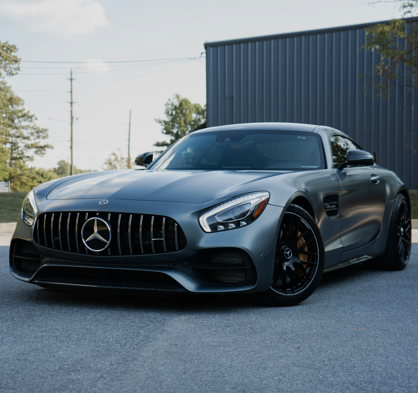
Germany – Mercedes-Benz workers have vowed to resist possible factory closures as tensions between the German carmaker and labour representatives escalate over rising production costs, working hours and plans to shift manufacturing to cheaper locations abroad.
The dispute follows Mercedes-Benz management’s decision to suspend further investment at its German manufacturing sites while considering possible plant closures if an agreement on reducing labour costs cannot be reached.
According to TopAuto, which cited Bloomberg, the company’s production chief, Michael Schiebe, has warned that future vehicle models could be allocated to factories outside Germany, including its facility in Hungary, if negotiations fail.
However, workers’ representatives have strongly opposed the possibility of shutting down German factories.
Ergun Lümali, head of Mercedes-Benz’s general works council and deputy chairman of its supervisory board, said: “We firmly reject plant closures and know how to defend ourselves.”
Longer working hours
Barbara Resch, head of the IG Metall union in Baden-Württemberg and a member of Mercedes-Benz’s supervisory board, also criticised management’s position, saying: “It can’t be that the management board wants to stop further investment in German sites while at the same time demanding longer working hours and cuts to benefits.”
According to Reuters, management is examining which German facilities it can continue operating after negotiations with employee representatives failed to produce an agreement on reducing production costs.
The dispute centres partly on Germany’s 35-hour working week, with Mercedes-Benz seeking longer working hours without increasing employees’ monthly basic salaries. Management argues that labour costs at its German plants are significantly higher than those at facilities in Eastern Europe and the United States.
The disagreement comes as the company faces mounting financial pressure, particularly in China, where weaker demand for luxury vehicles and growing competition from local manufacturers have affected sales.
Cost-cutting measures
Mercedes-Benz has also lowered its 2026 profit forecast. According to the company’s October 28 financial outlook, its cars division now expects an adjusted return on sales of between 2% and 3%, down from its previous forecast of 3% to 5%.
The company is also facing pressure over its proposed cost-cutting measures as it prepares for broader wage negotiations with IG Metall, which has called for a 5% salary increase across Germany’s metal and electrical industries.
Despite the growing tensions, Mercedes-Benz and its works council extended a job-security agreement, known as ZuSi 2035, which generally protects covered German employees against compulsory retrenchments until the end of 2034.
The latest developments highlight the challenges facing Germany’s automotive industry as manufacturers grapple with high production costs, international competition and weakening demand.
The outcome of the negotiations could have significant implications for Mercedes-Benz’s German workforce and the future of its domestic manufacturing operations.
Follow African Insider on Facebook, X and Instagram
Picture: Unsplash
For more African news, visit Africaninsider.com
Compiled by Betha Madhomu