Johannesburg – South Africa could move closer to regaining investment-grade credit status, with two major international rating agencies expected to review the country’s sovereign creditworthiness on Friday, 27 November.
Moody’s Ratings and S&P Global Ratings are scheduled to announce their latest assessments, with growing expectations that at least one could upgrade the country’s credit rating following improvements in government finances and progress on economic reforms.
According to BusinessTech, Investec chief economist Annabel Bishop believes S&P could upgrade South Africa’s foreign-currency rating from BB to BB+, while Moody’s could also raise its Ba2 rating.
An upgrade by S&P would bring South Africa one notch closer to investment-grade status, which it lost in 2017 amid political uncertainty and deteriorating public finances.
However, expectations remain divided over whether the agencies will act this week.
Sovereign credit ratings
In a separate report, Business Day reported that Absa economists Miyelani Maluleke and Sello Sekele expect both agencies to maintain their existing ratings.
“Our expectation is for both agencies to maintain their sovereign credit ratings at current levels,” they said.
The economists acknowledged that improving public finances and structural reforms had strengthened South Africa’s credit outlook, although weak economic growth and the slow pace of debt reduction remained significant concerns.
South Africa’s fiscal position has nevertheless shown signs of improvement.
Moody’s described the government’s latest Medium-Term Budget Policy Statement as credit positive, citing continued fiscal consolidation despite elevated oil prices and weaker economic growth expectations.
According to Reuters, in a report published by Engineering News, Moody’s noted that government debt was likely to have peaked, with the country’s budget deficit target for 2026/27 reduced to 3.9% of GDP from 4%.
Revised national accounts data
The agency also highlighted an upward revision of R17.1 billion in projected gross tax revenue.
Meanwhile, revised national accounts data from Statistics South Africa have improved the country’s debt-to-GDP projections, strengthening the government’s fiscal position.
Bishop told BusinessTech that the improved outlook was supported by debt stabilisation, stronger primary surpluses, reduced state-owned enterprise risks and structural reforms under Operation Vulindlela Phase 2.
“The MTBPS saw debt stabilisation, improved primary surpluses and reduced SOE risk—i.e. contingent liabilities—and structural reform on Operation Vulindlela Phase 2,” she said.
South Africa has been attempting to restore its investment-grade status after S&P and Fitch downgraded the country in 2017, followed by Moody’s in 2020.
A return to investment grade could improve investor confidence, broaden access to international capital markets and potentially lower government borrowing costs.
However, an upgrade is not guaranteed, with the country’s subdued economic growth and high debt-servicing costs continuing to weigh on its creditworthiness.
Fitch Ratings is expected to deliver its next assessment of South Africa on 11 December.
Follow African Insider on Facebook, X and Instagram
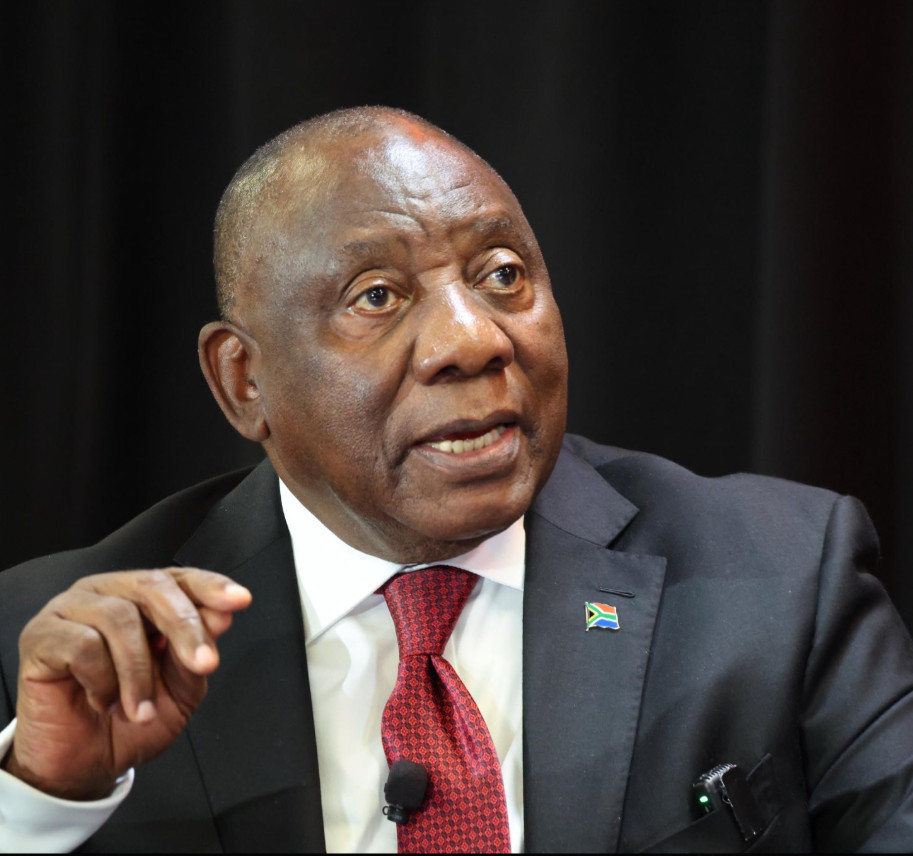
Picture: X /@PresidencyZA
For more African news, visit Africaninsider.com
Compiled by Betha Madhomu