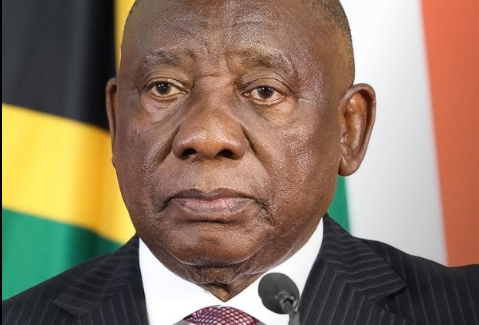
Dear Fellow South African,
Our country’s ambition to be a leading digital investment destination is being recognised by some of the world’s leading technology companies.
🔗 https://t.co/UcOvI5EyLR pic.twitter.com/D3nLBkBAnr
— Cyril Ramaphosa 🇿🇦 (@CyrilRamaphosa) July 6, 2026
The president also said Google would establish a R3 million digital innovation centre at South West Gauteng TVET College in Soweto and open applications later this month for the 2026 South African cohort of its Google for Startups Accelerator programme.
“Investor confidence in South Africa’s digital economy trajectory is growing,” Ramaphosa said.
He noted that Google joins other multinational technology companies expanding their footprint in South Africa.
“Beyond the Google investment, in 2023 Amazon Web Services announced plans to invest R30.4 billion in its South African cloud infrastructure. Last year, Microsoft announced plans to invest R5.4 billion to develop local hyperscale cloud and AI infrastructure,” he said.
Ramaphosa also welcomed the launch of Mastercard’s Africa Cybersecurity Centre of Excellence, saying the initiative would strengthen cyber resilience and support secure digital growth across Africa.
Highlighting the economic benefits of digital infrastructure, Ramaphosa cited Google’s estimate that its Johannesburg Cloud Region could contribute approximately R1.7 trillion in additional gross economic output by 2030 while supporting about 315,000 jobs.
Digital economy
“Across the world, the digital economy is a catalyst for economic growth and job creation,” he said.
The president said South Africa already houses a significant proportion of Africa’s large data centre capacity and remains the continent’s largest cloud market, with more businesses adopting cloud computing, machine learning and AI technologies.
He said small, medium and micro enterprises (SMMEs) stand to benefit from lower IT costs, improved productivity and expanded access to e-commerce.
However, Ramaphosa cautioned that technological advancement must be accompanied by safeguards to protect citizens and national interests.
“As we strive to position ourselves as a continental cloud and AI gateway, there is a need for ‘guardrails’ to prevent abuse and other risks. The digital economy must safeguard the rights and privacy of citizens, support environmental sustainability and uphold our country’s sovereignty,” he said.
Territorial borders
He added that digital sovereignty is becoming increasingly important.
“In the digital age, sovereignty is measured not only by territorial borders. It is increasingly measured by a nation’s ability to secure its data, develop its own digital capabilities and exercise meaningful control over the technologies on which its economy depends.”
Ramaphosa said the government was investing in its own cloud infrastructure through the Council for Scientific and Industrial Research (CSIR) to strengthen domestic digital capabilities.
“As we navigate these complexities, we must deepen collaboration across government, business, labour, industry and civil society in pursuit of a digital future that is secure, inclusive and leaves no-one behind,” he said.