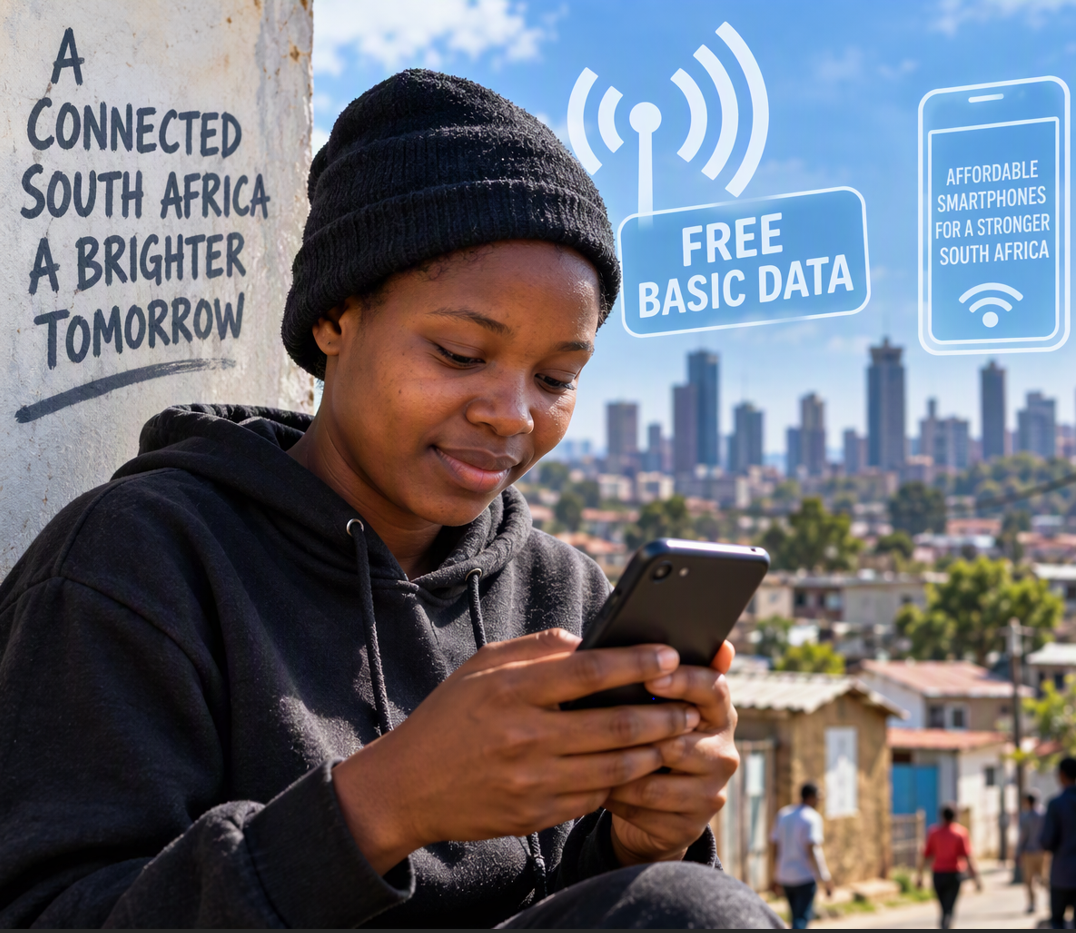
Johannesburg – South Africa’s internet service providers have called on the government to introduce free basic mobile data for people living below the poverty line and make smartphones more affordable, warning that connectivity costs continue to exclude low-income households from the digital economy.
The Internet Service Providers’ Association (ISPA) said falling data prices had not adequately addressed the cost of accessing digital services, arguing that meaningful connectivity requires affordable internet access and devices.
“Reducing the cost to communicate is key to reducing poverty in South Africa,” ISPA chair Sasha Booth-Beharilal said, according to MyBroadband.
“As a start, South Africa needs firm action on providing a free basic data allowance to those falling below the poverty line,” she said, adding that the intervention was already recognised in the country’s National Infrastructure Plan and National Radio Frequency Spectrum Policy.
Progress
The call comes amid delays in implementing the government’s proposed free-data initiative. In a February report, MyBroadband said the government had yet to engage mobile operators formally on a plan that initially targeted a monthly 10GB allocation for households before increasing it to 50GB.
The report quoted MTN as saying the implementation arrangements and funding model remained unclear. Telecommunications analyst Arthur Goldstuck also questioned how the initiative would be financed, saying: “The real question is not whether it can be done, but who pays for it, how the funding works over time”.
Meanwhile, Business Day reported in August that progress in providing data-free access to public-benefit organisations’ websites remained slow. Communications and Digital Technologies Minister Solly Malatsi acknowledged the delays but said the January 2027 deadline for compliance with the relevant requirements remained achievable.
“Almost every home in South Africa has a mobile phone, but many in poor communities can’t afford the cost of data,” DG Murray Trust chief executive David Harrison told Business Day, highlighting the barriers that prevent people from accessing educational resources, healthcare information and employment opportunities.
Delays in reforms
Affordability of devices is another challenge. Reuters reported in May 2025 that MTN planned to offer 1.2 million prepaid customers 4G smartphones for as little as R99 as South Africa prepares to phase out its 2G and 3G networks.
ISPA has also criticised delays in reforms intended to increase competition in the telecommunications sector and lower service costs. It said proposed amendments to the Electronic Communications Act could help by encouraging spectrum sharing, supporting smaller network operators and improving access to essential infrastructure.
However, the association warned that policy commitments had not translated into sufficient action, calling for more decisive measures to ensure poorer South Africans can afford both the devices and connectivity needed to participate in the digital economy.
Follow African Insider on Facebook, X and Instagram
Picture: Copilot
For more African news, visit Africaninsider.com
Compiled by Betha Madhomu