Harare – Zimbabwe’s economy is showing signs of a faster-than-expected turnaround after years of hyperinflation, currency instability and fiscal imbalances, according to Citigroup.
Citi chief Africa economist David Cowan said the pace of Zimbabwe’s economic improvement since 2025 may be exceeding perceptions among international investors, with the country moving away from some of the policies that contributed to its previous economic crises. His assessment was reported by Bloomberg.
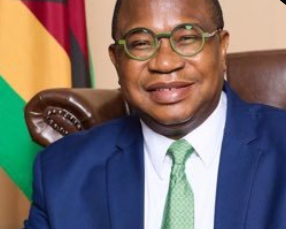
Citi’s assessment has been welcomed by Zimbabwe’s Finance, Economic Development and Investment Promotion Minister Mthuli Ncube, who said the report recognised the progress made under the country’s economic reform programme.
“We welcome the latest assessment by Citigroup Inc. which recognizes the significant progress Zimbabwe has made,” Ncube said in a post on X.
We welcome the latest assessment by Citigroup Inc. which recognizes the significant progress Zimbabwe has made. The report notes that under the framework of our engagement with the International Monetary Fund, policy discipline and structural reforms are now delivering tangible…
— Hon Prof Mthuli Ncube (@MthuliNcube01) August 27, 2026
He said the reforms being implemented under Zimbabwe’s engagement with the International Monetary Fund were producing results in economic stability, growth and investor confidence.
“While outdated perceptions persists, the reality on the ground reflects a country that is reforming, rebuilding and open for business,” Ncube said.
He added that the government remained committed to consolidating the gains through the National Development Strategy 2 (NDS2), with the aim of translating the economic recovery into jobs, higher prosperity and improved livelihoods.
Citi expects annual inflation to fall to about 8% this year, compared with an average of 736% in 2024. Official inflation has averaged about 4% so far in 2026 and slowed to 2.9% in August, according to reports by The Herald.
The improvement has been supported by tighter monetary and fiscal policies, the introduction of the gold-backed Zimbabwe Gold (ZiG) currency in 2024, an end to central-bank financing of the budget and strong commodity prices, particularly gold. Growth in lithium mining has also added to the country’s export earnings.
Agriculture, mining and favourable gold prices
The International Monetary Fund (IMF) has also reported stronger economic performance. The Fund said Zimbabwe’s economy grew by 8.3% in 2025 and projected growth of about 5% in 2026, supported by agriculture, mining and favourable gold prices. It said inflation had remained low because of tight monetary conditions and relative exchange-rate stability.
Ncube similarly said in his 2026 mid-term economic review that Zimbabwe’s annual inflation in the local currency had fallen sharply, while economic growth was being supported by mineral commodity prices, agriculture and reforms aimed at improving the business environment.
However, significant risks remain. Zimbabwe’s economy is still highly dollarised, while its roughly US$21.3 billion debt remains in distress. Citi also warned that shortages of foreign currency have left a parallel exchange market in place, although the gap between official and parallel rates has narrowed.
Zimbabwe is also working with the IMF under a staff-monitored programme aimed at strengthening macroeconomic stability and rebuilding a track record for international re-engagement. The IMF currently projects 2026 growth at 5% and average consumer-price inflation of 8%.
The assessment suggests that while Zimbabwe has made significant progress in restoring price and exchange-rate stability, the country still faces the more difficult task of sustaining growth, attracting investment and resolving its debt crisis.
Follow African Insider on Facebook, X and Instagram
Picture: X / @MthuliNcube01
For more African news, visit Africaninsider.com
Compiled by Betha Madhomu