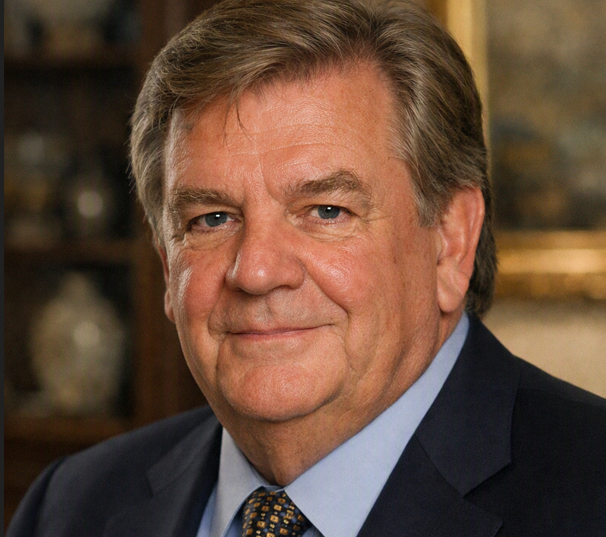
Johannesburg – South Africa’s richest man, Johann Rupert, has added about $1.3 billion to his fortune as strong demand for Cartier and other luxury jewellery brands drives a surge in the value of his Richemont holdings, a report says.
According to Billionaires.Africa, Rupert’s estimated fortune has increased from $16.1 billion in March to $17.4 billion, with the gains coming largely from the strong performance of Compagnie Financière Richemont, the Swiss luxury goods group he chairs and controls.
The publication reported that Richemont’s shares have risen 19.4% over the past 12 months on the Johannesburg Stock Exchange, helping to lift Rupert’s wealth.
The biggest driver has been the group’s jewellery division, which includes Cartier, Van Cleef & Arpels, Buccellati and Vhernier.
Richemont reported first-quarter sales of €6.33 billion for the three months to June, representing a 20% increase at constant exchange rates and 17% at actual exchange rates, according to Billionaires.Africa. Jewellery sales climbed 24% to €4.73 billion.
“This set of results smashes consensus,” luxury analyst Luca Solca of Bernstein said, describing the performance as significantly stronger than analysts had expected.
The jewellery houses have now recorded seven consecutive quarters of double-digit sales growth, with growth reported across all markets and distribution channels.
Cartier drives growth
BusinessTech reported in July that Richemont’s sales had risen 20% in constant currency terms during the quarter ended 30 June, with its jewellery Maisons accounting for 71% of group sales.
Retail sales increased 24%, while the Americas recorded 27% growth, Asia-Pacific 21%, Japan 36% and Europe 11%.
The Middle East and Africa also returned to growth, although at a slower 3%, as strong local demand offset a significant decline in tourism linked to the conflict in Iran.
Billionaires.Africa reported that the strength of the jewellery business is not limited to ultra-wealthy customers buying high-value pieces. Analysts say consumers with more modest budgets are increasingly choosing jewellery over other luxury products.
“When spending $3,000 to $4,000, a middle-class consumer is more likely to favour jewellery over a bag, for example, because they can wear a ring, bracelet or necklace every day and it’s seen as having a longer life,” Solca said.
Kepler Cheuvreux analyst Jon Cox said demand was also being supported by rising wealth among high-income technology workers.
“Luxury buyers want products with intrinsic value and their buying is being supported by AI-enabled wealth creation,” Cox said.
Rupert remains Africa’s second-richest
Forbes’ 2026 Africa billionaires ranking placed Rupert and his family second on the continent with an estimated fortune of $16.1 billion, behind Nigerian industrialist Aliko Dangote at $28.5 billion.
Forbes said the continent’s 23 billionaires had a combined wealth of $126.7 billion in its March ranking, up 21% from the previous year.
South Africa had the largest number of billionaires on the list, with seven, followed by Egypt with five, Nigeria with four and Morocco with three.
However, Forbes’ March figure for Rupert has since been overtaken by the more recent estimate from Billionaires.Africa.
The two wealth trackers use different methodologies. Billionaires.Africa reported that Bloomberg had placed Rupert’s wealth as high as $19.9 billion in June, while Forbes’ latest figure was $17.4 billion. The difference is partly attributed to how private holdings and family ownership structures are valued.
Rupert’s wealth is closely tied to Richemont. He holds about 10.18% of the group’s economic interest through the family holding company Compagnie Financière Rupert, while retaining 51% of voting rights.
Follow African Insider on Facebook, X and Instagram
Picture: Copilot
For more African news, visit Africaninsider.com
Compiled by Betha Madhomu