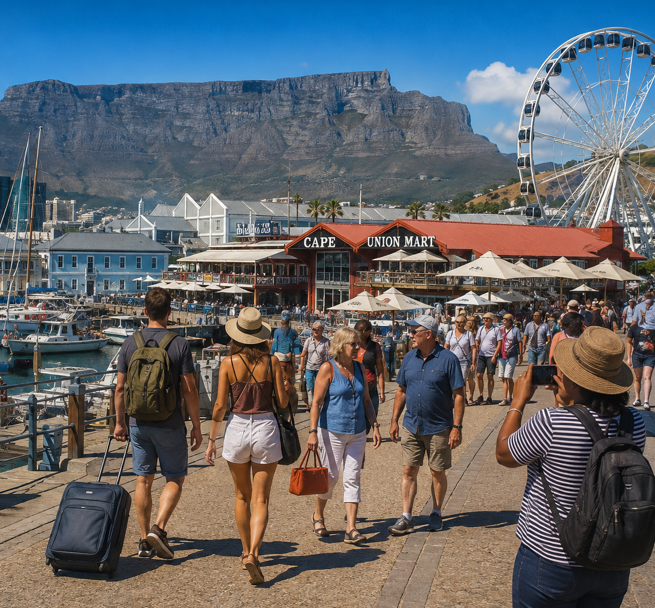
Cape Town – Cape Town’s tourism sector is experiencing strong growth, with international visitors injecting billions of rand into the local economy, but concerns are growing over the city’s reliance on foreign tourists while domestic travellers face rising affordability pressures.
According to North-West University (NWU), tourists contributed R24.5 billion to Cape Town’s economy in 2025, with international visitors accounting for about R19 billion. Tourism contributed 6.3% of the city’s gross value added and supported more than 106,000 jobs.
However, NWU’s analysis warned that the city’s growing dependence on international visitors could leave the sector vulnerable to global shocks.
Prof Peet van der Merwe of NWU’s Tourism Research in Economics, Environs and Society (TREES) said domestic tourism was being affected by South Africans’ financial pressures.
“South Africans are struggling because the economy is struggling. Holidays are among the first luxuries people cut when they need to reduce their expenditure,” Van der Merwe said.
He warned Cape Town against relying too heavily on international travellers, pointing to the Covid-19 pandemic as an example of how quickly international tourism can collapse.
“Cape Town should be very careful about relying too heavily on international travellers,” he said. “It needs to maintain a balanced market because, if another international crisis occurs, it will be domestic tourists who continue travelling locally.”
International demand remains strong
Figures from the Western Cape Government show that about 1.5 million international tourists visited the province in 2025, generating almost R26 billion in spending.
International arrivals increased by 11.1% during the year, according to the provincial government.
Western Cape Agriculture, Economic Development and Tourism MEC Ivan Meyer said the figures confirmed the province’s continued appeal.
“The Western Cape’s tourism performance in 2025 confirms that our province remains a top choice for both international and domestic travellers,” Meyer said.
The strong international demand continued into 2026. According to the African Travel and Tourism Association (ATTA), Cape Town recorded 121,612 visitors in February, with European travellers dominating overseas arrivals.
The United Kingdom and Germany were among the largest European source markets, while growing visitor numbers from countries such as Russia, China and India point to opportunities for further diversification.
Call for broader, more affordable tourism
NWU said Cape Town should focus not only on attracting more visitors but also on encouraging them to stay longer and spend more, while ensuring tourism benefits communities beyond the city’s main tourist areas.
“The objective should be to encourage tourists to remain in Cape Town for longer and spend more during each visit,” Van der Merwe said.
He also called for greater support for small businesses and more affordable tourism packages aimed at South Africans.
“Tourism must be spread to local communities, smaller districts and towns where tourism products already exist or could be developed,” he said.
The Western Cape Government has similarly emphasised responsible tourism, supporting small businesses and encouraging visitors to explore destinations beyond Cape Town.
With tourism already generating billions and supporting more than 100,000 jobs, the challenge for Cape Town will be to sustain its international appeal while building a tourism economy that is more affordable, inclusive and resilient to global shocks.
Follow African Insider on Facebook, X and Instagram
Picture: ChatGPT
For more African news, visit Africaninsider.com
Compiled by Betha Madhomu