
In July, President Cyril Ramaphosa released government’s National Water Action Plan (NWAP) in response to the growing water crisis in South Africa. It proposes a strategy to increase investment in water infrastructure, including through the private sector.
And the private sector, acknowledging that water security is central to business security, has been stepping up.
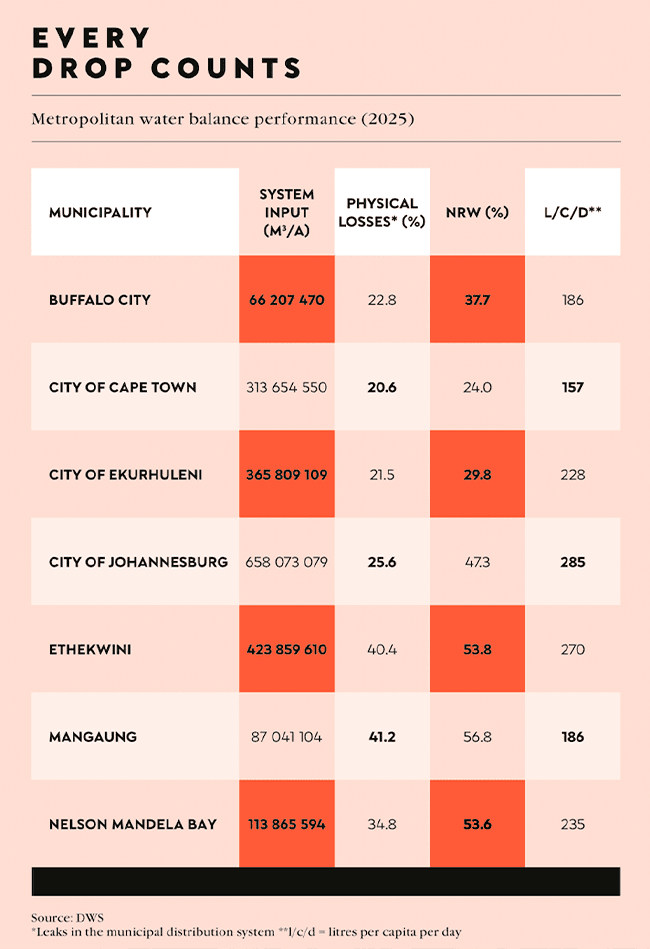
Only three months after the plan’s launch, the Coca-Cola system (which includes the Atlanta-based beverage giant’s global network of independent bottling partners) announced a ZAR500 million public-private partnership to tackle non-revenue water (NRW) in South Africa. NRW averages 47% across the country, meaning that almost half the water entering municipal distribution systems isn’t accounted for as revenue-generating water. The losses are not only linked to failing infrastructure, but also to commercial losses (such as faulty meters and illegal connections) and unbilled consumption (free water allocations and poor municipal revenue collection).
‘Water security is fundamental to South Africa’s economic growth, community resilience and long-term sustainability,’ said Luis Felipe Avellar, president of the Coca-Cola Company’s Africa operating unit. ‘Beyond its direct impact, the initiative demonstrates how collaborative action can help attract private investment and address critical water sector challenges. It supports the objectives of the National Water Action Plan and provides a scalable, catalytic model that could be replicated across South Africa.’
Part of Coca-Cola’s Africa Water Stewardship Initiative, the partnership involves Coca-Cola Beverages Africa, the World Bank’s 2030 Water Resources Group, the Platform for a Water Secure Gauteng, the Department of Water and Sanitation, Rand Water Services, the Global Water Challenge and the City of Tshwane.
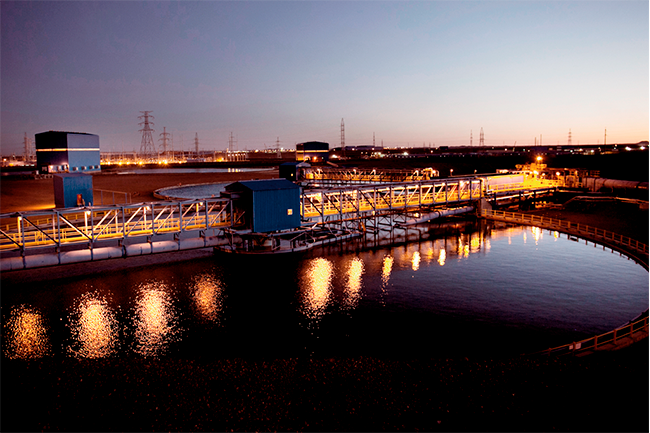
The company says the initiative will initially focus on the City of Tshwane municipal system targeting leak reduction through pressure management and the installation of infrastructure to improve industrial effluent monitoring and accountability.
‘This initiative demonstrates the value of partnership across government, business and development partners in advancing a shared national priority,’ said Minister of Water and Sanitation Pemmy Majodina at the launch.
Partnerships, it seems, are the name of the water game. In fact, government’s Water Partnership Office (WPO), established in 2023, is the product of a partnership itself – between the Development Bank of Southern Africa, the Department of Water and Sanitation (DWS) and the South African Local Government Association. The WPO has identified a pipeline of more than 30 water infrastructure projects worth more than ZAR40 billion across 18 municipalities, a number of which have been earmarked for public-private partnerships (PPPs).
‘With the establishment of the National Water Infrastructure Agency (NWIA) and other such reforms, the current and future landscape of the water sector presents many different opportunities for private investors,’ says Stuart Morrison, a data analyst in Good Governance Africa, which in June released an intelligence report on the role of PPPs in South Africa’s water sector. ‘Additionally, with the current water crisis affecting business operations, quality of life and political stability, involvement in this sector ensures the private sector is able to directly contribute to the development of communities, municipalities and the economy, provided they do not directly substitute government responsibility.’
Morrison says the private sector in the water sector has been sceptical about PPPs ‘because of the municipal challenges, slow bureaucratic systems and substantial upfront capital requirements’. That is reflected in the lack of private investment in the water sector in the past – only 8% of total investment between 2000 and 2020, according to Morrison. However, improvements to legislation governing PPPs may help attract more public-sector interest. For example, recent amendments to the Public Finance Management Act have created a separate approval process for PPP projects with an estimated total cost of under ZAR2 billion, exempting them from the standard, rigid National Treasury approval process. They will still be required to engage with Treasury’s PPP Advisory Unit, but the procedural complexity of implementing PPP projects has been significantly reduced.
There are other more company-specific ways the private sector can go about managing their water consumption, thereby relieving some of the pressure on water service providers or municipalities. In the Western Cape, South African Breweries (SAB) is collaborating with the Nature Conservancy (TNC), the Greater Cape Town Water Fund (GCTWF) and the World Wide Fund for Nature to remove alien vegetation clogging up the province’s water supply system. The overall GCTWF initiative is saving more than 17 billion litres of water every year.
The brewer has invested about ZAR5.5 million in the GCWTF over three years and has replenished 3.3 billion litres of water by clearing 1 367 ha of non-indigenous and invasive plants from parts of the province. ‘Water security is fundamental to our business and our communities. Through strong partnerships such as these, we are able to drive impactful solutions that replenish vital water sources, create jobs and ensure a sustainable future for all,’ according to Richard Rivett-Carnac, CEO of SAB.
At key sites such as the Newlands brewery in Cape Town, SAB has also installed AI-led internet of things systems designed to enhance water efficiency in its operations.
Christiaan Meyer, the national commercial facilities manager for property company Growthpoint, believes the private sector has an important role to play in water stewardship. ‘Commercial properties form part of broader urban water systems and depend on the same resources and infrastructure as surrounding communities. Water stewardship therefore starts with understanding and reducing an organisation’s own demand, while ensuring water is used responsibly and losses are minimised,’ he says. Meyer stresses that the goal is ‘not simply to secure supply for individual properties, but to contribute to more sustainable shared water resources’.
The mining sector has long been investing in water-saving measures, such as closed-loop systems and installing treatment plants to recycle mine-impacted water. Alessandra Pardini, head of projects, energy and infrastructure at Bowmans law firm, writes in an online blog that the mining sector’s huge investment in renewable energy projects ‘offers a powerful example of the corollary impact that co-ordinated private sector investment’ can achieve. ‘Mpumalanga’s coal belt is a good example of where this approach is working well. Water treatment facilities capable of processing millions of litres of contaminated water per day are being built, with a significant portion of this purified water then provided to local municipalities to boost their potable supply. The remaining purified water is treated according to the standards required for safe discharge,’ she writes.
At eMalahleni, for example, Nafasi Water Technologies, which develops, finances, builds and operates water-treatment facilities for industrial and public clients, is partnering with the Industrial Development Corporation on a ZAR125 million project to convert waste sludge generated by mine-impacted water treatment processes (sourced from Nafasi’s own mine-water treatment operations) into the inputs used in fertiliser manufacture.
Pardini believes there are many positives for privately funded water projects in the mining sector. ‘Addressing legacy issues around water management, especially in regions with old mines and large contaminated water volumes, results in cost savings and new opportunities to increase water supply for further use,’ she writes. ‘Such investments also contribute to the social licence to operate and provide potential financial incentives, especially if standards for water-related credits (similar to carbon credits) are developed down the line.
‘Forward-thinking mines are already documenting the benefits of augmenting government’s water treatment and water supply capacity. Mines are exploring and implementing initiatives that not only solve their own water problems but also benefit the government and surrounding communities. Depending on the structuring, these initiatives can also provide new sources of financial revenue for the mine and leverage the advantages of public-private collaboration,’ writes Pardini.
As Morrison points out, for these partnerships to work, commercial incentives must be balanced with community needs. ‘Meaningful engagement with local communities can strengthen public trust, reduce risks such as infrastructure vandalism, and improve the long-term viability of water projects.’