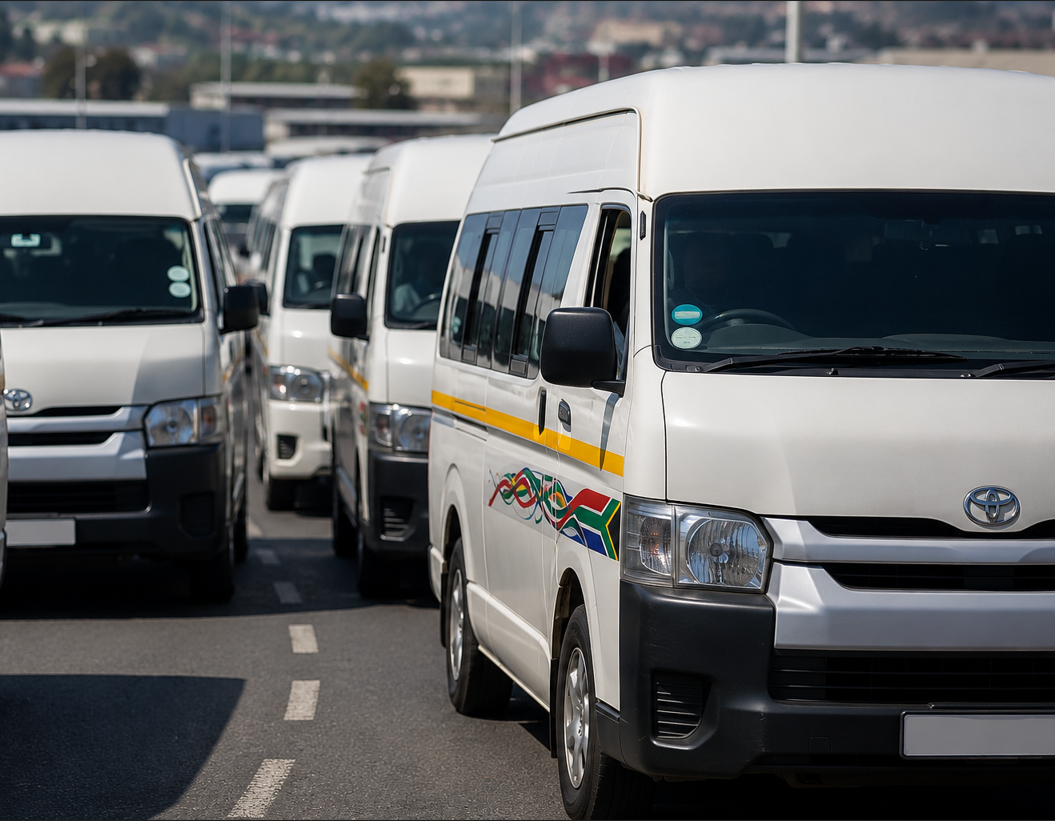
Cape Town – South Africa’s government is stepping up efforts to introduce cashless payments in the minibus taxi industry, with pilot projects underway to replace cash fares with digital payment systems.
Transport Minister Barbara Creecy revealed the initiative in a parliamentary response to a question from MP Katherine Christie on progress towards introducing digital payments in the informal economy.
The Department of Transport is implementing the projects through Taxi Recapitalisation South Africa (TRSA), working with four automated fare collection providers to develop sustainable systems for the industry.
The proposed technology will allow commuters to pay using smart cards or smartphones instead of cash, improving operators’ revenue visibility, reducing cash-handling risks and creating verifiable transaction records.
“The technology improves operators’ revenue visibility, reduces cash-handling risks, and creates verifiable payment records that can support access to formal financial services,” Creecy said in her response, published by the Parliamentary Monitoring Group.
Financial viability
She also confirmed that SANTACO is funding its own cashless payment pilot in Gauteng, with the department providing support and guidance.
The initiative is part of broader efforts to formalise the taxi industry and improve its access to financial services. Creecy said the department had engaged National Treasury on the financial viability, performance measures and funding structures of automated fare collection systems.
The department’s efforts date back to 2011, when Integrated Fare Payment Regulations were introduced to support the transition towards digital payments.
Cashless payment initiatives have already started gaining traction in some parts of the country.
In October 2025, Gauteng Premier Panyaza Lesufi announced plans to transition the province’s minibus taxi industry to cashless payments. According to SABC News, SANTACO welcomed the proposal, although its spokesperson Rebecca Phala cautioned that a completely cashless system would not be immediately achievable.
Integration, sustainability, safety and affordability
The Western Cape has also made progress, with the Cape Organisation for the Democratic Taxi Association (CODETA) launching a cashless payment pilot on two routes on 1 June 2026.
The pilot allows commuters travelling between Site C in Khayelitsha and Killarney, as well as Mfuleni and Killarney, to pay using digital cards scanned when boarding.
Western Cape Mobility Minister Isaac Sileku described the development as “a practical step towards a safer and more efficient public transport system”.
According to the Western Cape Government, the initiative is intended to reduce the risks associated with handling cash while improving convenience for commuters.
Meanwhile, the government’s broader transport reform agenda includes efforts to formalise the taxi industry through pilot Transport Operating Companies in each province.
Creecy said the reforms were aimed at improving integration, sustainability, safety and affordability across the public transport sector.
However, the transition to cashless payments is expected to require cooperation between government, taxi associations, operators and technology providers, particularly as commuters and drivers adapt to the new systems.
Follow African Insider on Facebook, X and Instagram
Picture: ChatGPT
For more African news, visit Africaninsider.com
Compiled by Betha Madhomu