Cape Town – President Cyril Ramaphosa has urged South Africans to turn out in large numbers for Wednesday’s local government elections, saying their votes could help improve service delivery, strengthen municipalities and build safer, more prosperous communities.
In his weekly newsletter, published on Monday, 2 November, Ramaphosa described the 4 November poll as one of the biggest electoral contests in South Africa’s democratic history, with 546 political parties and nearly 137,000 candidates contesting the elections.
“Local government is essential to improving the quality of life of citizens,” he said, calling on all registered voters to exercise their democratic right.
Ramaphosa emphasised that municipalities play a central role in providing essential services, including water, sanitation and electricity, which he described as the foundations of a thriving economy.
He also highlighted the importance of maintaining public confidence in the electoral process, noting that every election since 1994 had been free and fair, with public trust in the Independent Electoral Commission (IEC) remaining high.
Dear Fellow South African,
In two days’ time, on Wednesday 4 November, we will be holding local government elections.
This is one of the biggest electoral contests in our country’s democratic history, with 546 parties and nearly 137,000 candidates.
🔗 https://t.co/4urEiuei8B https://t.co/91Fazcm2uW
— Cyril Ramaphosa 🇿🇦 (@CyrilRamaphosa) November 2, 2026
With concerns about political violence and intimidation ahead of the elections, the president said the South African Police Service (SAPS) had undertaken risk assessments, operational planning and simulation exercises to ensure voting day proceeded peacefully.
“As a nation we must come together to ensure that the upcoming poll is not marred by acts of violence or intimidation,” he said.
The president acknowledged that competition for political power and access to municipal resources had contributed to violence, including disruptions of council meetings and the killings of ward candidates, councillors and municipal officials.
He also raised concerns about corruption and political patronage within municipalities, accusing some councillors of prioritising procurement deals over the needs of communities.
“Sadly, what is supposed to be a democratic contest for the opportunity to serve communities has in some cases become a transactional arrangement,” Ramaphosa said.
The elections will see candidates contest leadership positions across South Africa’s eight metropolitan municipalities, 44 district municipalities and 205 local municipalities.
Reforms
Those elected will take office as government embarks on reforms aimed at addressing persistent municipal failures through the newly launched White Paper on Local Government.
According to Ramaphosa, the proposed reforms seek to strengthen municipal administration, improve accountability and professionalise local government by ensuring that officials are appointed on the basis of their qualifications and competence.
The reforms also place emphasis on improving municipal finances through stronger financial management, better revenue collection, reducing financial losses and tighter spending controls.
One key proposal is to ring-fence revenue generated from the sale of electricity and water so that the money is reinvested in maintaining and upgrading critical infrastructure.
The White Paper also proposes compulsory licensing requirements for water and electricity providers to ensure they meet minimum standards of competence.
Let us vote for progress and development
Where municipalities cannot adequately perform particular responsibilities, the president said these could be assigned to another sphere of government or an entity with the capacity to deliver.
Ramaphosa argued that municipal failures had undermined public confidence in democratic governance, but said the elections offered an opportunity to reverse the trend and rebuild local government as an instrument for development.
“The voters of South Africa have an unprecedented breadth of choice of candidates and parties,” he said.
“However we vote on Wednesday, let us strive for better, safer, cleaner and more prosperous communities. Let us vote for progress and development.”
He concluded by urging citizens to recognise their responsibility beyond election day, saying that the future of local government depended on both elected representatives and active public participation.
“Working together, as an active citizenry, we can make South Africa better. Through our votes, we can help ensure that local government is able to fulfil the promise that our Constitution has made to our people.”
Follow African Insider on Facebook, X and Instagram
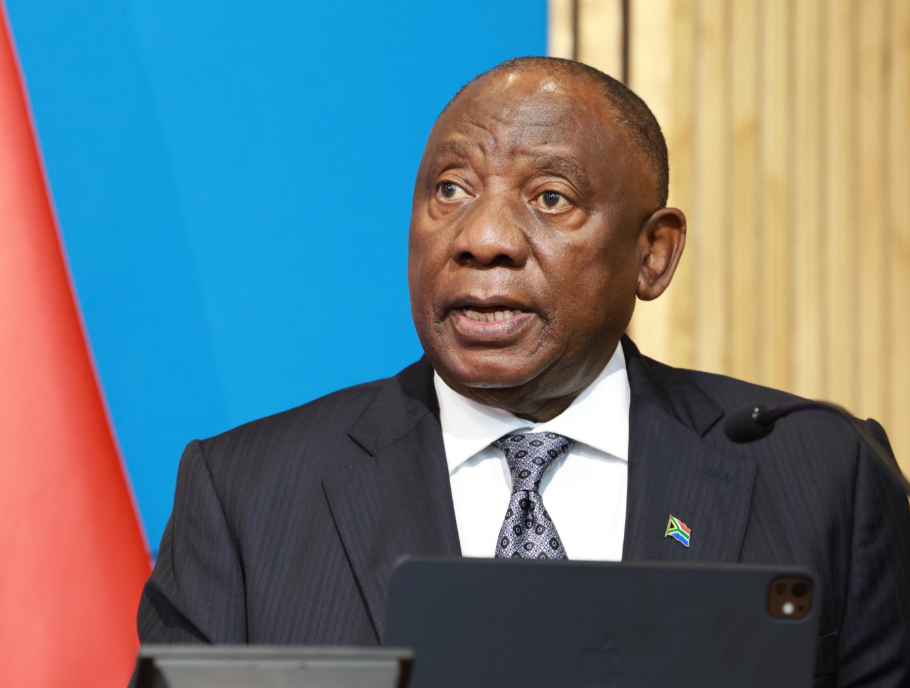
Picture: X/@PresidencyZA
For more African news, visit Africaninsider.com
Compiled by Betha Madhomu