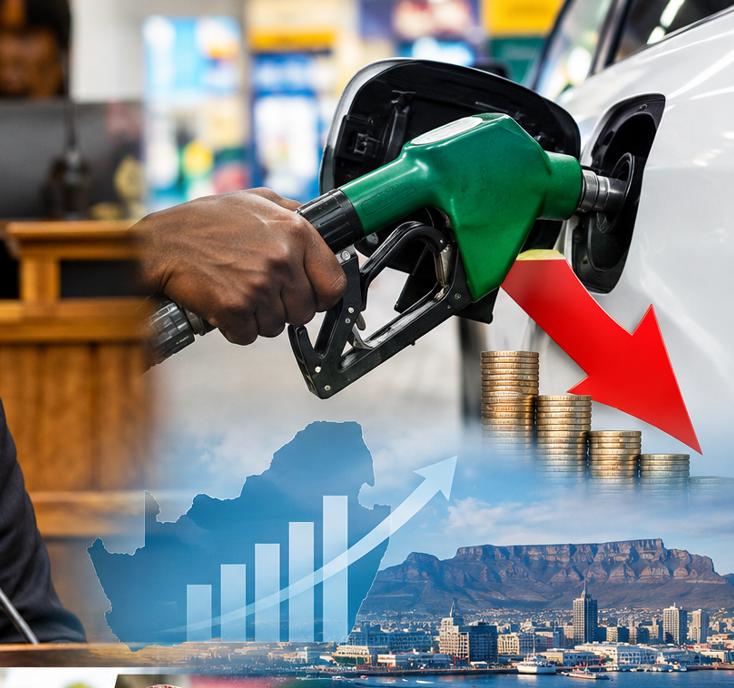
Cape Town – Finance Minister Enoch Godongwana has announced temporary fuel levy cuts, additional funding for public services and new measures to strengthen fiscal discipline as South Africa grapples with weaker economic growth and rising living costs.
Presenting the 2026 Medium-Term Budget Policy Statement (MTBPS) in Parliament on Wednesday, Godongwana said the government’s efforts to stabilise public finances were beginning to yield results despite global economic uncertainty.
The government will reduce the general fuel levy by R1.50 per litre for petrol and R3 per litre for diesel from 4 November to 1 December 2026. The relief will continue at lower rates until 5 January 2027, with cuts of R1 per litre for petrol and R1.50 for diesel.
The measures will cost the government R10 billion in foregone revenue.
“This intervention will help ease cost of living pressures without compromising the sustainability of the budget,” Godongwana said.
The minister also revised South Africa’s economic growth forecast for 2026 downwards to 1.2%, from the 1.6% projected in February, reflecting pressure from higher fuel prices, geopolitical tensions and the effects of El Niño.
However, the fiscal outlook has improved, with tax revenue for the 2026/27 financial year expected to exceed February’s estimate by R17.1 billion, driven by stronger collections from corporate income tax, dividends tax and value-added tax.
Much of the revenue improvement stems from higher commodity prices, which the National Treasury expects to ease over the medium term.
Godongwana said the government had “emerged from the fiscal wilderness”, as debt stabilised at 78.4% of gross domestic product in the 2025/26 financial year and began to decline.
Additional funding from municipalities
The consolidated budget deficit is projected to narrow to 3.9% of GDP in 2026/27, while the primary budget surplus is expected to increase from 1.7% of GDP to 2.9% by 2029/30.
The budget also provides additional funding for municipalities and provincial services, including R21.8 billion for the local government equitable share and R20.5 billion for the provincial equitable share to help meet the costs of health and education.
Further allocations target child nutrition, public safety and gender-based violence, including R3.8 billion to recruit more than 3,500 social workers.
Godongwana said the government’s priority was to maintain fiscal discipline while protecting essential services and supporting economic growth.
“The difficult choices of the past few years were made for a purpose. To restore stability today so that we can build a faster-growing, more inclusive and more resilient economy tomorrow,” he said, as quoted by BusinessTech.
The MTBPS sets out the government’s updated fiscal plans ahead of the next national budget, balancing immediate cost-of-living pressures against the need to contain debt and sustain public investment.
Follow African Insider on Facebook, X and Instagram
Picture: ChatGPT
For more African news, visit Africaninsider.com
Compiled by Betha Madhomu