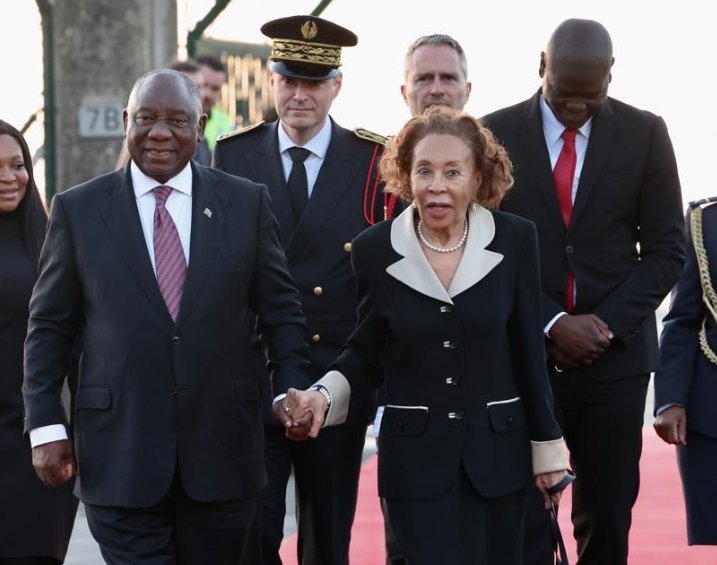
Paris – President Cyril Ramaphosa has called on world leaders to move from commitments to action in transforming education systems, warning that the world cannot afford to delay efforts to improve access to quality learning.
Addressing the Transforming Education Summit (TES+4) at UNESCO headquarters in Paris on Friday, Ramaphosa said countries must prioritise investment in education to prepare young people for a rapidly changing world shaped by technology, climate change and ongoing global conflicts.
The summit reviewed progress made since countries committed in 2022 to reform education systems in line with the United Nations Sustainable Development Goal 4 (SDG 4), which aims to ensure inclusive and equitable quality education for all by 2030.
Ramaphosa said education remained the “most powerful weapon” to change the world, echoing the words of former president Nelson Mandela.
“The time for transformation is now. The responsibility is ours. The future belongs to those we educate. Let us move forward together,” he told delegates.
“Education builds. It unlocks human potential. It dismantles ignorance.”
Keynote address by His Excellency @CyrilRamaphosa during the Transforming Education Summit (TES +4) at @UNESCO Headquarters
📍 Paris, France#SAinFrance 🇿🇦 🇫🇷… pic.twitter.com/HF6tKVNiIO
— The Presidency 🇿🇦 (@PresidencyZA) July 10, 2026
Highlighting South Africa’s progress, Ramaphosa said the country recorded its highest matric pass rate since the advent of democracy last year, with most university entrance passes achieved by learners from disadvantaged communities.
He said many of those learners would be able to study at universities, technical or vocational colleges free of charge, describing it as evidence that expanding educational opportunities can transform lives and societies.
The President cited Rwanda, China and India as examples of countries that have used sustained investment in education to drive economic growth and reduce poverty.
Despite progress, Ramaphosa warned that major challenges remain.
He said tighter fiscal conditions, armed conflicts and climate-related disasters continue to disrupt education worldwide, while the rapid advancement of technology requires countries to equip learners with new skills.
When we convened in 2022, the global education crisis had been amplified by the COVID-19 pandemic. More than 140 countries committed to recover learning losses, to close equity gaps, to strengthen our teachers, and to ensure that no child would be left behind.…
— Cyril Ramaphosa 🇿🇦 (@CyrilRamaphosa) July 10, 2026
Ramaphosa also called for greater support for teachers, saying meaningful education reform would not be possible without improving their working conditions, remuneration and professional development.
“The teaching profession stands at the heart of any meaningful education transformation,” he said.
He urged governments to place equity and inclusion at the centre of education policy, saying quality education must be accessible to all learners regardless of gender, disability, income or location.
Ramaphosa also encouraged countries to align education priorities with those advanced during South Africa’s G20 Presidency, including improving foundational learning, strengthening the teaching profession and promoting the mutual recognition of qualifications across borders.
He called on governments to translate commitments into measurable results as the world approaches the 2030 deadline for achieving SDG 4.
“We must move from commitment to implementation, from promises to results, from statements to accountability,” Ramaphosa said.
Follow African Insider on Facebook, X and Instagram
Picture: X/@PresidencyZA
For more African news, visit Africaninsider.com
Compiled by Betha Madhomu