Cape Town – South African-born billionaire Elon Musk has again criticised the South African government over delays in granting his satellite internet service, Starlink, an operating licence.
Musk claims that “racist laws” such as Black Economic Empowerment (BEE) are blocking approval, suggesting on X that Starlink would have been licensed “years ago” if he were Black.
His remarks follow online claims that farmers and rural communities are pressuring the government to approve the service due to poor internet access in remote areas.
“Starlink has committed to a R500 million investment to connect 5,000 rural schools with free, high-speed internet, benefiting more than 2.4 million learners each year. But it is still on hold,” Musk wrote.
Still no approval https://t.co/fxtvec9Ehp
— Elon Musk (@elonmusk) February 20, 2026
“Why? Because South African regulations require 30% local Black ownership for telecom licenses. South African farmers and rural communities are asking the government to approve Starlink.
“In many remote areas, there is no internet access at all, and people have to drive several kilometers just to get basic connectivity. The South African government is the enemy of its own people.”
ELON MUSK: “There are 140 laws in South Africa that give strong preference to if you are a black South African & not otherwise. Starlink is not allowed to operate there because I’m not black”
South African farmers & rural residents have agitated for the govt to approve Starlink. pic.twitter.com/g3CLdKMNFY
— DogeDesigner (@cb_doge) February 20, 2026
However, officials argue that Starlink has not complied with local regulatory requirements, including Black ownership rules in the ICT sector. Regulators maintain that all operators must meet transformation laws.
Starlink says it is not seeking special treatment or exemptions.
According to its website, the company proposes investing R500 million to connect 5,000 rural schools to free high-speed internet through Equity Equivalent Investment Programmes (EEIPs), but critics argue this may sidestep existing ICASA transformation rules.
Starlink insists it will comply with South African laws, pay taxes, meet B-BBEE requirements, and partner with local businesses if granted approval.
” This commitment has been shared with government leaders and with thousands of South Africans who are waiting for service to become available.
“For this investment to proceed, ICASA’s licensing regulations must be aligned with existing law and the B-BBEE ICT Sector Code, which already recognizes EEIPs.”
Follow African Insider on Facebook, X and Instagram
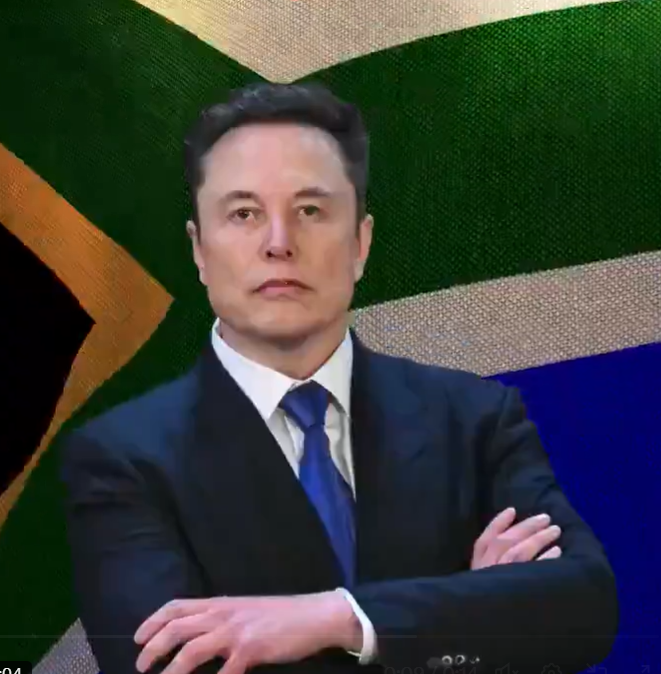
Picture: Screengrab
For more African news, visit Africaninsider.com
Compiled by Betha Madhomu