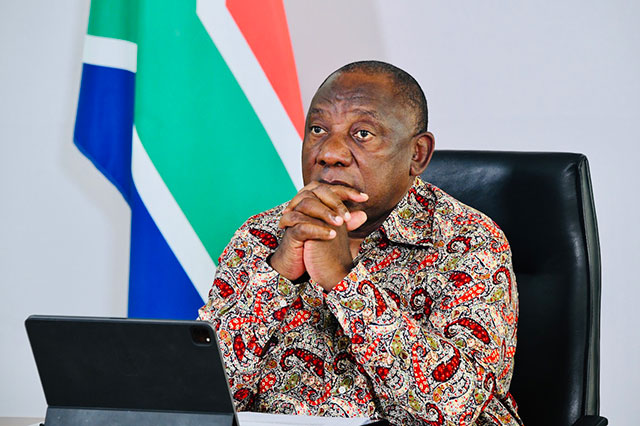
Durban – The eThekwini metropolitan municipality is providing a model for stabilising struggling local governments, President Cyril Ramaphosa said on Monday, highlighting the role of coordinated action, strong leadership, and partnerships between government, business, labour, and civil society.
Addressing progress made since the establishment of the Presidential eThekwini Working Group in 2024, Ramaphosa noted that interventions aimed at improving service delivery and infrastructure have begun to yield results. At the time of the group’s formation, eThekwini faced service delivery failures, deteriorating infrastructure, and declining business and investor confidence.
“Two years later, the interventions undertaken to tackle poor service delivery and failing infrastructure are driving an effective sustained recovery in the metro,” Ramaphosa said.
Key economic indicators support the claim of recovery. The Durban Business Confidence Index has reached its highest level since inception, with the manufacturing sector registering a nearly 16% quarter-on-quarter increase. Tourism has also rebounded, with over 1.2 million visitors to the metro during the recent festive season. Meanwhile, infrastructure projects are underway, and improvements in safety and security coordination are being reported.
Dear Fellow South African,
The progress being made by the eThekwini metro towards stabilisation demonstrates how effective leadership, coordinated action and strong societal partnerships can support struggling municipalities to regain their footing.
🔗 https://t.co/Rhs3dOemQe pic.twitter.com/jbCWPtJsQl
— Cyril Ramaphosa 🇿🇦 (@CyrilRamaphosa) March 9, 2026
The President emphasised that while stabilisation is not equivalent to a full turnaround, the eThekwini experience demonstrates a replicable model for other municipalities. “The working group approach is based on the District Development Model, launched in 2019, which brings together all three spheres of government, business, labour, and civil society to accelerate turnaround strategies,” he said.
Ramaphosa also stressed the importance of strengthening institutional capacity across local government. “Municipalities must be able to deliver on their constitutional mandates without the need for national intervention,” he said, pointing to ongoing reforms in the White Paper on Local Government. Proposed changes include differentiated municipal powers, improved senior official appointment processes, and stronger cooperation with traditional leadership.
Financial stability remains a major challenge. Audit outcomes indicate that roughly two-thirds of municipalities are in financial distress, often due to poor revenue management and rising debt. To support reform, the national government has allocated R27.7 billion over the next three years to encourage improvements in water, sanitation, solid waste, and electricity services, while also overhauling the municipal infrastructure grant system.
Ramaphosa linked municipal reform to broader economic benefits. “The progress being made in eThekwini and other municipalities is part of a wider programme of reforms that are contributing to better economic growth and improved business confidence,” he said, citing initiatives in the energy, water, telecommunications, and logistics sectors.
With local government elections approaching, Ramaphosa urged all stakeholders to focus on improving service delivery and community well-being, rather than electoral politics. “When local government works well, villages, towns, and cities become engines of opportunity and growth,” he said.
Follow African Insider on Facebook, X and Instagram
Picture: X/@PresidencyZA
For more African news, visit Africaninsider.com
Compiled by Betha Madhomu