Cape Town – The US National Institutes of Health (NIH) has lifted restrictions on funding research projects in South Africa, reversing a policy introduced after US President Donald Trump ordered government agencies to halt foreign aid and assistance to the country.
The decision follows an internal memo from NIH Director Jay Bhattacharya, reported by Science, which concluded that NIH research grants do not constitute foreign aid and therefore fall outside the scope of Trump’s executive order.
Bhattacharya said meritorious research projects in South Africa could proceed, subject to NIH review processes, US State Department review and the agency’s policies governing foreign awards.
“Because NIH grants are distinguished from ‘foreign aid or assistance’ as described above, meritorious research projects located in South Africa are permitted to proceed,” Bhattacharya said.
The decision comes as the US and South Africa maintain a long history of scientific collaboration, particularly in research into HIV and tuberculosis.
Funding
According to Business Insider Africa, the decision ends a 17-month disruption that had threatened major HIV, tuberculosis and other medical research programmes in South Africa. The publication reported that the funding freeze risked weakening decades of research infrastructure and scientific collaboration between the two countries.
The report said that South African scientists can once again seek eligible NIH research funding following the reversal. However, researchers remain excluded from some NIH training and career-development programmes.
The funding disruption was triggered by the Trump administration’s 2025 executive order halting US assistance to South Africa. The NIH subsequently determined that its research grants were distinct from foreign aid and therefore should not be covered by the order.
While research funding has been cleared to continue, the NIH’s Fogarty International Center (FIC) will no longer fund the training of scientists from South Africa.
According to the NIH, the exclusion affecting sub-Saharan African countries was removed as part of an update to its implementation policy.
The agency said the change was intended to make better use of US taxpayer funding, noting that South Africa is classified as an upper-middle-income country and is a member of the G20.
South Africa’s land expropriation
The distinction means South African researchers can continue to compete for eligible NIH research grants, while training programmes funded through the FIC will no longer receive support under the previous arrangements.
Trump’s executive order targeting US foreign assistance to South Africa cited what it described as two “egregious acts” by the South African government.
According to Health Policy Watch, the order criticised South Africa’s land expropriation legislation and its decision to bring proceedings against Israel at the International Court of Justice (ICJ).
The executive order alleged that South Africa had adopted legislation allowing the government to seize agricultural property belonging to Afrikaners without compensation.
Critics have disputed that characterisation, arguing that South Africa’s Expropriation Act allows expropriation without compensation only in specific circumstances and subject to legal processes. The legislation does not identify any particular racial or ethnic group as the target of expropriation.
The order also criticised South Africa’s case against Israel at the ICJ, claiming that the proceedings undermined US foreign policy.
It directed US government agencies, including the US Agency for International Development, to halt foreign aid or assistance to South Africa to the maximum extent permitted by law.
However, the order also allowed agency heads to continue assistance they considered necessary or appropriate.
The NIH’s decision therefore creates a distinction between foreign assistance covered by the executive order and scientific research grants, allowing eligible research collaboration between the US and South Africa to continue.
The lifting of the restriction provides relief to South Africa’s research community after months of uncertainty over the future of US-backed scientific programmes, particularly those focused on HIV, tuberculosis and other medical research. Business Insider Africa said the disruption had threatened to erode research infrastructure built through decades of US-South African collaboration.
Follow African Insider on Facebook, X and Instagram
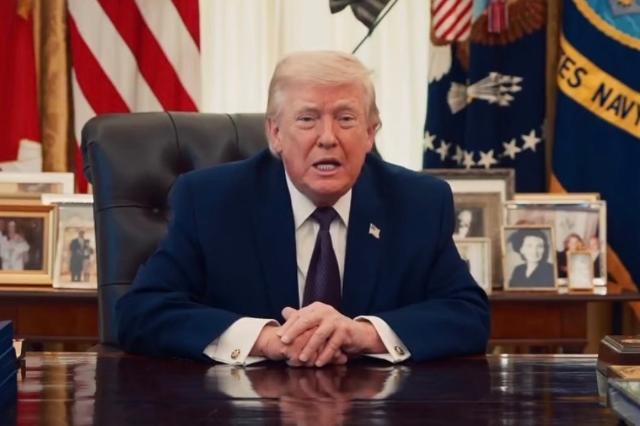
Picture: Screengrab
For more African news, visit Africaninsider.com
Compiled by Glaan Sibuyi