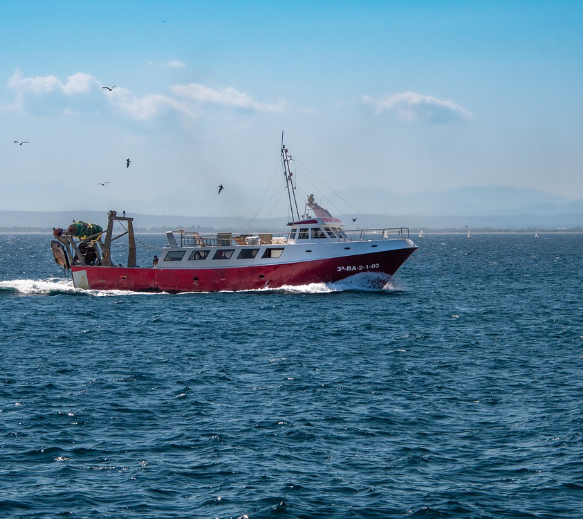
Cape Town – Four Chinese-flagged fishing vessels were intercepted after entering South Africa’s maritime zones without authorisation, prompting swift action by the Department of Forestry, Fisheries and the Environment (DFFE) and the South African Police Service (SAPS) Tactical Team.
The vessels — Zhong Yang 231, Zhong Yang 232, Zhong Yang 233, and Zhong Yang 239 — were detected inside South Africa’s Exclusive Economic Zone (EEZ) and later within territorial waters along the KwaZulu-Natal and Eastern Cape coastline.
Authorities placed the vessels under guard at the Port of Cape Town anchorage while compliance procedures were finalised between the DFFE and the vessel owner, Shenzhen Shuiwan Pelagic Fisheries Co. Ltd.
Minister of Forestry, Fisheries and the Environment Willie Aucamp welcomed the coordinated enforcement operation, stressing that South Africa would not tolerate violations of its maritime laws.
“South Africa will not tolerate the unlawful use of its maritime zones,” said Aucamp.
“We remain resolute in safeguarding our marine resources and ensuring that our ports are not perceived as ports of convenience. Compliance with our laws is non-negotiable.”
According to the department, the vessels had initially requested permission on 23 February 2026 to transit through South Africa’s EEZ under “innocent passage”, stating they would leave the zone by 3 March.
However, on 27 February, the South African Maritime Safety Authority (SAMSA) reported that the vessels had also applied for Off-Port Limits (OPL) authorisation without providing the necessary justification or documentation. The request was subsequently rejected.
Further investigations by the DFFE revealed that the vessels had already entered South African territorial waters while the OPL application was still under consideration. The ships were first detected within 12 nautical miles of the KwaZulu-Natal coast before being tracked further along the Eastern Cape coastline.
Authorities also found that the vessels repeatedly switched their Automatic Identification System (AIS) on and off while travelling through South African waters, which contravenes regulations requiring foreign vessels to keep the system active to maintain navigational safety.
Officials said the conduct raised concerns about possible violations of the Marine Living Resources Act 18 of 1998, prompting enforcement action.
The masters of the vessels were charged and an administrative penalty of R400,000 was imposed. The vessel owner later paid the fine, after which the ships were released and departed from South African waters.
The department said the operation underscores South Africa’s commitment to protecting its marine resources and strengthening efforts to combat illegal, unreported and unregulated fishing in its maritime zones.
Follow African Insider on Facebook, X and Instagram
Picture: Pixabay
For more African news, visit Africaninsider.com
Compiled by Betha Madhomu