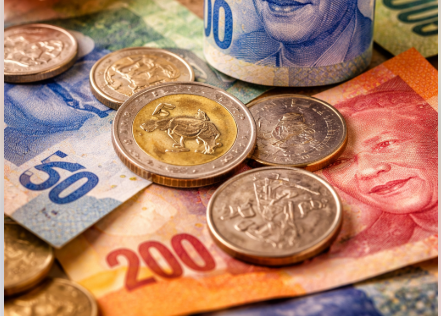
Cape Town – The South African rand weakened on Thursday after briefly hitting a one-month high in the previous session, as markets reacted to renewed uncertainty over the US–Iran ceasefire agreement.
The currency had strengthened on Wednesday following the announcement of a two-week truce, at one point trading as strong as R16.30 to the US dollar.
However, it later eased to around R16.44–R16.45 on Thursday morning as geopolitical tensions resurfaced after deadly Israeli strikes in Lebanon and fresh doubts over the durability of the ceasefire.
Analysts warned that the agreement remains fragile, with Iran and the United States set to begin peace talks in Pakistan on Friday, Reuters reported.
“Following the initial appreciation, the rand appears to have settled into a range as investors await clarity on the ceasefire agreement, which remains fraught with challenges and distrust,” said ETM Analytics in a note, as per the report.
South African rand slips as investors track fragile Middle East ceasefire, assess local data https://t.co/jxD0rJ5bmz https://t.co/jxD0rJ5bmz
— Reuters (@Reuters) April 9, 2026
“This weekend’s events will be a critical test of whether the ceasefire holds, as officials meet in Pakistan to begin negotiations,” said the firm, adding that the rand is expected to remain range-bound into next week, due to “light positioning and lower volatility.”
According to IOL, Bianca Botes, managing director at Citadel Global, said the situation remained unstable, noting that “the ceasefire appears all but stable” and that accusations of breaches had already emerged, including claims linked to the Strait of Hormuz.
Global markets also reflected the uncertainty. While US equities rallied on Wednesday, Asian markets fell in early Thursday trade, and US futures came under pressure ahead of key economic data releases, including US inflation and jobless claims figures.
Oil prices rose again on Thursday, with Brent crude nearing $97 per barrel after a sharp drop earlier in the week when the ceasefire was first announced.
Despite the rebound, analysts said fuel price relief for South African consumers is unlikely, as prices are expected to remain above pre-conflict levels. Anchor Capital’s Nolan Wapenaar said any decline in oil would likely delay further fuel price increases rather than reverse them.
Locally, investors also focused on upcoming South African manufacturing data, while earlier figures showed foreign reserves fell to $73.19 billion in March from $75.84 billion in February. Government bonds also weakened, with yields edging higher in early trade.
Overall, analysts expect the rand to remain range-bound in the near term as markets await clarity on geopolitical developments and global economic indicators.