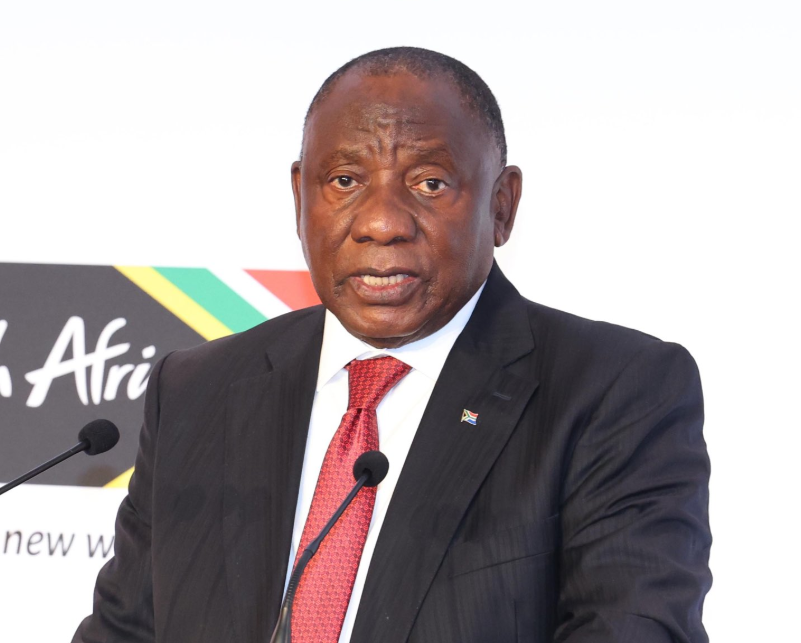
Johannesburg – South Africa’s investment outlook is showing renewed strength, supported by signs of economic recovery and ongoing structural reforms, President Cyril Ramaphosa said in his weekly newsletter ahead of the sixth South Africa Investment Conference (SAIC).
The conference, taking place in Sandton, Gauteng, will bring together delegates from more than 50 countries and more than 1 000 investors, business leaders and policymakers.
“Since its inception in 2018, the SAIC has grown to become a premier global forum for showcasing the attractiveness of investment opportunities in our country to domestic and international investors,” Ramaphosa said.
He said investment conferences play a critical role in attracting foreign direct investment and building partnerships between governments, business, banks and development finance institutions.
“Investment conferences play a key role in attracting foreign direct investment (FDI) as high profile platforms that connect international investors with local opportunities,” he said.
Ramaphosa said South Africa’s economic fundamentals and reform agenda continue to strengthen investor confidence, despite global financial uncertainty.
“As investors look to destinations that have demonstrated resilience in the face of increasingly volatile global financial conditions, South Africa presents a favourable proposition,” he said.
Dear Fellow South African,
This week we will be welcoming delegates from more than 50 countries to the sixth South Africa Investment Conference (SAIC) in Sandton, Gauteng.
🔗 https://t.co/T08J0s8he6#SAIC2026#InvestSA pic.twitter.com/A6A73bsZl2
— Cyril Ramaphosa 🇿🇦 (@CyrilRamaphosa) March 30, 2026
He highlighted the country’s position as Africa’s largest economy with a diversified industrial base, noting that investment pledges since 2018 have spanned sectors including mining, healthcare, automotive, and food and beverages.
“We are Africa’s largest economy with a diversified industrial base,” Ramaphosa said.
He added that South Africa had become a leading destination for renewable energy investment on the continent.
“We are also the leading destination for renewable energy investment on the continent,” he said.
Ramaphosa pointed to improvements in macroeconomic indicators, including consecutive quarters of growth, stabilising debt levels, job creation, and improved credit standing.
“The macroeconomic outlook has improved. We experienced four consecutive quarters of growth by the end of 2025, national debt has stabilised and more jobs are being created,” he said.
Structural reform agenda
He also highlighted international recognition of reforms, saying: “Last year, our sovereign rating was upgraded for the first time in 17 years, and we were removed from the Financial Action Task Force grey list.”
The President credited the Operation Vulindlela reform programme for progress in electricity, freight logistics, water, telecommunications and visa systems.
“The structural reform agenda being driven through Operation Vulindlela has unlocked progress in electricity, freight logistics, water, telecommunications, and the visa system,” he said.
Ramaphosa said the country had ended load-shedding and was building a competitive electricity market.
“We have brought load-shedding to an end and are creating a new, competitive electricity market that will ensure energy security and attract investment,” he said.
He further noted reforms in freight transport and ports, including private sector participation projects and new rail access allocations.
Investment mobilisation
“A system for third-party access to the freight rail network is in place and 41 freight rail slots have been allocated to private companies,” he said.
On visas, he said government had introduced reforms aimed at boosting tourism and investment.
“These include operationalising the Remote Work Visa, introducing a Trusted Employer Scheme to support major investors, and piloting an Electronic Travel Authorisation system,” Ramaphosa said.
He said South Africa exceeded its previous investment mobilisation target, securing R1.57 trillion in pledges, with more than 300 projects initiated.
“At the end of our first five-year investment mobilisation drive in 2024 we exceeded our target by 26 per cent, securing pledges valued at R1,57 trillion,” he said.
Ramaphosa said the current investment drive aims to mobilise R2 trillion by 2028, with a focus on moving from pledges to implementation.
“The clear message we will be delivering is that we remain committed to staying the course on fiscal discipline, to accelerating the momentum of the reform agenda,” he said.