Advertorial

Leading the way

Bringing the first satellite to Angola, Infrasat aims to offer innovative services that will drive economic and social development... Read more
20 Oct, 2016

The global Sustainable Development Goals (SDGs) cannot be achieved without affordable and universal access to ICTs and broadband connectivity. This was the finding of members of the Broadband Commission who met on the eve of the opening of the 71st session of the UN General Assembly in September.

Currently, more than half of the global population are not yet using the internet and large differences in terms of speedy service and quality exist. As at December 2015, only 20% of sub-Saharan Africans had access to the internet.

A recent report by the UN Broadband Commission for Sustainable Development states that globally, approximately 3.9 billion people are not using the Internet. The research estimates that China, India, Indonesia, Pakistan, Bangladesh and Nigeria account for 55% of all unconnected people.

These findings suggest that targeted efforts in just a few key markets could help significantly in redressing the gaping ‘digital divide’ between those who are online and those still offline.

Understanding the challenges and opportunities
To drive global ICT expansion, there is the need to set ambitious and achievable targets. The International Telecommunication Union’s (ITU) Connect 2020 agenda states that by 2020, in excess of 50% of individuals in the developing world will use the internet.

Considering that a huge part of the global population lives in this region, this poses an enormous challenge but also an opportunity. To meet the Connect 2020 requirements, we will need to provide internet to more than 700 million new subscribers between now and 2020. This is equivalent to connecting 500 000 new users to the internet each day via mobile broadband.

Erricson_2
With mobile broadband connectivity, currently underserved markets will have access to new online and mobile services such as e-health, e-education and e-government

The difficulty is that the average revenue per unit (ARPU) is rather low for many of these 700 million users. It can vary between US$1 and US$10 depending on region and country, and this sets new requirements on what a cost-efficient mobile broadband solution is. Nevertheless, role players in this industry must find the solutions to capture the opportunity to grow with 700 million new subscribers.

The challenge of providing mobile broadband to these new subscribers can be split into three tracks, with enabling solutions from Ericsson. Firstly, improving the mobile user experience for those in underserved areas. An example that illustrates the difference in consumer experience with and without mobile broadband is that the typical average web download is easily 20 times faster with 3G than with 2G. Hence, the most straightforward way to improve consumer experience is to upgrade GSM networks and let performance improve-ment enable and drive data usage and growth.

Secondly, ensuring sustainable coverage and subscriber growth with innovation for underserved users. Today, there are hundreds of thousands of GSM-only sites that need to be upgraded to 3G and 4G. Which sites shall an operator start with to connect the largest groups of subscribers that can benefit from 3G services? Ericsson has the methods and tools to find the sites that make the biggest difference to people and operators.

Thirdly, building mobile broadband coverage in a cost-efficient and profitable way. The mobile broadband solutions that are built on 3G and 4G need to be robust, simple to operate and cost efficient. Therefore, today we present new cost-efficient radios, cabinets and backhaul solutions specifically designed for developing markets such as sub-Saharan Africa.

Investing in solutions that make a difference
As governments met at the UN General Assembly to discuss progress on the SDGs, Ericsson announced a set of solutions to help bridge the digital divide and bring mobile broad-band coverage to the remaining 3 billion people who are underserved or without mobile broadband access.

The new suite of solutions – which includes software and hardware additions to the Ericsson radio system – provide the capabilities needed to reduce the total cost of ownership by up to 40% when rolling out Ericsson’s total site solution for mobile broadband. This makes investments in low-ARPU markets viable.

Complementing the deployment of the solutions are new unique mobile broadband tools that allow operators to identify the sites in a GSM/EDGE coverage area with the highest number of users who already own internet-ready devices. Operators can then determine where it makes more sense to convert those sites first to HSPA or 4G/LTE, so that the greatest number of people will enjoy the benefits of mobile broadband.

The new solutions address the significant divide in internet adoption between developed and developing countries: only four out of 10 people in developing countries are connected to the internet. These solutions are also energy efficient, taking into consideration a significant challenge in some developing markets.

As at 2015, GSM/EDGE still accounted for close to 70% of the total mobile subscriptions in sub-Saharan Africa. These energy-efficient suites of solutions will enable operators to seamlessly identify underserved communities in the region, making it faster to introduce or improve the mobile broadband experience of their subscribers.

This will create new opportunities in far flung areas in the region, providing access to new services such as mobile money, e-health, e-education and e-government, thereby transforming the way people play, learn and do business.
Erricson_4

In summary, with these solutions, operators can improve user experience by up to 20 times by upgrading the GSM networks and allowing the performance to drive data consumption.

Our solutions also provide the methods and tools to find the sweet spots and invest where it makes a difference to the largest groups of users, which enables an accelerated deployment pace due to faster return on investment.

Finally, these solutions reduce total cost of ownership by up to 40% when rolling out Ericsson’s total site solution for mobile broadband. These are substantial additions to the company’s mobile broad-band coverage product portfolio targeted at securing the next 700 million mobile broadband users by 2020.

The role of partnerships
A recent report by Ericsson and the Earth Institute at Columbia University on the impact of ICT on sustainable development calls on governments to harness technology, investment and new types of partnerships to meet the goals.

The study indicates that even though ICT has a direct impact on meeting the goals by 2030, three supporting aspects need to align before ICT can deliver transformational change at the pace and scale required: an enabling policy framework; strong public-private partnerships; and sufficient public and private investment.

Erricson
Improving the mobile user experience in underserved communities is one of Ericsson’s key focus areas

As per the ITU’s 2020 targets, Ericsson will continue to innovate and develop technology to move this agenda forward, as well engage relevant stakeholders to support the deployment of ICT, ensuring that the dividends are being enjoyed across the region.

Erricson_logo
Johannesburg, South Africa office
148 Kelvin Drive,
Woodmead, Johannesburg
Tel: +27 (0)11 844 2000
Fax: +27 (0)11 844 2001
www.ericsson.com


Bridging the divide

Connecting the unconnected is a priority for Ericsson sub-Saharan Africa
20 Oct, 2016

Established in 1998 in Gaborone, Botswana, Letshego Holdings Limited has been listed on the Botswana Stock Exchange since 2002. Today, we are the largest indigenous company on the Botswana Stock Exchange with more than half of our shareholders being local investors.

With a proudly Botswanan heritage as well as a dedicated and committed team of people from across Africa, we have enjoyed consistent growth for almost two decades and expanded our footprint across the continent.

We are now established in Botswana, Kenya, Lesotho, Mozambique, Namibia, Nigeria, Rwanda, Swaziland, Tanzania and Uganda – with a growing financial inclusion agenda that is aligned to supporting local government initiatives. The provision of consumer finance to our customers – primarily government employees through the deduction at source model – remains our core business.

Letshego has grown from humble beginnings as a company employing less than 30 people in a small office in Gaborone to being Botswana’s largest indigenous group (by market capitalisation) listed on the Botswana Stock Exchange. Our inclusive finance strategy has steered our expansion beyond our borders.

As of 2015, and through a consistent focus on solving our customers’ needs in the simplest, most appropriate and accessible way, Letshego has grown to provide finance to 300 000 borrowers and offer savings capability to in excess of 100 000 depositors across the continent. This growth in size of operations has brought with it a diversity of talents, strengths, expertise and communities that make up our African heritage. We employ 2 300 employees representing 20 nationalities across 10 countries. As such, Letshego embraces our identity as a pan-African financial services provider.

The firm’s ambition is to become Africa’s leading inclusive finance group. Giving our customers access to loans that they can use for agribusiness, education, health, housing, and micro and small businesses signifies how we deliver inclusive finance and encourage productive use of our solutions. These solutions are offered through innovative access points or channels that give our customers access to our services anytime, anywhere.

Letshego
Letshego’s loans allow customers to give their children access to good education and a brighter future

Additionally, the ability to save for families, for education and for the future, as well as to pay and be paid safely and securely, is not available to many customers in the low- to middle-income earning segments of Africa. We have recognised the need to provide simple, appropriate and affordable solutions for our customers to allow them to pay bills and send and receive money. We continue to explore and develop innovative ways to make this possible across a broader footprint.

Innovation underpins our inclusive finance agenda, combined with a strong focus on customer experience. These themes – in combination with our commitment to improving lives – ensure that we are able to sustainably deliver strong growth, performance and returns for our shareholders.

Letshego launched its agency banking model in Mozambique, with the highlight being the LetsGo BlueBox model, which will allow an individual to open a basic transactional deposit account in remote areas via an agent’s smartphone or tablet. Also – in time – agents will provide additional services including deposit taking and withdrawals (cash-in/cash-out services).

The LetsGo BlueBox will also bring with it a number of features, including a bluetooth printer to provide customers with printed receipts/statements, a charging facility and torchlight, as well as financial education aids on the agent device and distribution to agent customers. In effect, the LetsGo BlueBox has the capability to take full-scope financial services to the customer. As such, this innovation aims to eliminate barriers for those in rural locations and help them join the financial ecosystem.

Letshego’s agency banking model is designed to strengthen the provision of inclusive financial services in rural areas and to those in various segments (formal, informal and micro and small entrepreneurs) that are either ignored or underserved by mainstream banks and other existing financial service providers. The LetsGo BlueBox incorporates eco-friendly practices in an affordable manner.

We celebrate 18 years of improving the lives of our customers, and in turn improving communities that we call home. Our customers have now gained access to participate financially and actively in the economy through our solutions.

Letshego-2
Letshego is committed to servicing rural and underserved communities, thereby making a positive impact on their lives

Letshego remains committed to helping the rural and underserved populations in every country we do business in, as our solutions impact on the members of our societies whose needs are, more often than not, overlooked.

This is especially so when it comes to gaining access to financing for education, health, housing and businesses – which in turn provide customers with dignity. Through-out our journey, we strive to significantly shift the narrative by improving lives through our services that are based on driving greater financial inclusion and therefore stimulating development.

We are humbled by and proud of our invaluable niche that has improved lives by servicing more than hundreds of thousands customers, which in turn has had a positive impact on their families and communities. Through our assistance to the underserved, we are grateful to have contributed towards Africa’s development.

To all our partners, customers, staff and other stakeholders we say: ‘Together, let’s improve life.’

Letshego_logo
Letshego Place, 22 Khama Crescent,
Gaborone, Botswana
Tel: +267 364 3000
Fax: +267 319 0418
Email: [email protected]
www.letshego.com

Working towards progress

Botswana-born finance company Letshego Holdings Limited is dedicated to assisting rural and underserved populations
19 Oct, 2016

Mara Delta (originally Delta Africa) is the largest pan-African-focused real estate fund listed on both the Johannesburg Stock Exchange (code: MDP) and Stock Exchange of Mauritius (code: DEL.N0000).

The company focuses exclusively on real estate assets on the African continent (excluding South Africa), underpinned by US dollar-denominated long-term leases with high-quality tenants, delivering strong sustainable income and offering investors exposure to US dollar-yields.

Following its merger with Mara Diversified Property Holdings, the company manages in excess of US$467 million worth of assets with a US$500 million property pipeline identified, including brownfield and greenfield developments as well as completed quality properties. 

Mara Delta’s current asset base is located in Mauritius, Morocco, Mozambique, Kenya, Nigeria and Zambia – with further pipeline assets and opportunities identified in these jurisdictions as well as in Tanzania, Uganda and Ghana.

The company is promoted by Pivotal, Delta, the Mara Group, Carlisle Property Holdings and Abland Africa – each of which provide an unrivalled blend of commercial experience and expertise in Africa.

Prime-loction
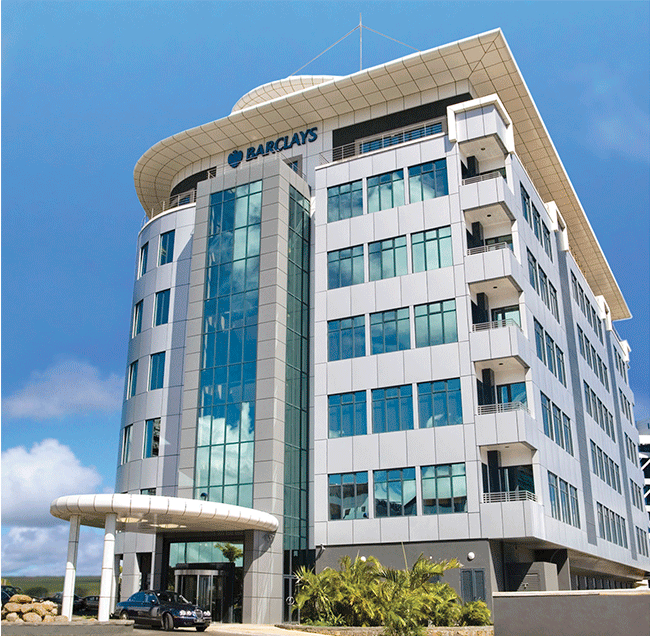
Mara Delta has established solid relationships with various banks and development finance institutions

GATEWAY TO AFRICA
‘When we decided to switch our offshore domicile to Mauritius, we gained several unanticipated advantages,’ says Bronwyn Corbett, Mara Delta’s chief executive.

She mentions the depth of domestic investment capacity, citing more than 35 investor groups attending their recent financial results presentation. Mara Delta’s head office is in Grand Baie, Mauritius and its management team (consisting of South African, Moroccan, Mozambican, Kenyan and Mauritian nationals) has a combined experience on the continent exceeding 45 years.

According to Corbett, Mauritius has done much to position itself as the business gateway to Africa, creating an ecosystem for global business – thanks to conducive legal and regulatory frameworks, as well as favourable tax treaties with many African countries.

Over the past two decades, Mauritius’ role as a financial centre has grown significantly, mainly as a result of its historical links with India. However, Mara Delta has been part of a second, Africa-focused wave on which Mauritius is keen to capitalise.

With airlines increasingly opening new routes via the island country, doing business on the continent is becoming more and more seamless.

THE LAST GROWTH FRONTIER
Given the rapid rate of urbanisation, burgeoning middle classes and being home to some of the world’s fastest-growing economies, Africa is increasingly recognised by international capital as the last frontier for real growth.

Real estate on the continent is particularly under-represented outside of South Africa, and developers are now responding to the strong demand for modern shopping malls, offices and hotels.

Jones Lang LaSalle estimates that the stock of ‘grade A’ shopping malls across Africa (bar South Africa) is less than 1.5 million m2. That’s barely equivalent to the stock of Hungary, a nation of 10 million people compared to Africa’s 1 billion.

Investing into a frontier market, however, is not without risks, as many of these countries are exposed to fluctuations in commodity markets, as well as severe exchange volatility against hard currencies.

‘The economies of Mozambique and Zambia, just like Nigeria and many other natural resource-rich African countries have been impacted by the fall in oil and commodity prices,’ says Corbett.

‘This has not had a significant effect on Mara Delta’s retail investments there. You can see all these macro-economic challenges but we are not necessarily feeling it on the ground from a real estate perspective.

‘This is largely as a result of our retail offering dominating in their respective areas, and the fact that these centres do not cater for luxury goods or discretionary spending – our customers frequent these centres for their daily living essentials,’ she says.

Prime-loction2
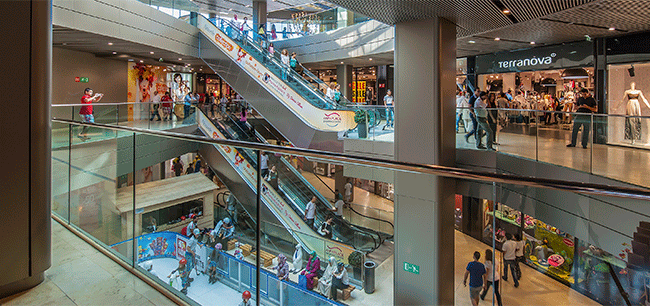
Recently, there has been a surge in demand for modern shopping malls, offices and hotels across the continent

The majority of Mara Delta’s leases are dollar denominated and underpinned by strong, international anchor tenants, further mitigating against these risks.

‘In addition, we are busy dealing with the global insurance market to take out cover against currency inconvertibility and non-transfer cover in Morocco and Mozambique.

‘We carefully manage the flow of funds through our liquidity facilities in Mauritius and pay particular attention to the cash flow surrounding investments and the strength of counter parties (tenants).

‘This places us in a strong position to deal with currency depreciation and liquidity issues.’

Apart from its investment criteria shielding its income flow, Mara Delta has access to a development pipeline, providing further yield accretive opportunities.

‘One way in which we are able to mitigate against a number of these risks is to ensure that we have good quality tenants already in place before we even start construction. This isn’t easy, but it is critical to our business. Currently, around 97% of our properties have tenants guaranteed,’ says Corbett.

ATTRACTING CAPITAL
‘Despite the associated risks, Africa is still home to good economic and demographic growth, and long-term investors are keen to be part of this. The real estate sector can give them exposure to these long-term fundamentals,’ according to Corbett.

Mara Delta’s immediate strategy is to consolidate opportunities within current countries of operation before expanding into other geographies. It enjoys strong support from a number of large pension funds, development finance institutions, banks and private equity funds, increasingly attracting capital from the Far East.

The company recently announced the conclusion of a US$77 million funding facility from the Bank of China at favourable US dollar LIBOR-plus rates. Mara Delta is aiming for a fund size of US$2 billion in the next five years, and is currently raising equity to fund its growth ambitions.

Prime-loction-logo

Moira van der Westhuizen: chief integration officer
Email: [email protected]
Tel: +230 650 4030
3rd Floor, La Croisette, Grand Baie, Mauritius
www.maradelta.com

Prime location

There are multiple benefits to investing in Mauritius, which has fast become a frontier market, according to cross-listed real... Read more
11 Aug, 2016