Johannesburg – South Africa’s rand has been hit by a combination of international market pressures and domestic political uncertainty, weakening to its lowest level in a year as investors become increasingly cautious about emerging-market currencies.
According to Daily Investor, the currency weakened to R17.62 against the US dollar on 22 November before recovering to R17.38 at Monday’s close.
Old Mutual Wealth investment strategist Izak Odendaal attributed much of the pressure to international developments, describing South Africa’s vulnerability to global financial markets by saying: “South Africa is a small boat on a large ocean”.
Odendaal said the country’s markets remained exposed to movements in the dollar, commodity prices and international investor appetite for risk.
The pressure has also been compounded by uncertainty surrounding municipal coalition negotiations following the November local government elections, particularly the possibility of the African National Congress (ANC) excluding the Democratic Alliance (DA) from several major municipal coalitions.
Political developments
Investec chief economist Annabel Bishop warned that the political developments could further undermine investor confidence.
“Negative investor sentiment towards South Africa will likely intensify if the ANC enters coalitions without the DA in the main in local government, as investors fear the largest political party could turn against the DA, threatening its inclusion in the GNU,” she said, according to Daily Investor.
In its 23 November currency assessment, Investec also highlighted the impact of expectations of higher US interest rates, declining precious metal prices and concerns over South Africa’s political direction.
Internationally, expectations that the US Federal Reserve could raise interest rates in response to persistent inflation have strengthened the dollar, making emerging-market currencies less attractive to investors.
The stronger dollar has also placed pressure on gold and platinum prices, removing an important source of support for South Africa’s currency.
The Bureau for Economic Research (BER), in its 20 November weekly review, reported that the rand had depreciated by 4% against the dollar over the week, with both domestic and international developments contributing to the decline.
Stronger greenback
The BER noted that global movements appeared to have been an important, and likely larger, driver of the currency’s weakness.
Meanwhile, Reuters reported that the rand touched a one-year low of R17.56 against the dollar in early trading on 20 November, with coalition uncertainty, a stronger greenback and a divided Reserve Bank interest-rate decision weighing on the currency.
The South African Reserve Bank kept its policy rate unchanged at 7.25%, although the decision was narrowly split, with four Monetary Policy Committee members voting to hold rates and three favouring a 25-basis-point increase.
Bishop warned that the rand’s weakness towards the end of the year could leave it increasingly vulnerable to further market shocks.
“Trade in the rand thins as year-end nears, and moving into the period on a weakened base erodes the currency further,” she said.
The currency’s outlook will therefore depend on developments in global financial markets, US monetary policy and the outcome of South Africa’s ongoing coalition negotiations.
Follow African Insider on Facebook, X and Instagram
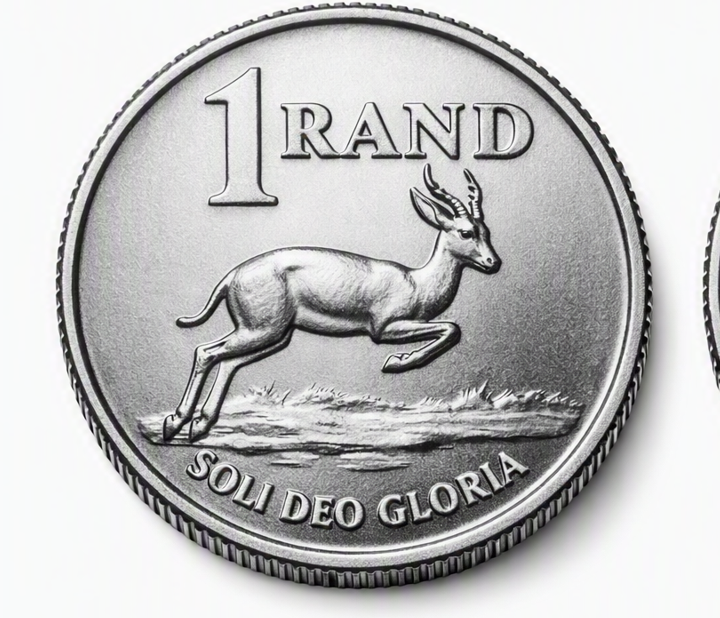
Picture: Copilot
For more African news, visit Africaninsider.com
Compiled by Betha Madhomu