
Germany’s latest tourism ambassador is at a slight disadvantage: she has never been to Germany. At least, not in the flesh.
Emma, an AI-generated persona created by the German National Tourist Board (GNTB), was launched in 2024 as the country’s official travel influencer. She has a Berlin-based identity, an Instagram account that has, to date, amassed almost 40 000 followers, and can chat to travellers in more than 20 languages. The GNTB is also marketing Emma to tourism partners who can ‘book’ Emma exclusively to promote their destination, event or tourism offering.
Emma’s winsome personality is just the ‘face’ to a huge amount of number crunching. Behind Germany’s approach to AI-powered tourism lies a vast pool of data from across the country. It gives AI something reliable to work with when travellers ask where to stay, what to see or how to put together a trip.
The implications are increasingly relevant to South Africa, where the technology underpinning the travel journey is evolving somewhat unevenly: in some areas, the country is embracing sophisticated new tools; in others, businesses are still working to get the fundamentals right.
One example is payments, where innovation is being used to address a relatively basic but consequential part of the travel journey. South African fintech TurnStay, which builds payment infrastructure specifically for African travel businesses, is tackling the complexity of cross-border payments, allowing guests to pay in their own currency while businesses can settle in theirs. Its platform also gathers payment links, virtual cards and local payment methods into a single system.
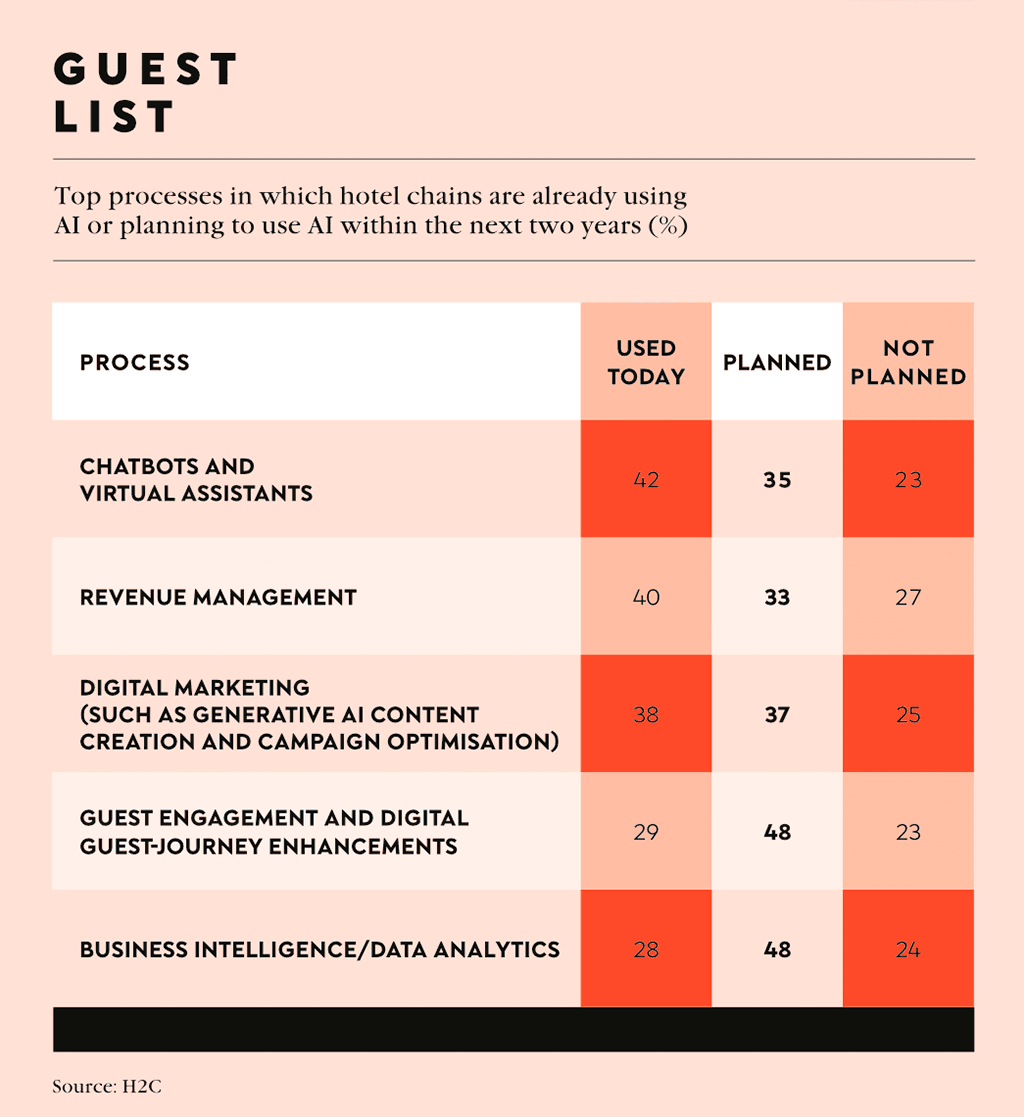
In August, TurnStay said it had processed more than R1 billion in travel payments in the first six months of 2026.
For tourism businesses, however, the technology race is unfolding against a growing gap between how quickly travellers are adopting AI and how prepared businesses are to respond.
Recent research from global marketing company MMGY Travel Intelligence found that 54% of travellers have already used AI to plan travel and 75% intend to use it for future trips. By comparison, only 22% of destination marketing organisations offer AI trip-planning capabilities on their websites and just 26% have a documented AI strategy.
In December last year, South African Tourism (SAT) launched Siyanda, an AI travel assistant similar to Emma, built with US digital media firm Matador Network’s GuideGeek platform for travellers and travel advisers in North America, one of South Africa’s most valuable overseas source markets. Users can ask it questions about South Africa or prompt it to build a full itinerary, while its responses draw on SAT’s destination data and more than 1 000 travel-information integrations. Siyanda is available through the SAT website.
But Siyanda is competing for attention in a market where travellers do not need a destination-specific tool to start using AI. They can simply open ChatGPT, Gemini, Claude or Perplexity and ask for an itinerary – putting the onus on tourism businesses to make sure their products and information can be found by whatever AI tool a traveller chooses. ‘Guests are already asking [these tools] for recommendations, describing their travel party, budget and ideal experience, and getting a curated shortlist in return,’ says Leigh Myles, regional director for Africa at Profitroom, a global booking and marketing technology platform.
The implications extend beyond marketing. ‘The gap matters because discovery is moving,’ says Myles. ‘If your property isn’t visible or well represented in those AI conversations, you may never make the shortlist. And if you’re not offering a smooth direct journey, online travel agencies will happily fill that gap and charge 15 to 25% commission on guests who may have found you first.’
But the ability to respond to that shift varies considerably.
David Frost, CEO of the Southern Africa Tourism Services Association (Satsa), sees a similar unevenness in adoption. ‘From what we are seeing among Satsa members, generative AI adoption is growing but [is] uneven. Some businesses are already using it for content, customer communication, research and admin. Others are still working out where it fits and what they are comfortable using it for.’
That makes skills and confidence as important as access to technology. ‘That is why AI literacy should now form part of development work in the sector,’ says Frost. ‘Smaller and emerging tourism businesses often have the least time and capacity to experiment, yet they may have the most to gain from tools that can support research, learning, planning and routine admin.’
Lizanne du Plessis, CEO of sustainability-focused tourism marketing agency Eco Africa Digital, agrees.
‘AI can help turn local knowledge into useful content at scale, but the accuracy and expertise behind it are essential. As content becomes easier to produce, I believe trusted tourism bodies have an increasingly valuable role in verifying information and showcasing their members. Done well, this can help visitors discover smaller businesses and give them more reasons to explore the region and stay longer,’ she says.
Du Plessis also identifies another challenge: the systems beneath the technology.
‘AI adoption in South African tourism is growing, particularly for social media, blogs and website content. The deeper challenge is connecting the systems behind the marketing. Many businesses still have websites, booking platforms and customer databases that operate in isolation.’
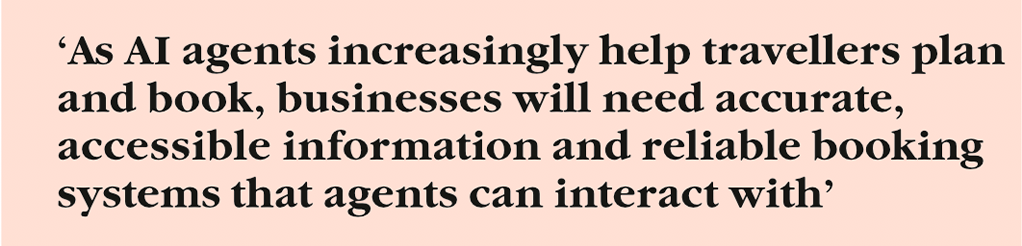
That problem is becoming more important as AI agents move further into trip planning and booking. ‘As AI agents increasingly help travellers plan and book, businesses will need accurate, accessible information and reliable booking systems that agents can interact with, with the traveller’s permission,’ says Du Plessis. ‘My view is that our next big step is moving beyond content creation to integrating the full customer journey.’
AI is also creating new possibilities for smaller and less visible tourism products. Frost points to South Africa’s strengths beyond its best-known safari and city experiences, including birding, food and wine, conservation, culture and community-based tourism.
‘Those products are often hard to find through a standard search, particularly when they sit outside the main hubs,’ he says. ‘AI can match recommendations to a traveller’s interests, budget, travel style and time. That gives specialist experiences a chance to be considered early, while the itinerary is still open. For smaller operators and less-visited destinations, it means a better shot at getting onto the trip. For the country, it is a way to spread visitor spend more widely.’
But enthusiasm for AI does not mean every new tool is worth adopting. Myles recommends that tourism businesses start with a measurable business problem rather than the technology itself. ‘Ask where you’re losing guests or money today. Is it low visibility, an abandoned booking engine, failed payments or a database you’ve never activated? Then judge any AI tool on whether it measurably fixes that problem.’
For South Africa, she sees both an opportunity and a need for businesses to adapt. ‘AI makes it possible to serve each of them in a personalised way at scale, which was previously only achievable for the largest operators.’
She also expects ‘a rebalancing of distribution’, making it easier for tourism businesses to own guest relationships rather than rely entirely on intermediaries.
Frost believes the role of tourism businesses will evolve alongside those changes. ‘Travellers can now plan much more of a trip before they speak to anyone, and some will arrive with an itinerary AI has already built for them.’
That does not make human expertise less valuable, he says. Instead, it changes where that value lies. ‘Less of the value sits in putting the trip together, and more in checking it, improving it and standing behind it when something goes wrong.’
For Du Plessis, the technology ultimately remains secondary to the experience it helps create.
‘The experience guests arrive to must live up to the recommendation. Warmth, kindness and the generosity of African hospitality will remain essential, supported by genuine guest reviews.’
By Robyn Maclarty
Image: Gallo/Getty Images