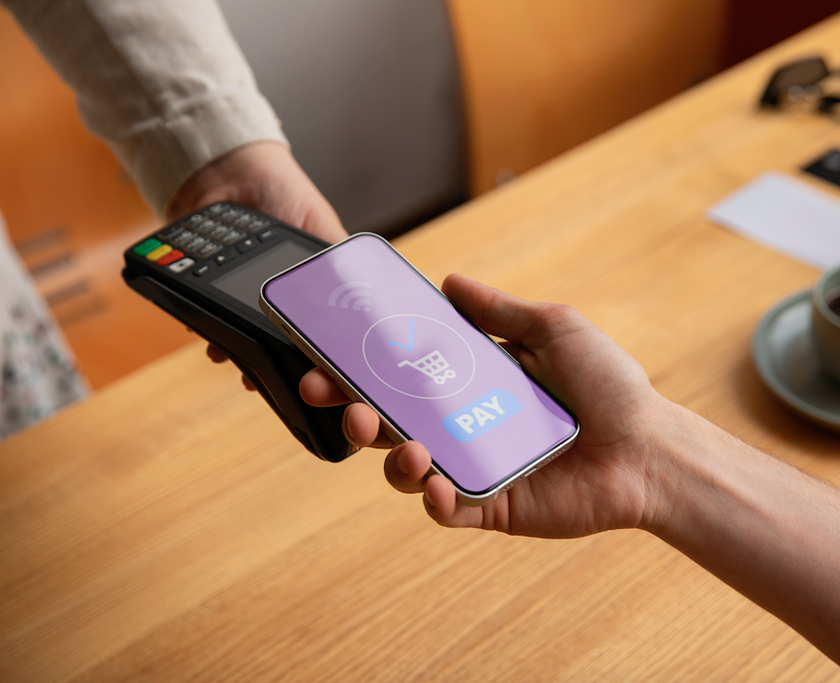
For years, people used mobile phones to connect with each other, and they became a vital link for homes and businesses. Now mobile network operators are playing an even bigger role as their traditional business model transforms and they increasingly connect more people to money.
The Fintech Association of South Africa (Finasa) says the country is ‘observing an extraordinary rise in innovation, investment and adoption that is transforming the financial sector’. This is happening through digital wallets and mobile payments, micro-lending and credit scoring, insurance technology and savings and investment apps. The super app has become a one-stop-shop of sorts where customers can handle a variety of lifestyle tasks such as doing online shopping, paying transport fares, streaming entertainment and sending money to relatives in rural areas. Customers are able to do this using their phone numbers instead of bank account numbers to identify digital wallets holding their money.
Finasa believes it’s no accident that South Africa’s fintech ecosystem is booming. It says several key factors are converging to ‘create the perfect storm for fintech innovation’. These include widespread mobile phone access and internet connectivity where mobile phone penetration exceeds 90%, making smartphone and mobile money platforms ‘game changers’.
At the same time, despite the established banking sector and well-functioning electronic funds transfer infrastructure, millions of South Africans still lack access to traditional banking services or remain underserved by them. This creates a gap for those offering accessible and affordable financial products.

Enter South Africa’s two biggest mobile operators, MTN and Vodacom, which have developed their own super apps – all-in-one mobile platforms that combine financial services with other offerings, such as e-commerce. Both operators have expanded into financial services with MTN Mobile Money (MoMo) and VodaPay.
These apps offer more convenience and wider financial access to customers through telecom-backed financial platforms that provide alternatives to cash-based transactions. Both companies have enjoyed growing success with the platforms and plan to extend them further.
According to ENS Africa, this success is mostly down to the fact telecom operators already control assets that matter in financial services, including extensive customer reach and distribution networks, and it believes the strength of the telco model is therefore ‘not just technological, it is infrastructural’. There is an increasing demand for alternatives to traditional, and oftentimes costly, banking, especially among those in rural areas.
MTN Group’s fintech division is centred on its MoMo service, which facilitates access to secure banking services, credit and affordable insurance without needing a bank account, and is available to everyone, on any South African mobile phone number. Reintroduced in South Africa in January 2020, with Ubank as a partner, the platform had 2.5 million users by the end of that year before reaching the milestone of 13 million registered customers in the country in April last year as it continues to expand financial accessibility.
‘Since its relaunch in South Africa, MoMo has played a key role in promoting economic growth and reducing the digital financial divide,’ says Kagiso Mothibi, CEO of fintech at MTN South Africa. ‘It provides a pathway for people who have operated on a cash basis for most of their lives to enter the formal banking system. This transition can transform lives.’
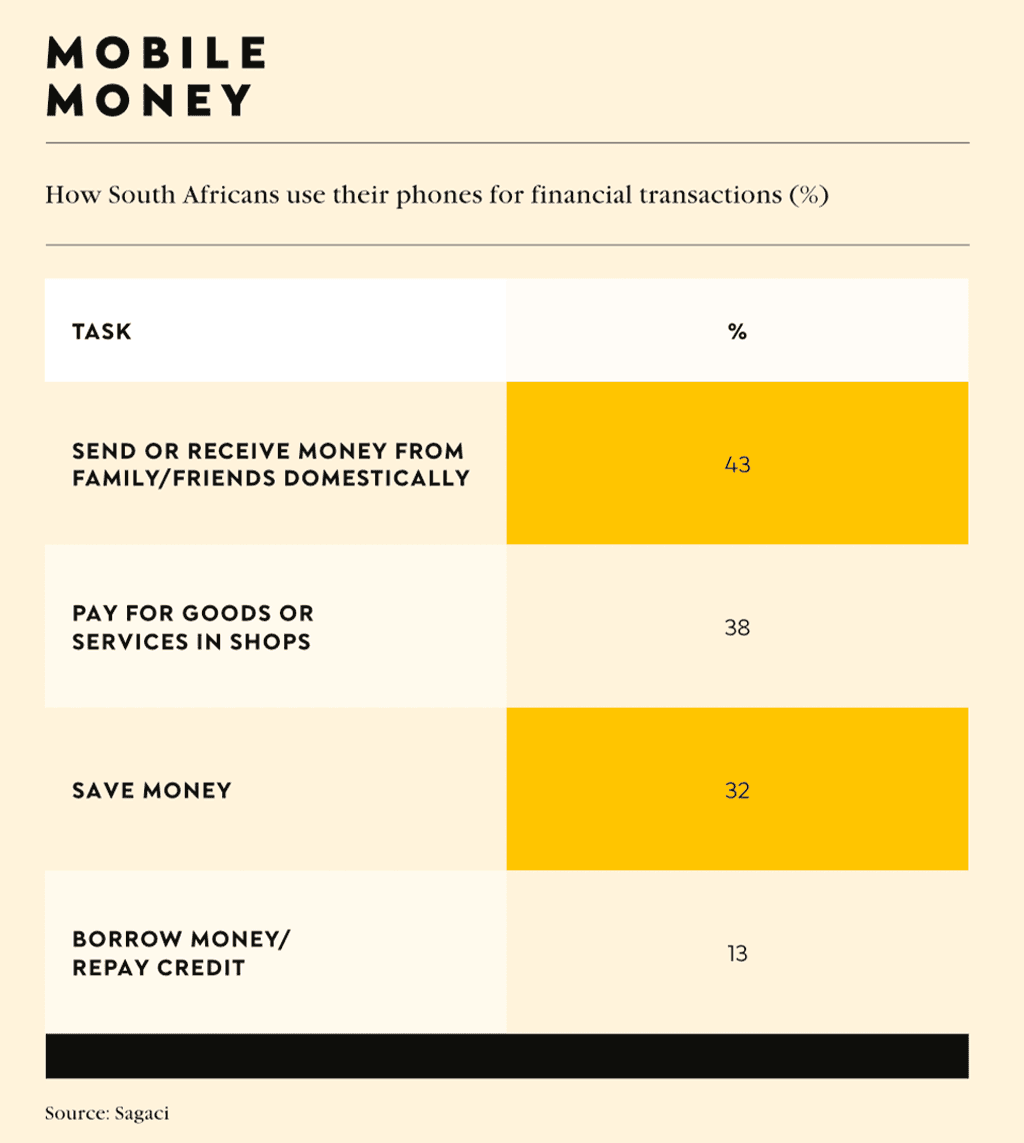
Last year, MoMo also launched MoMo Pay, a digital payment solution for informal traders that allows them to accept cashless payments instantly. According to MTN, this initiative aims to bridge the financial inclusion gap in the country, where more than 80% of transactions in the informal sector are cash-based.
Meanwhile, Vodacom’s fintech arm in South Africa, anchored by the VodaPay app, has also grown. Financial services revenue increased by 8.1% to ZAR3.7 billion in the 2025/2026 financial year, with insurance the biggest driver. VodaPay went live in 2021, offering cus-tomers a simple way to manage their money through a digital wallet. It combines mobile money, banking services, online shopping and utility management on one platform. VodaPay charges no monthly fees and offers low-cost cash withdrawals and cash-send services. The app has also grown rapidly since its launch, when it reached 1 million registered users in the first three months, to a milestone of 11.9 million users, according to Vodacom’s 2025 annual report. Vodacom Group CEO Shameel Joosub said the app has exceeded expectations and that financial services remain a core pillar of the group’s growth strategy and ‘a powerful engine for inclusion’.

The wider significance of these developments is that financial inclusion now depends on digital inclusion.
Finasa chairman Kagisho Dichabe argues that the two have become inseparable. ‘A person cannot fully participate in the modern financial system if they remain excluded from digital identity, connectivity, interoperable payments, affordable data, smartphones or trusted digital platforms. Fintechs therefore have a role that goes far beyond building apps or payment products. They are helping create the infrastructure through which people can transact, save, borrow, insure, invest and participate more meaningfully in the economy.’ He adds that mobile networks are an important factor in this inclusion as they provide reach, while fintechs bring innovation and agility and financial institutions provide regulated financial capability.
The role of telecom operators could well expand further as South Africa’s payments system undergoes regulatory reform. Speaking at the MTN Group’s fintech summit in 2026, South African Reserve Bank (SARB) governor Lesetja Kganyago said the SARB was preparing to put the fintech sector on a more comparable regulatory footing with banks with the National Payment System Bill soon going out for public comment. The proposed reform would move the country away from an entity-based model, where regulation follows the type of institution, towards an activity-based one, where it follows the activity being carried out.
‘The principle is straightforward: similar payment activities should be subject to similar regulatory expectations, whether they are performed by a bank or a fintech,’ he said. ‘If it walks and quacks like a duck, it is a duck, and it should be treated as one.’

Kganyago added that modernising payments was one of the SARB’s top three strategic objectives, alongside price and financial stability, and that fintech companies were already reshaping the market.
A second SARB fintech scoping study had identified about 400 fintechs operating in South Africa, he said. These companies were helping to expand access, improve customer experience and encourage established institutions to raise their standards of governance and resilience.
‘What I would like to see is South Africa’s money being accepted with confidence, no questions asked, wherever it is tendered,’ he said. ‘Neither cash nor cards can fully pass that test at this stage. Together, we can do better.’
The growth and success of telecom-backed financial platforms has shown that fintech isn’t only about convenience for customers, it’s also about accessibility and affordability, and is proving to be transformative for millions of South Africans.
By grouping multiple services in one app and making them available through mobile phones, access is also safer and more economical.
This enables previously unbanked people and those with a lower income able to benefit from the formal financial sector, which can only be liberating.
By Phillipa Byron
Image: Magnific