Cape Town – The Democratic Alliance (DA) is making significant gains across South Africa’s major metropolitan municipalities following Wednesday’s local government elections, with party leader Geordin Hill-Lewis calling on political parties to prioritise residents as coalition negotiations loom.
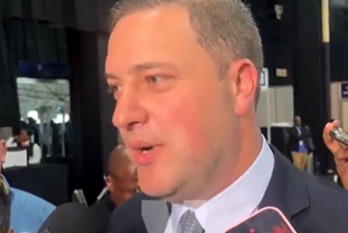
Hill-Lewis addressed the media at the Electoral Commission of South Africa’s (IEC) national results centre in Midrand on Friday, saying political differences should not stand in the way of establishing stable local governments.
He said emerging election results suggested that between 150 and 160 municipal councils, representing approximately two-thirds of the country’s local municipalities, would require coalition governments.
Hill-Lewis urged political leaders to put aside their campaign differences and focus on forming administrations capable of improving struggling municipalities.
[WATCH] DA federal leader Geordin Hill-Lewis says the party now has about 1 million black voters in the country, making it a mainstream party. He says the DA will also be the largest party in four metros. #LGE2026 https://t.co/0iB7r7yrXr
— Newzroom Afrika (@Newzroom405) November 6, 2026
The developments come as the DA appears poised to emerge as the leading party in five of the country’s eight metropolitan municipalities, although coalition arrangements are expected to determine control of several councils.
Early results and projections indicate that the African National Congress (ANC) could fall behind the DA in most metropolitan municipalities, marking a significant shift in the country’s local political landscape.
The DA is particularly well positioned in Gauteng, where it is leading in Ekurhuleni, while ActionSA has also strengthened its position in the province, potentially making it an influential coalition partner.
In Cape Town, the DA is projected to retain its outright majority, while Johannesburg, Tshwane and other major metros are expected to require coalition arrangements.
LGE 2026 | DA Federal Chairperson Geordin Hill-Lewis says the party is ready to enter coalition talks with humility, aiming to build stable and integrity-driven governments. https://t.co/Eqm2fvqSGt
— SABC News (@SABCNews) November 6, 2026
With 71% of votes counted, the ANC was leading nationally with 32%, followed by the DA at 25%. The figures point to a substantial decline in ANC support compared with the 2021 municipal elections.
The election results are expected to usher in another round of coalition negotiations, with the stability of municipal administrations emerging as a major concern.
In an earlier report, Business Day warned that the fragmented electoral landscape could make negotiations particularly challenging, noting that a party could emerge victorious at the ballot box but lose out during coalition negotiations.
The publication also highlighted the importance of forming durable partnerships, particularly given the instability that has characterised several coalition-run municipalities since the 2021 elections.
The IEC is expected to announce the final election results on Sunday, after which parties will face the task of negotiating governing arrangements across the country.
Follow African Insider on Facebook, X and Instagram
Picture: Screengrab
For more African news, visit Africaninsider.com
Compiled by Betha Madhomu