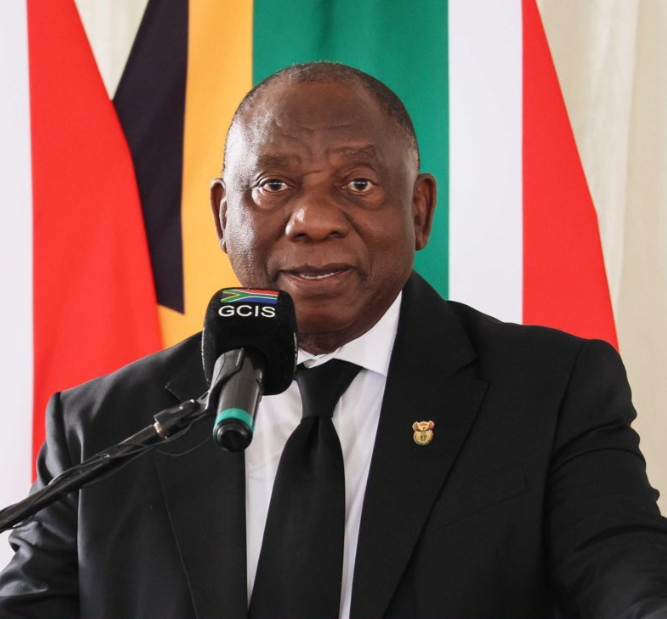
Cape Town – Six years after President Cyril Ramaphosa promised to transform Lanseria in Gauteng into a world-class smart city capable of accommodating up to 500,000 people, the ambitious development remains largely undeveloped, with informal settlements and stretches of open land dominating the proposed site.
According to MyBroadband, a recent assessment of the area found little visible progress on the project, despite government commitments to establish a modern, technology-driven urban centre.
Ramaphosa first announced the Lanseria Smart City during his 2020 State of the Nation Address, describing it as a “truly post-apartheid city”.
“A new smart city is taking shape in Lanseria, which 350,000 to 500,000 people will call home within the next decade,” he said at the time.
He further promised that the development would be “smart and 5G-ready” and set a continental and international benchmark for green infrastructure.
Most noticeable development
However, as reported by MyBroadband, visits to the proposed development site between January 2023 and January 2026 revealed minimal construction activity. The most noticeable development was an incomplete fence along Ashenti Road, while informal settlements remained within the planned development area.
The Gauteng Growth and Development Agency acknowledged the informal settlement, saying the matter was being addressed through intergovernmental processes.
“All interventions will be guided by applicable legislation, policy frameworks, and due process, with a strong emphasis on human dignity and social sustainability,” the agency said.
Although solar-powered streetlights were installed along Pelindaba and Ashenti roads by April 2026, these were part of a separate City Power project and not directly linked to the smart city development.
The latest report also highlighted Ramaphosa’s renewed commitment to smart-city development, with the president telling Parliament that government was pursuing technology-driven urban planning to address urbanisation, infrastructure challenges and climate change.
Land occupation challenges
“These initiatives seek to use information and communications technology, Internet of Things, data centres, and artificial intelligence to support more efficient and sustainable urban environments,” he said.
Meanwhile, BusinessTech previously reported that the Lanseria development had encountered land occupation challenges and infrastructure constraints.
The publication reported in January 2025 that the project had its origins in 2007, when it was known as Cradle City, and that a R320 million water treatment plant had broken ground in October 2024.
The plant, funded through international financing, was intended to produce two million litres of water daily and address critical water and sanitation requirements in the area.
Despite these infrastructure plans, the broader vision of a fully developed smart city remains a distant prospect.
The development involves several government institutions, including Infrastructure South Africa, the Gauteng Growth and Development Agency, the City of Johannesburg and Mogale City.
The slow progress raises questions about the government’s ability to translate its ambitious urban development promises into tangible infrastructure and housing for South Africans.
Follow African Insider on Facebook, X and Instagram
Picture: X/@PresidencyZA
For more African news, visit Africaninsider.com
Compiled by Betha Madhomu