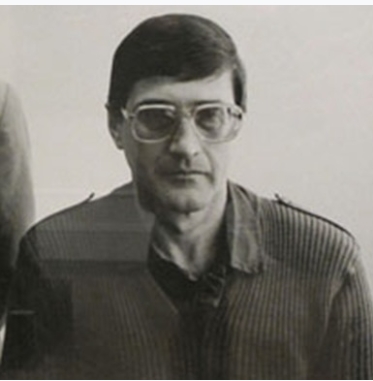
Cape Town – Former Vlakplaas commander Eugene de Kock has told the Khampepe Commission of Inquiry that he was willing to provide evidence against senior apartheid-era police officers and politicians but was never called upon to help prosecute them.
De Kock, 77, testified on Monday during an inquiry into alleged interference and delays in investigating and prosecuting crimes referred by the Truth and Reconciliation Commission (TRC).
He argued that investigators and prosecutors had failed to pursue those higher up the chain of command, leaving him among the few people held criminally accountable for atrocities committed under apartheid.
“I have never been reluctant to provide information to the prosecuting authorities; however, they have simply never approached me to provide this information,” De Kock said.
According to TimesLIVE he accused the National Prosecuting Authority (NPA) of failing to use information he could have provided about killings, bombings and the senior figures who allegedly authorised them.
[WATCH] “They had to remove me as a danger to the rest of the system that existed at that time,” says Eugene de Kock, alleging that politicians knew about crossborder operations. #Newzroom405 https://t.co/1ra70qbUdG
— Newzroom Afrika (@Newzroom405) October 26, 2026
De Kock said he had been a key link between senior police officers and those who carried out operations at Vlakplaas, the notorious security police unit associated with extrajudicial killings, kidnappings and attacks on anti-apartheid activists.
He told the commission that prosecuting the generals could have exposed the politicians who allegedly issued instructions.
“I believe that if the generals had been prosecuted, they would have disclosed the source of their instructions and that they would have implicated political office bearers,” he said.
During his testimony, De Kock also made allegations about the use of thallium to poison prisoners during the apartheid era.
He claimed that former police commissioner General Johan van der Merwe, then a colonel, had discussed experiments involving the substance in prisoners’ food during a meeting shortly after Operation Koevoet began in January 1979.
According to De Kock, the poison could cause paralysis and, in some cases, death. He alleged that prisoners who died were cremated to prevent autopsies from revealing evidence of poisoning.
He further claimed that a young sergeant was blamed when questions arose about the food and was subsequently transferred to a remote police station.
“He was the one who always had to take the food to the Article 29 prisoners, but he didn’t know it was poison,” De Kock said.
“And they transferred him to a one-horse station about 30km from Piet Retief. There he was, alone, out of the way.”
De Kock also recounted an account he said he had heard from a Rhodesian Special Branch officer about the alleged use of thallium in tinned food against opponents.
These claims form part of De Kock’s testimony and would need to be assessed against other evidence before the commission.
De Kock alleged that instructions for certain attacks came from senior police officers and political leaders.
He named former ministers Louis le Grange and Adriaan Vlok, claiming Le Grange approved the bombing of African National Congress (ANC) offices in London and that Vlok visited Vlakplaas to congratulate him after the bombings of Cosatu House in 1987 and Khotso House in 1988.
TRC CASES INQUIRY | Former apartheid-era police officer Eugene de Kock says political office bearers were aware of, and involved in, crimes committed during the apartheid era. https://t.co/OxGW4lZLXn
— SABC News (@SABCNews) October 26, 2026
De Kock also said that Brigadier Willem Schoon had told him that the order to bomb Cosatu House came from the highest levels of government.
“When I was instructed by Brigadier Schoon to bomb Cosatu House, he told me that the instruction to do this was from very high,” he said.
“I asked him how high, and he said it came directly from President PW Botha.”
The allegations concern events during apartheid and are being raised in the context of the commission’s examination of why many cases referred by the TRC did not result in prosecution.
According to EWN, he also questioned why former prosecutor Anton Ackermann had not pursued information he says could have implicated senior officials.
De Kock argued that those who gave orders were protected because the people who carried them out were prosecuted while those higher up the command structure escaped criminal accountability.
“I was willing and able to give evidence as to where the instructions came from that would have exposed the chain of command. I was not called as a witness to do so,” he told the commission.
He said the failure to prosecute senior figures should be examined by asking who benefited from the outcome.
“The answer is that those who benefitted were those who were at the top of the chain of command,” he said.
Follow African Insider on Facebook, X and Instagram
Picture: X/ @TRC_inquiry
For more African news, visit Africaninsider.com
Compiled by Glaan Sibuyi