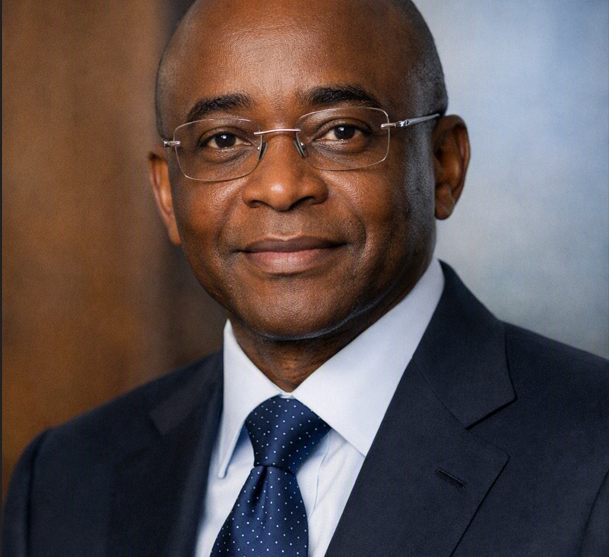
Johannesburg – Zimbabwean billionaire Strive Masiyiwa’s Cassava Technologies has partnered with Nvidia and the World Bank Group in a new initiative aimed at making artificial intelligence (AI) computing power more accessible to developing countries, with Africa among the initial targets.
According to Billionaires.Africa, Cassava has been named a knowledge partner in the World Bank’s AI Infrastructure and Readiness Initiative, which will provide governments with shared, pay-as-you-go access to specialised computing infrastructure used to develop and run AI applications.
The initiative was announced on Tuesday alongside the World Bank Group’s first digital strategy, launched in Seoul, South Korea. It will initially focus on Africa and Latin America, offering an alternative to building national data centres, which can be costly and take years to establish.
The World Bank said its broader strategy seeks to “help developing countries expand affordable digital access, improve services, and create jobs”.
World Bank Group president Ajay Banga said digital technology could help countries create employment and use limited resources more effectively, but stressed the need for reliable connectivity, affordable devices, digital skills and relevant services.
“Our first digital strategy brings these pieces together, helping countries build the foundations to benefit from today’s digital tools and the promise of small AI—AI for the people,” Banga said in the World Bank’s announcement.
The initiative will also support the development of “small AI” applications tailored to local needs, including tools to help farmers identify crop diseases, assist healthcare workers and improve small-business operations.
Building Africa’s AI infrastructure
Cassava’s involvement builds on its efforts to establish AI computing infrastructure on the continent in partnership with US chipmaker Nvidia.
ITWeb Africa reported that Cassava began deploying its Nvidia-powered AI Factory at its South African data centres earlier this year, with plans to expand into Nigeria, Kenya, Egypt and Morocco.
The company launched what it described as Africa’s first graphics processing unit (GPU)-as-a-service offering in November 2025, allowing businesses, developers and researchers to access computing power through local data centres. Masiyiwa said the company had acquired 12,000 Nvidia GPUs.
Cassava has argued that developing local AI infrastructure would help African organisations process data on the continent rather than relying entirely on overseas facilities.
“Our goal is to give Africa the infrastructure to write its own future, using its own languages,” said Ahmed El Beheiry, Cassava’s group chief operating officer and chief technology and AI officer, as quoted by ITWeb Africa.
Meanwhile, Business Day reported that the company intends to use its existing fibre network and data centre operations to support the expansion of AI services for governments and businesses.
The World Bank’s announcement comes amid a significant digital access gap between developing and advanced economies. The lender said more than two billion people were offline globally in 2025, while internet use stood at 23% in low-income countries, compared with 94% in high-income countries.
It also estimates that 1.2 billion young people in developing countries will reach working age over the next 10 to 15 years, while their economies are projected to create about 420 million jobs.
The World Bank said it would combine financing, policy advice, private investment and guarantees to help countries strengthen digital infrastructure, improve affordability and build the skills needed to benefit from emerging technologies.
Follow African Insider on Facebook, X and Instagram
Picture: Copilot
For more African news, visit Africaninsider.com
Compiled by Betha Madhomu