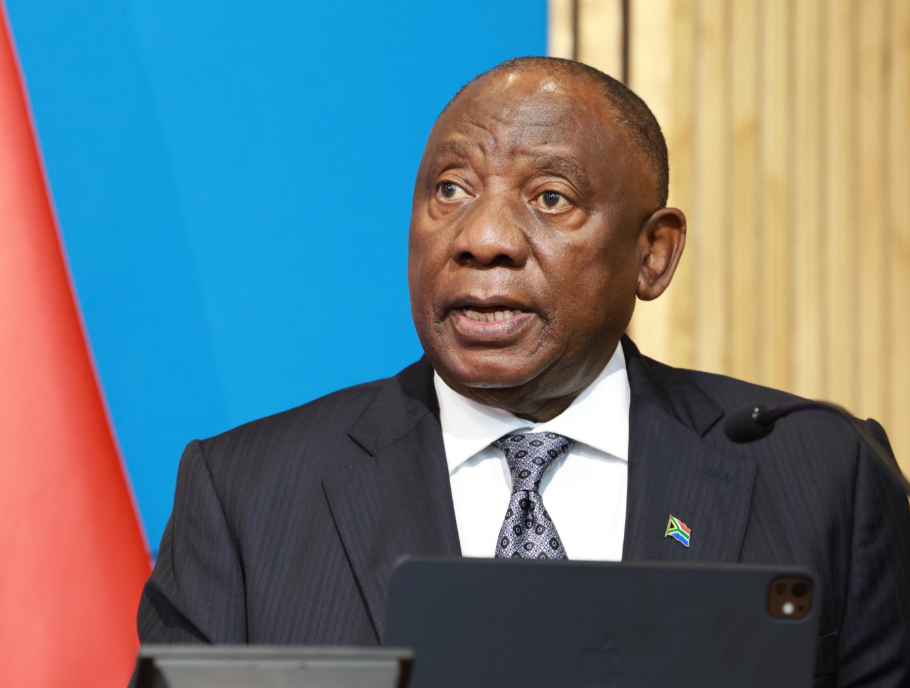
Johannesburg — President Cyril Ramaphosa has warned that the country must prepare for potentially severe economic consequences if the United States removes it from a preferential trade programme, as worsening diplomatic relations threaten export markets and employment.
Ramaphosa said on Monday that his government was still engaging Washington over South Africa’s future in the African Growth and Opportunity Act (AGOA), which provides eligible sub-Saharan African countries with duty-free access to the US market for thousands of products.
“I need, as president, to prepare us if it ever happens,” Ramaphosa said, according to Reuters. He warned that the impact on jobs would be “devastating” if South Africa lost the benefits.
The warning comes amid strained relations between Pretoria and Washington under US President Donald Trump. The administration has criticised South Africa’s domestic policies, including land reform and Black economic empowerment, while the South African government has rejected allegations that the country is persecuting white people.
Alternative markets
South Africa is seeking to reduce its exposure to the dispute by diversifying its export destinations. Ramaphosa said he and Deputy President Paul Mashatile had been travelling internationally to explore alternative markets, with China and India among the potential partners.
According to the Financial Times, Ramaphosa has highlighted opportunities to expand trade with both countries as relations with Washington deteriorate.
China introduced a zero-tariff scheme for qualifying imports from African countries in May, while South Africa and India have revived discussions on a preferential trade agreement.
However, shifting exports to other markets may not be straightforward for businesses that have built supply chains around access to the US market. Agricultural producers, vehicle manufacturers and other exporters could face additional costs and greater uncertainty if preferential access is withdrawn.
Deteriorating bilateral relations
The dispute also follows Washington’s announcement of a 30% tariff on South African goods in July 2025. In response, the South African government argued that the tariff did not accurately reflect the countries’ trade relationship and said negotiations should continue towards a more balanced agreement.
In a statement published by the South African government, Pretoria said its assessment showed that 77% of US goods entering South Africa faced zero import duty, disputing Washington’s interpretation of trade barriers.
Although AGOA has been extended to 2028, uncertainty over South Africa’s continued participation underscores the risks posed by deteriorating bilateral relations. For the government, the immediate challenge is to preserve access to the US market while developing alternative export destinations capable of protecting businesses, investment and jobs.
No final decision to exclude South Africa from AGOA was confirmed in the reports cited. The immediate concern is therefore the risk of losing preferential access, rather than an announced termination of benefits.
Follow African Insider on Facebook, X and Instagram
Picture: X/@PresidencyZA
For more African news, visit Africaninsider.com
Compiled by Betha Madhomu