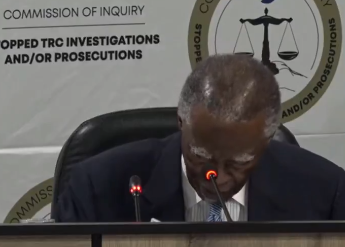
Johannesburg – Former South African president Thabo Mbeki has rejected allegations that his government held secret meetings with apartheid-era military and police generals to prevent them from facing prosecution, describing the claims as a “complete fabrication”.
Mbeki made the remarks on Monday while testifying before the Khampepe Commission of Inquiry in Johannesburg, which is investigating alleged political interference in the prosecution of apartheid-era crimes referred to authorities by the Truth and Reconciliation Commission (TRC).
Mbeki denied participating in secret negotiations with former president FW de Klerk and senior security force officials to secure protection from prosecution.
“It’s a complete fabrication; there is no such thing — there were no meetings that took place,” Mbeki said.
However, Mbeki acknowledged meeting former military and police officers, saying their concerns centred on the perceived unfairness of lower-ranking operatives being required to account for apartheid-era crimes while their political superiors had not done so.
He told the inquiry that the generals had proposed that De Klerk and other political leaders appear before the TRC’s Amnesty Committee to explain their decisions.
Mbeki has also denied directing or authorising the suppression of investigations and prosecutions. In a statement submitted to the inquiry, he argued that the failure to pursue the cases fell within the responsibility of the National Prosecuting Authority (NPA), which has the statutory mandate to decide which cases should proceed.
The inquiry follows longstanding allegations that political interference contributed to the failure to prosecute crimes committed during apartheid.
As reported by the Associated Press, the TRC referred approximately 300 cases for further investigation and possible prosecution, but only a handful resulted in successful prosecutions.
The commission is examining whether successive administrations failed to ensure accountability for crimes that remained unresolved after the TRC process, which offered perpetrators amnesty in exchange for full disclosure of politically motivated offences.
The allegations have kept victims’ families waiting decades for answers. The Foundation for Human Rights and 25 families of victims and survivors have called for an explanation of why the cases were not pursued.
“After so many years of waiting and obfuscation, the families really look forward to a candid explanation of why they have been denied justice,” the foundation’s executive director, Zaid Kimmie, said, according to the Associated Press.
Mbeki’s testimony is expected to continue as the inquiry examines the handling of apartheid-era cases during and after his presidency, which ran from 1999 to 2008.
Follow African Insider on Facebook, X and Instagram
Picture: Screengrab
For more African news, visit Africaninsider.com
Compiled by Betha Madhomu